Subscribe now for full access and no adverts
Richard I, the third son of Henry II, is often lauded as one of England’s great martial kings – matching Edward I, Edward III or Henry V. When debating the attributes of ‘Coeur de Lion’, however, attention usually focuses on the ‘Crusader King’ and his exploits during the Third Crusade (1189-1192). Here, we will look instead at his other great campaign, the war with Philip II of France (1194-1199), to assess whether the ‘Lionheart’ deserves to share column inches with those others, and whether his nickname was really well earned.
Born in Oxford in 1157, Richard was just a child when he was invested with the Duchy of Aquitaine, the patrimony of his mother, the famed Eleanor of Aquitaine. Later, he would rule England for nearly ten years – but would spend less than a year of that time actually residing in the country. So, although we know him today as the king who gallops centre stage at the conclusion of Ivanhoe – and who is lauded in Robin Hood movies for saving our ancestors from the misrule of his nasty little brother John – the truth is that it is doubtful whether he could even speak the mother tongue. He has become a hero of medieval legend, but not necessarily of fact.

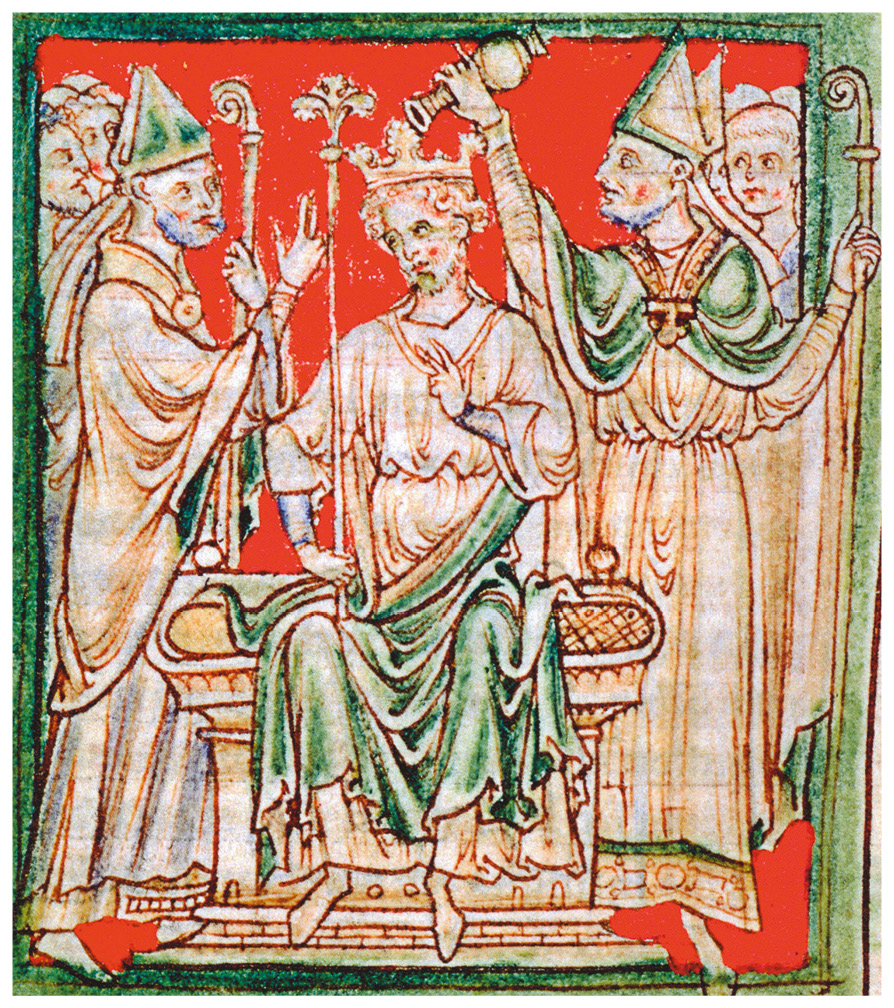
Richard was a thorn in his father’s side, joining his brothers, Henry and Geoffrey, in a rebellion (1173-1174) – a feat he repeated in 1189 in conjunction with Philip II (also known as Philip Augustus) of France. He would be elevated to kingship on 5 July 1189, and would become not only King of England but also Duke of Normandy and Count of Anjou. By this time, however, he had already taken the crusader’s vows, and was flogging the family silver to fund an expedition to wrestle back the Holy Land from Saladin, the great Muslim leader who had grabbed it in 1187.
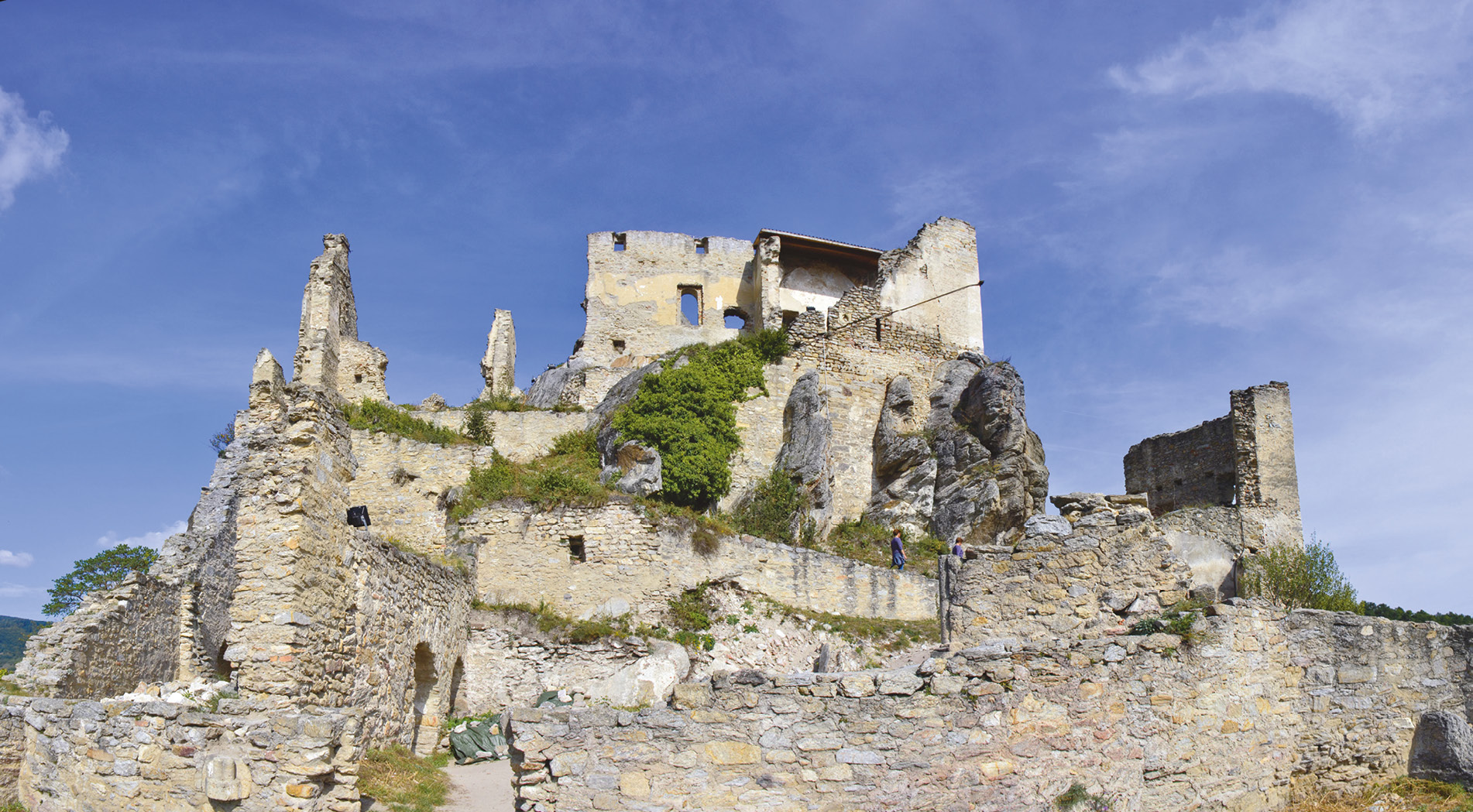
In 1190, he departed for Palestine – the only English king to become a crusader (see MHM 100, January 2019). His adventures and misadventures on this Third Crusade galvanised Christendom then, and still cast a romantic spell today. The surrender of Acre, the march on Joppa (Jaffa), two advances on Jerusalem (a city he never captured), the taking of fortresses in the south of Palestine, the Battle of Arsuf, the relief of Joppa – rightly or wrongly, a chivalrous legend was born. Having concluded his peace with Saladin, however, it was the journey home that undid him – as he ended up as a prisoner in Austria’s Dürnstein Castle, to be handed over to the Holy Roman Emperor, Henry VI, and eventually ransomed at ruinous cost to both his countrymen (150,000 marks) and his reputation (he was forced to acknowledge Henry as his overlord).


In March 1194, Richard returned to England – making only his second ever visit – and forgave perfidious John for his treachery in attempting a rebellion while he had been away. The following month, Richard’s royal authority was reasserted at an official ‘crown wearing’, where he paraded before his subjects in full regalia, showing that captivity and ransom had not diminished his majesty. But, with his effective vice-regent Hubert Walter handling the boring stuff, the king’s heart was still set on waging war abroad. Indeed, if he achieved anything in England, it was by retaining the trust of his magnates while also imposing further financial burdens to feed his war machine (a trick John would not be able to repeat following his own eventual succession to the throne in 1199).
Richard had intended returning to the Holy Land but never got the chance. Instead, Normandy would be his focus for the remaining five years of his life, as he struggled to recover lost territories and restore order to his neglected patrimonial lands. From now on, he would spend nine or ten months of each year there, and the remainder in his other Continental territories. As a result, he never set his regal eyes on England again, and perhaps we shouldn’t be surprised. He was at heart an Angevin, who regarded little old England as a mere fiefdom funding his campaigns. With his lands in Aquitaine and Anjou threatened, and those in Normandy even more so, there was barely a backward glance – and then only because of the lucre he now needed more than ever to squeeze from England. His overriding aim was to restore his position to that pertaining pre-Third Crusade – to that of 1189 in other words.

Departure and arrival
Having promised much but arguably achieved little in the Holy Land, it was time for Richard to prove himself again closer to home. After a hold-up for bad weather, he left England’s shores for the last time on 12 May 1194, sailing from Portsmouth to France, where war against Philip II would occupy him intermittently for the rest of his days. He landed in Barfleur, intending to bring the cockroach Philip to heel – for not only had the French king abandoned the Crusade, much to Richard’s displeasure, but he had also used Richard’s incarceration as an opportunity to undermine his position in France. Richard was intent on recovering his lost territories in Normandy and sorting out rebellious lords in Aquitaine. In Normandy, east of the Seine, he had lost Eu and Arques, plus the ports of Tréport and Dieppe; Philip had encroached west, too – with Rouen, Normandy’s capital and heart of the Duchy, being threatened. In addition to consolidating his position further north in Flanders, Philip had generally taken advantage of the absent Lionheart. Further south, more losses were incurred in Touraine and Loches in the Loire Valley, while frontier lords switched allegiance, despairing of Richard ever coming to their aid. In Aquitaine, many once-loyal lords were up in arms. The castle at Verneuil was being besieged, the garrison unsure whether Richard would relieve it in time.
Richard knew it wouldn’t be easy. Philip’s strength had increased significantly since the Crusade with his acquisition of Artois – and, in Richard’s absence, he had been throwing that extra wealth and power at Normandy during the 1190s, succeeding in storming considerable chunks of the Duchy. John had done his bit to undermine his brother, too, being so intent on worming his way to the English throne during Richard’s incarceration that he was prepared to sign away the chattels if it suited his purpose. John’s self-serving treaties saw Philip in the region known as the Vexin (north of the Seine) and much of western Normandy, acquiring territory in Flanders, taking castles in Touraine without a fight, and counting his blessings as John conceded the overlordship of Angoulême in Aquitaine. John had been every bit as much an enemy as Philip now was – but, of all the losses he had allowed, the one Richard felt most keenly was Gisors, in the Vexin – one of France’s most impressive castles, in a vital strategic position between Rouen and Paris.
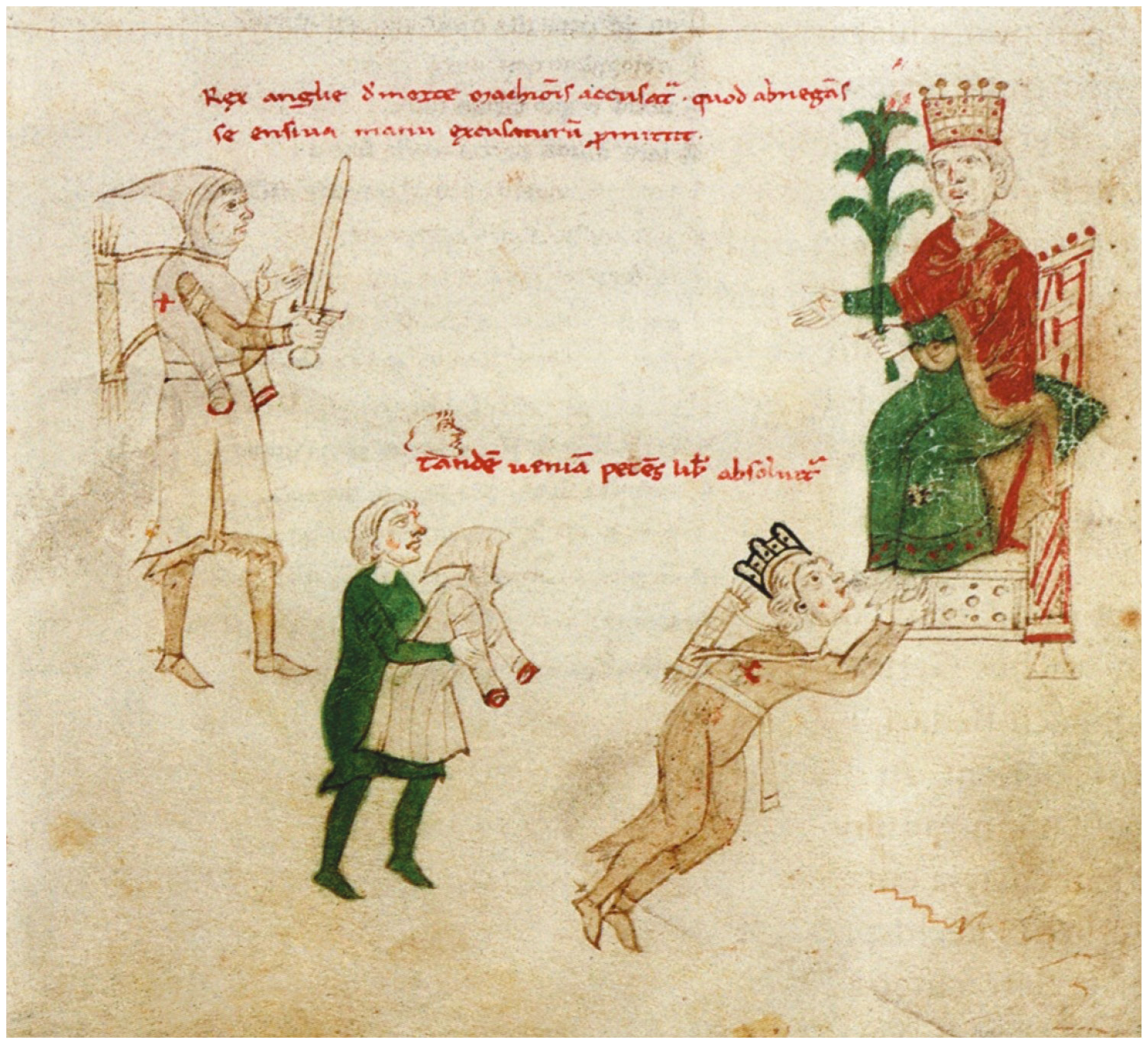
John had certainly erred, but now he came to Normandy, was reconciled with his brother, and immediately betrayed Philip – heading to the Norman town of Évreux, which he had been holding on the French king’s behalf, and having his garrison put to the sword. For all his previous backstabbing, John was now Richard’s loyal lieutenant – and proved it by displaying the utmost brutality. The siege of Verneuil petered out, and Richard entered the stronghold unopposed. Enraged at the tide turning, Philip took it out on Évreux, retaking the town and thoroughly sacking the place. Having gained leverage by capturing Simon de Montfort, the 5th Earl of Leicester (the father of Simon de Montfort, 6th Earl of Leicester, who would later rebel against Henry III), an emboldened Philip proposed a three-year truce, which Richard rejected: a truce was anathema to him, as it would have allowed Philip to retain his gains. De Montfort would nevertheless be released on payment of a ransom in 1196, while in the meantime Richard focused on recovering territory – beginning with the castle of Loches, which was considered impregnable, but which fell in quick order to the astonishment of many.
An early chance to decide matters almost occurred when Richard closed with Philip at Vendôme, between Orléans and Le Mans. Battle was averted when the French army retreated – but the ensuing pursuit saw Philip’s wagon train being taken, and the king narrowly avoid capture. A red letter day for Richard saw the famed knight William Marshal garner particular praise, not only for his personal prowess but also as a capable commander who followed orders. Key castles and important towns, including Angoulême, fell to Richard as the war turned on its head – a notable achievement in a relatively short time. Sadly, details of precisely what he accomplished are scant.
While Richard campaigned further south, Philip regrouped and relieved the Norman castle of Vaudreuil, besieged by John and the Earl of Arundel. It was a crucial spot as it commanded a crossing of the Seine, ten miles south of Rouen. With the war proceeding rapidly, a pause for breath was inevitable, and a truce was finally agreed to run from 23 July 1194 to 1 November 1195. It wouldn’t last, however. Philip was handed a pretext when he rumbled that Richard was negotiating with the Holy Roman Emperor, Henry VI, and once more went on the offensive, sacking Norman castles rather than let Richard retake them; Vaudreuil was razed. Richard countered by rebuilding alliances in Normandy and striking further south with his allies, taking Issoudun and Graçay, south of the Loire. Philip’s renewed aggression in Normandy had found its response.

War with Philip
What was Richard’s approach to this, his final war? He had his feudal knights, Welsh mercenaries, some Saracens, crossbowmen and archers, siege equipment, the chemical weapon known as Greek fire, and his own personal aura. He maintained armies in the field, commanding them personally, while using Hubert Walter’s fundraising to chuck large sums at a princely alliance that would hopefully keep Philip occupied. Philip also had considerable resources at his disposal – so it is understandable that William Marshal described it as a ‘fierce and dangerous war’, with nothing one-sided about it. Richard’s forces were dragged all over his empire with a series of bitter sieges – including at Milly-sur-Thérain, near Beauvais, where Marshal described how he (Marshal) had disarmed the castle’s constable through the simple expedient of sitting on him.
Warfare wasn’t Richard’s only adversary, however, as famine was added to the mix. It had been marching across Europe for a few years – and, by 1195, had reached Normandy, with Richard taking steps to ensure the poor received sufficient sustenance. He had been taken ill in April 1195, and his sudden care of the poor and needy was possibly a result of an increased awareness of his own mortality. Another lull in the fighting ensued after Muslim forces made ground in Spain with the defeat of King Alfonso VIII at Alarcos in July 1195; just briefly it felt like Richard and Philip needed to make common cause. Alfonso prevailed later in 1195, so Richard and Philip got back to what they did best: fighting one another.

At the end of August 1195, another large English army arrived at Barfleur. Richard’s conniving ally, Henry VI, encouraged him to take the offensive again; it suited his purposes to have English and French beating ten bells out of one another. Philip launched a surprise strike against the key port of Dieppe, leaving it ablaze. Richard responded by besieging Arques, while further south Philip regained the town of Issoudun but was thwarted in his attempt to take its castle, Richard relieving it in the nick of time. This phase of the war was topsy-turvy to say the least.
If disarming an opponent by sitting on him sounds comical, the winter of 1195-1196 certainly wasn’t, although it was a period when Richard held the upper hand. He took Dieppe, which Philip had granted to an ally, the Count of Ponthieu, and thwarted his rival’s attempt to besiege Issoudun. When a temporary peace ensued, Philip showed where his own priorities lay, giving up some claims to Plantagenet territory, abandoning his alliance with Toulouse (which made Aquitaine more secure), but drawing the line at the important county of Vexin and some key border castles. He clearly still had his eyes focused on Normandy and the Vexin. The next truce, the Peace of Louviers, was ratified in January 1196, however – with most of Philip’s Norman gains being handed back to Richard at that point; the exceptions were the Vexin and a few other castles. Richard was playing a canny game, every truce affording him the time to build up his forces for the next campaign, every truce leaving him in a slightly better position than the one before.
Philip’s ambitions in the Vexin were boosted in 1196, when he gained custody of Richard’s nephew, nine-year-old Arthur of Brittany. As Henry II’s only legitimate grandson, Arthur had a claim on the English throne and other Plantagenet possessions – and, with John being such a conniving little toad, Richard summoned the boy to his court in Normandy, presumably to burnish his credentials as heir-presumptive. The trouble was that the Bretons weren’t having any of it. Their refusal to hand Arthur over led to Richard invading the Duchy and the Bretons retaliating by despatching him instead to Philip, who probably couldn’t believe his luck. While Richard fumed, Arthur was introduced to Philip’s similarly aged son Louis, and treated like a family member. For his part, Richard showed his own ruthlessness and lack of scruple by treating this as rebellion, and punishing adults and children alike, even on as holy a day as Good Friday. This contrasted starkly with his previous humanity towards potential famine victims in Normandy.
Ominous portent
Richard had other problems. Back in England, the charismatic figure of William Fitz Osbert was executed in April 1196 after becoming the mouthpiece for popular discontent at Richard’s financial exactions. Three months later, in Normandy, Philip attacked the town of Aumale – with Richard responding by taking Nonancourt, west of Paris, but failing to relieve Aumale, which was razed by Philip. In a wretched summer, Richard also lost Nonancourt, and was wounded in the knee by a crossbow bolt while besieging nearby Gaillon: an ominous portent indeed. Richard pulled off another diplomatic coup in October 1196, however, when his sister Joanna married Raymond VI, Count of Toulouse – a surprising alliance as the counts of Toulouse had traditionally opposed the dukes of Aquitaine.
In April 1197, Richard sacked St Valery: the port at the mouth of the Somme was fair game, as it belonged to Philip’s ally Baldwin IX, the Count of Flanders. He also captured the castle of Dangu, just four miles from Gisors, as the conflict again turned his way. Richard was no blunt instrument where warfare was concerned, however, and cooperation and commerce were also used to dull an opponent’s threat. A trade embargo on Flemish goods, for instance, was followed by the successful dangling of commercial and pecuniary carrots to entice Baldwin away from Philip – thereby wrecking a potentially dangerous alliance.

Purchasing the loyalty of Philip’s neighbours proved successful, and the summer of 1197 saw Richard once more in the ascendancy. His withdrawal from Brittany saw Arthur returned, and he was building a new statement castle, too – the majestic fortress of Château Gaillard – just a few miles from Gaillon, in the heart of the Vexin. Taking two to three years to erect, and based partly on his crusading experiences, it would be the most financially ruinous castle-building project of his reign. Still, Richard could draw a line from his new castle, back to Rouen – the approach to which it guarded – and on to Portsmouth; using joined-up thinking to combine comms and governance. This is how he would defend Normandy’s French frontier, a masterclass in castle-siting, compensating for the loss of Gisors. For inspiration, he turned to a Roman-era writer, Vegetius, and his De re militari – the classic 5th-century guide to military matters.

By July 1197, Richard had forced Philip and Baldwin apart – and, by the autumn, the French king felt he had no option but to sue for a year’s peace, which would buy Richard more time. He was feeling lucky. The death of Henry VI saw the election in February 1198 of a more compliant Holy Roman Emperor in the form of Richard’s own nephew Otto – the son of his sister Matilda and Henry the Lion, Duke of Saxony. The cost was extreme, however, so Richard concocted and used a new Great Seal of the Realm for the first time in May 1198, repudiating grants made under its predecessor to raise new funds. It was the first time, heraldically, that the ‘three lions’ had appeared (representing England, Normandy, and Aquitaine – football fans take note!). His strategy of encirclement was bearing fruit, and the war continued once the latest truce expired – whatever Philip may have wished. Renauld, Count of Boulogne defected, while Philip’s one-time ally Baldwin attacked him in Artois, besieging St Omer. Meanwhile, Richard maintained pressure in the Vexin, retaking Dangu and pressurising Gisors again.
Dieu et mon droit (‘God and my right’). This was the king’s battle cry, chosen at Gisors, in September 1198, which asserted that Normandy’s rulers (Richard in other words) owed no vassalage to French kings. They subsequently became the motto of England’s royal arms. Richard launched a surprise attack on Philip’s army, leading the charge himself, its ferocity causing a bridge to collapse under the weight of retreating French knights. Philip narrowly escaped an ignominious end, being pulled from a ford. Richard’s forces were now largely predominant in the Vexin. Philip still held the former Norman stronghold of Gisors, although Château Gaillard, Richard’s new castle at nearby Les Andelys, cast an immense shadow. Philip’s tail wagged again as he resumed raids in the south of Normandy, sacking Évreux, before Richard caught up with him near Vernon and saw him off. Richard spent his last Christmas in Normandy, with any merriment possibly impaired by Philip – though he would soon receive better news as Otto launched attacks on several of the French king’s cities.
Philip and Richard finally met to discuss terms on 13 January 1199, with a five-year truce mooted. Negotiations lumbered on until March, with Richard insistent on the return of everything taken from him, Philip hoping to cling on to Gisors, and the Church hoping things could be patched up so everyone could go crusading. There was at last the possibility of a lasting peace, with a royal marriage posited between Richard’s niece and Philip’s son, Louis. First, though, Richard had to sort out Philip’s allies in Aquitaine, who were excluded from any truce.
The final chapter
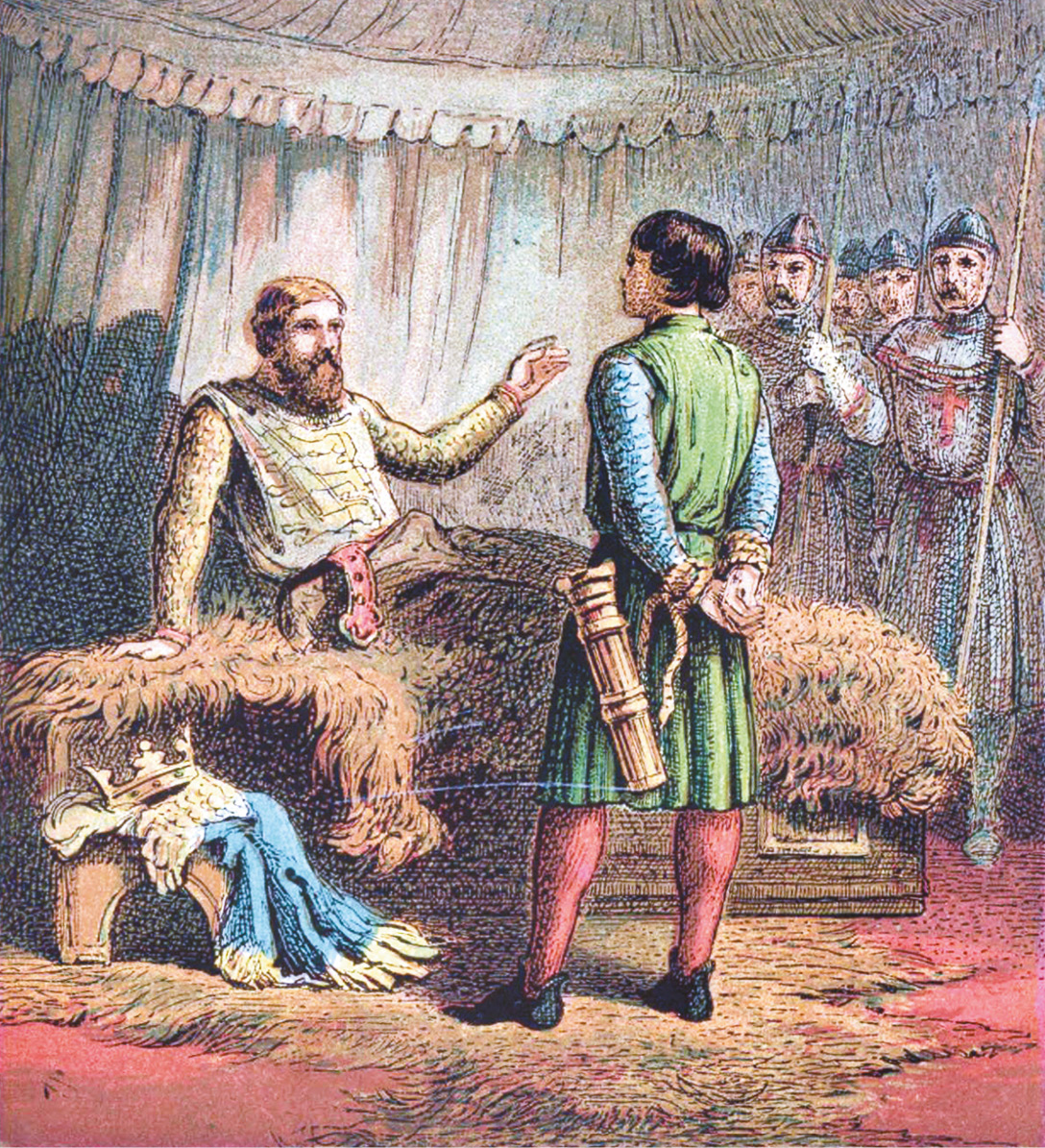
It was the end of March 1199 when Richard went firefighting again. He led a company to the Limousin to suppress a revolt by the Count of Angoulême and Viscount Aimar of Limoges. His target was the castle of Châlus-Chabrol, which was hardly formidable, being home to just 40 people. There was a financial incentive, as some gold treasure trove had been found under the plough early in 1199, which the lord of Châlus, Achard, had claimed. Richard, as overlord, thought otherwise – and would probably have done so regardless of war’s financial exigencies. Richard began the siege on 24 March and anticipated it being short work. Having laid waste to the surrounding countryside, he set his sappers working while his crossbowmen kept heads down on the battlements. This state of affairs continued for three days until the evening of the 26 March, when Richard inspected his own defences.
Richard was killed in the same manner as many others he’d faced on the field of battle, despatched by a sole assailant – a crossbow bolt doing for him, reputedly fired by one Peter Basilius (some sources say Bertrand de Gourdon), who was allegedly using a frying pan as a makeshift shield. It is said Richard saw the bolt coming and attempted to dodge it, but failed – having first applauded his assailant. It hit his left shoulder and penetrated six inches. The bolt was removed, but only when the king was ready, so intent was he on a successful conclusion to the siege; the wound had festered meanwhile, and turned gangrenous. Châlus-Chabrol fell – but so did the king, who expired from blood poisoning on 6 April 1199, ten days after he’d been hit. Richard met his killer and ordered he be freed, but after the king’s death he was nobbled anyway. The Viscount of Limoges was also terminated (by Richard’s illegitimate son, Philip of Cognac), his failure to hand over the treasure, which indirectly led to the king’s death, being his undoing.
Richard was buried alongside his father Henry II at Fontevrault Abbey on Palm Sunday – 825 years ago this spring. The lion’s heart was taken to Rouen, where his brother, Henry the Young King, lay, while his brain and entrails were buried at the Abbey of Charroux in Aquitaine. Nothing came to England.

Enduring legacy
It wasn’t just a king’s ransom that tried the finances of Richard’s kingdom, but his endless campaigning, which ironically began the break-up of the Angevin empire. Richard’s premature death, and therefore his failure to assert Dieu et mon droit, left unfinished business, and a baton that Edward III would waft as he launched the Hundred Years War. In addition, his interminable absences led to a sea change in terms of the independence and strength of the baronial party. He sowed seeds that his kid brother John would reap, his use of England as a money-tree playing its part in causing the rebellion that led to Magna Carta in 1215. Richard, though, would become a national hero – an absentee king, but one who died young and in martial valour. His name would become synonymous with chivalry, even though he was as ruthless as the next, his life and reign coinciding with the morphing of any fact about King Arthur into an undoubted Arthurian legend – the ‘bodies’ of the ‘Once and Future King’ and his wife being ‘discovered’ in Glastonbury during Richard’s reign. The Lionheart also took a sword dubbed ‘Excalibur’ with him on crusade, as he identified himself with the myth. The historian Steven Runciman (1903-2000) perhaps summed it up best, when he described the multifaceted monarch as ‘a bad son, a bad husband and a bad king, but a gallant and splendid soldier’.
Further reading
W B Bartlett, Richard the Lionheart: the Crusader King of England (2019, Amberley Publishing).
D Boyd, Lionheart: the true story of England’s Crusader King (2014, The History Press).
All images: Wikimedia Commons, unless otherwise stated