Subscribe now for full access and no adverts
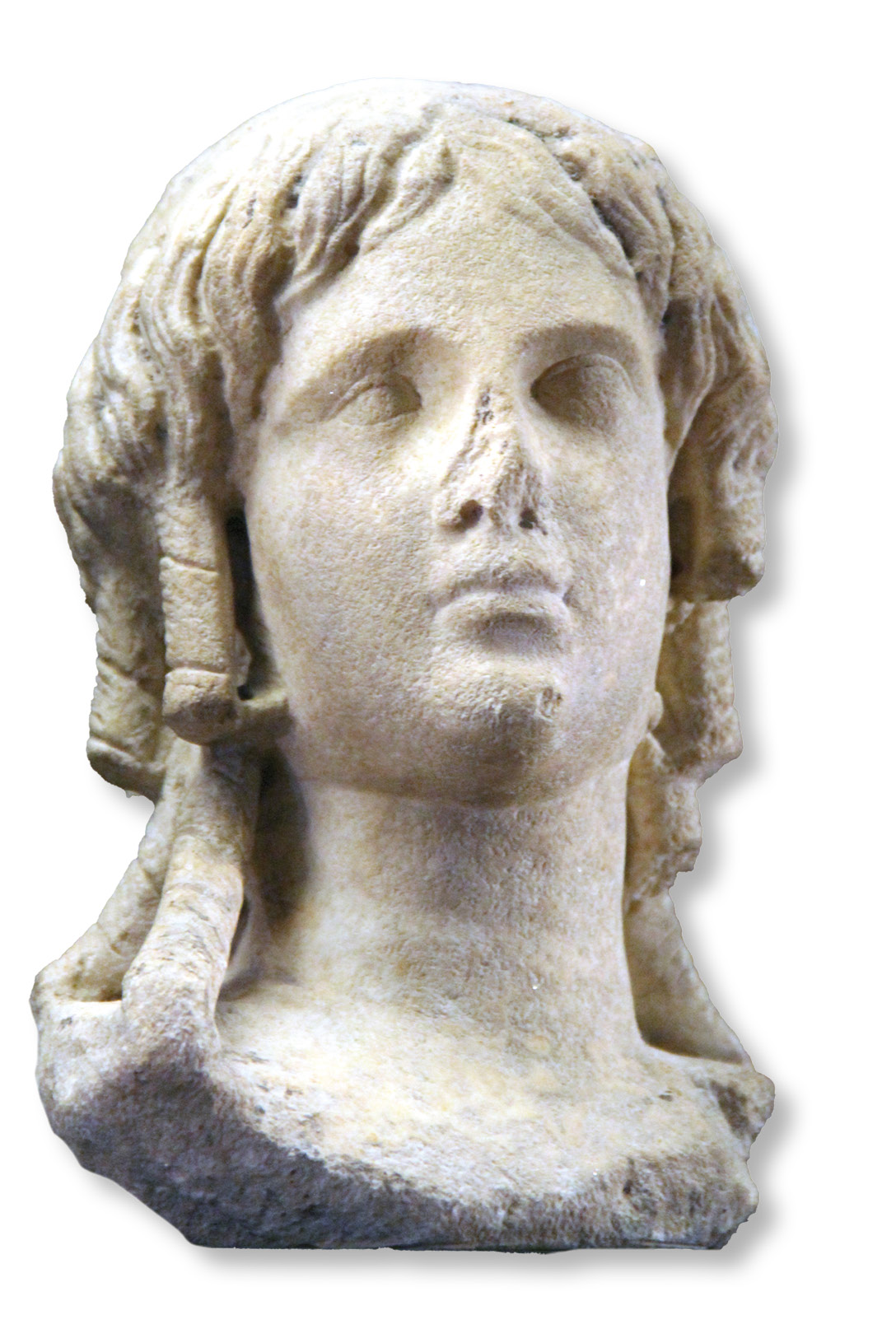
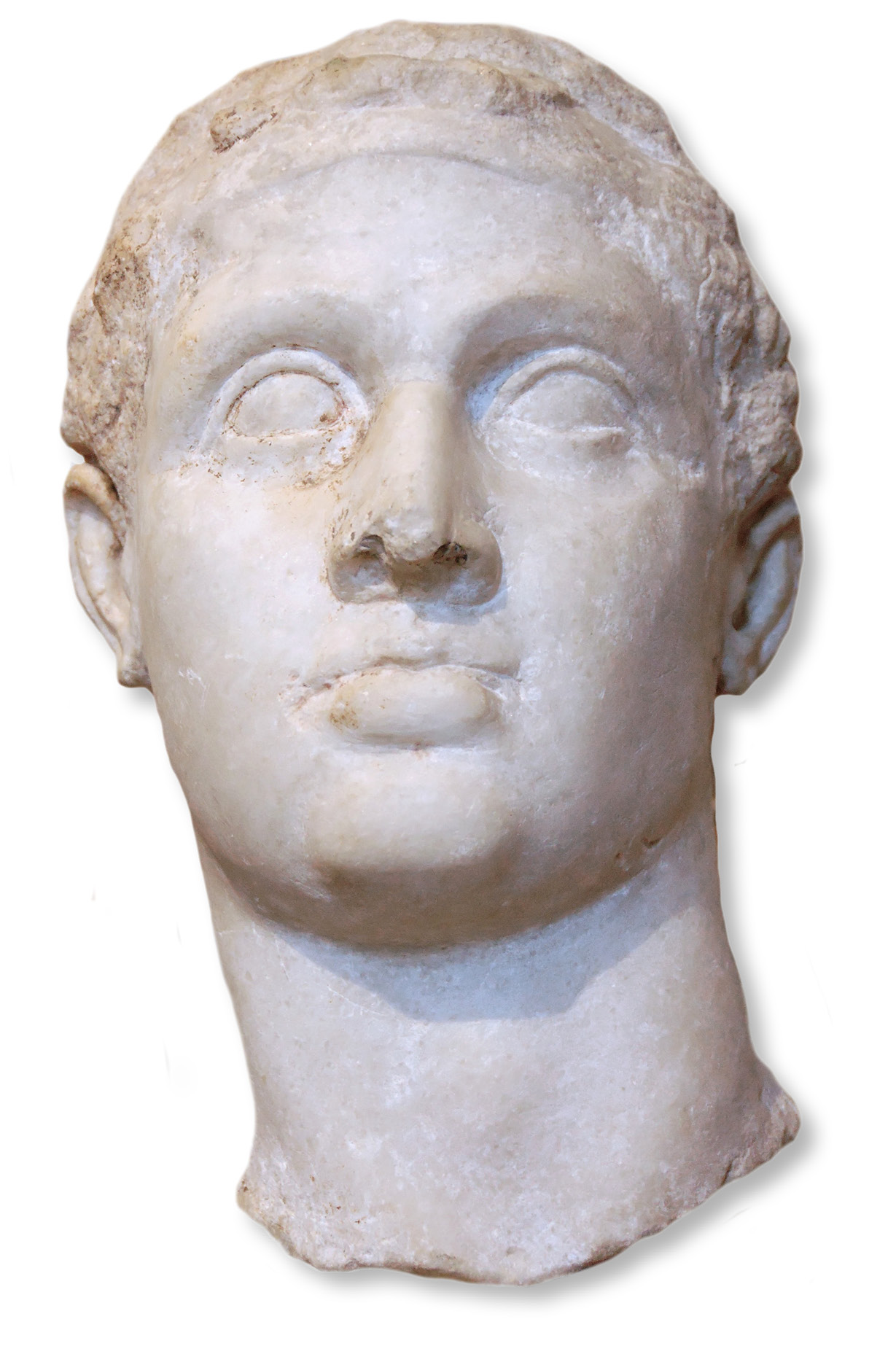
The 50-odd-year period that stretched from the death of Cleopatra III to the rise of Cleopatra VII was Egypt’s period of terminal decline. In 101 BC, the feckless Ptolemy X Alexander I, having murdered his co-regent mother Cleopatra III, sat on the throne, generally disliked by everyone, especially the Romans who regarded him as a corpulent waste of space. The one thing Ptolemy X had in his favour was his brilliant young niece-wife Cleopatra V Berenice III, who was the antidote to Ptolemy’s ineptitude.

Cleopatra V Berenice III
Very little evidence has survived about the nature of their reign, but there is just enough to hazard a guess about the couple’s power dynamics. Cleopatra Berenice may not have wielded much personal power at first, acting more as a basilissa-consort than co-ruler during the initial period of their joint reign. But over time she grew in importance and visibility, especially after she bore the king a daughter sometime around 100-95 BC. By the mid- to late-90s BC, she had given birth to a second child, attested in an inscription from Philae which suggests that the king and queen visited the temple with their children.
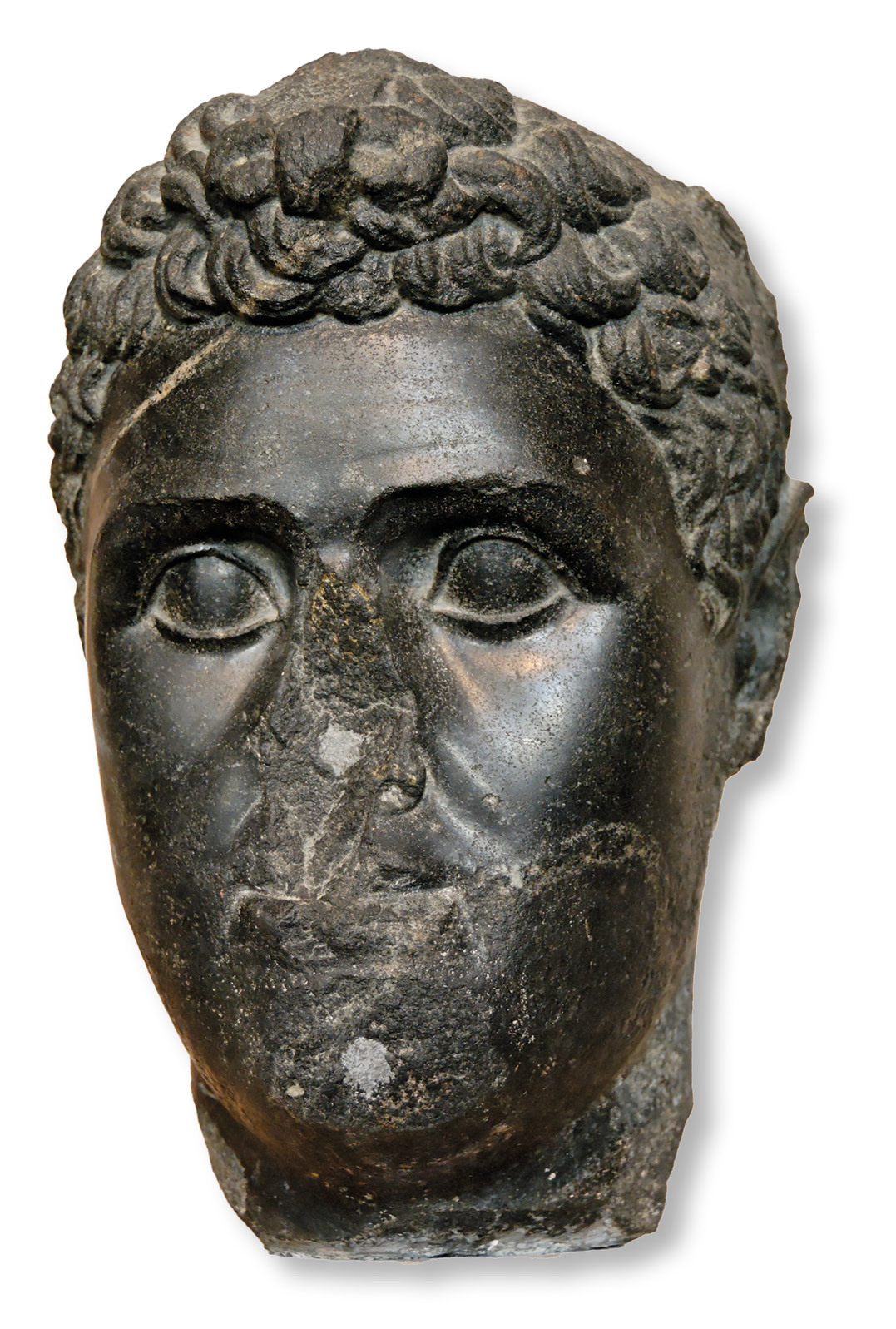
Curiously, Cleopatra Berenice is absent from many inscriptions and documents where we might expect to find her. Four Greek inscriptions from the Fayum, for instance, which record donations and dedications made on behalf of the king to the crocodile deity Sobek in the 90s BC, fail to mention her at all. This is a stark departure from the regular inclusion of royal women in Greek inscriptions from the reigns of Ptolemy VI and ‘Potbelly’ (Ptolemy VIII), and even from Cleopatra III’s co-regencies with her two sons. Why was Cleopatra Berenice overlooked in these documents? Was Ptolemy X trying to marginalise the public image of his popular wife? Perhaps, although sadly the epigraphic sample is too small to be sure, but Ptolemy X seemed to have had the remarkable ability to alienate nearly all the constituent groups of his kingdom. His profound unpopularity among the populace of Alexandria, for instance, can be juxtaposed against the city’s deeply held affection for Cleopatra Berenice, a detail even mentioned by Cicero in his (now-fragmentary) work De rege Alexandrino: he notes that she was ‘dear to her people and well-established in their affections.’ Such reports fuel the inkling that Cleopatra Berenice was more popular than the king, despite his efforts to ostracise her.
Ptolemy X had become so hated by his own military that, during the period of unrest in Upper Egypt, he was forced to bring in foreign mercenary soldiers to quell the rebellion. This proved to be a costly decision. In order to pay these troops, Ptolemy stole Alexander the Great’s golden coffin, had it melted down, and turned it into gold coins. On learning of this violation against the founder of the city, the Alexandrian mob rioted through the streets, aiming to lynch the king. Ptolemy, Cleopatra Berenice, and their children fled the city and sailed to Myra in Asia Minor, where the king attempted to assemble enough naval and ground forces under his banner to take control of Cyprus – perhaps, he hoped, with the financial support of the Romans. On Cyprus, Ptolemy allegedly drew up a will that bequeathed his kingdom to Rome as collateral for a loan. Late in the summer of 88 BC, the small fleet of ships he had managed to pull together from Rome’s financial aid met with the larger naval squadrons sent by Egypt off the coast of Cyprus where, in the short sea battle that ensued, Ptolemy X lost his life, drowned in the ocean.

The return of Chickpea
With the death of Ptolemy X, his elder brother, the exiled Ptolemy IX – ‘Chickpea’ – returned to Alexandria to take the throne. The widowed queen Cleopatra Berenice also went back to Alexandria in the summer of 88 BC, with her one surviving daughter (the other child, we must presume, had died during the period of exile). She settled into the palace alongside her father, Chickpea, and it seems that they developed a close relationship: she had been with him throughout the first period of his reign, silently observing how her grandmother Cleopatra III had bullied him, and she had seen her father flee for his life in the post-war period when he had been replaced by her uncle-husband Ptolemy X. Although not a co-regent, she nevertheless had a prominent ritual role to play alongside her father, and he relied on her many capabilities to steer him through the choppy waters of state politics.

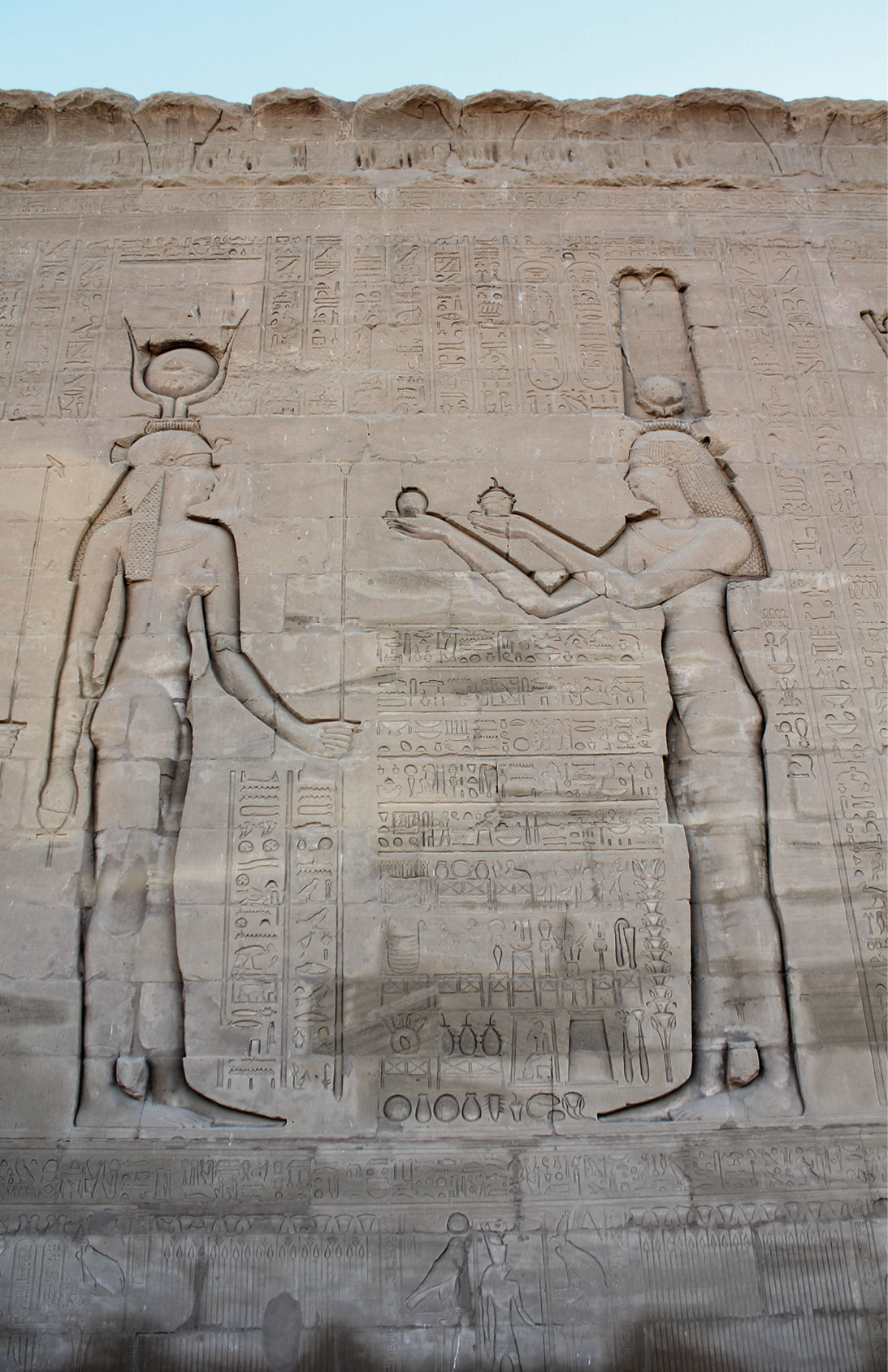
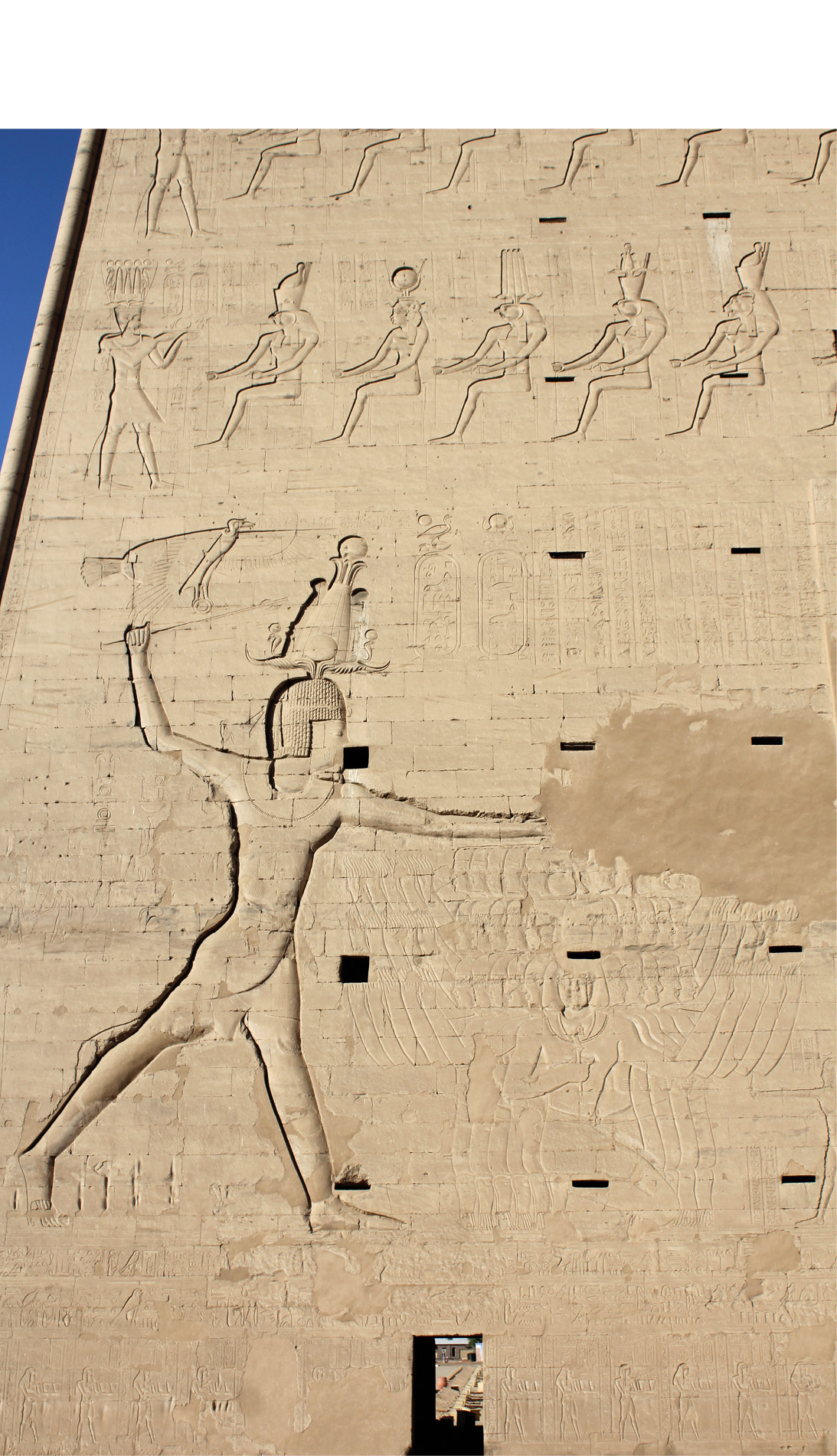
In August 81 BC, Cleopatra Berenice was appointed as Chickpea’s co-ruler for the last months of his reign. In late December 81 BC, Chickpea died at the age of 62. His two sons by Cleopatra IV were far away from Egypt in the custody of the Romans, and so it was Cleopatra V Berenice III who ascended the throne as a sole female-pharaoh, the first time a woman had gained rulership this way in the history of the dynasty. She was accordingly incorporated into the royal cult as the Father-loving Goddess, while her Egyptian titles praised her as the Great Ruler, the King’s Wife, the King’s Sister who is Beloved of Ra, the Noblewoman, Mistress of Two Lands, and the Female Ruler. Her most profuse set of royal titles are to be found at the temple of Edfu, where she contributed much time and expense to the building programme. The rear wall of the temple is decorated with a 20-foot-high image of the queen proffering nu-jars to Horus. She is shown wearing traditional pharaonic dress, including the towering horned and plumed crown of Hathor, perhaps in reference to her dynastic namesakes Berenice II and Cleopatra III, who in their time had presented themselves as the ‘new Hathor’.
Murder and bloodshed
Cleopatra V Berenice III’s brief period of independent rule (March-August 80 BC) was brought to an abrupt halt when the Romans interfered in dynastic policy at the instigation of the Alexandrian mob who, despite their genuine affection for Cleopatra Berenice, felt unnerved by the presence of a sole female ruler on the throne – there was no precedent for such a thing in living memory. The Ptolemies had always regarded the monarchy as a dual entity that required a male and female presence, and it was probably beyond even Cleopatra Berenice’s comprehension to rule alone as a single woman. In fact, according to Appian, the queen actively ‘wanted a man of the same lineage’ to sit on the throne beside her.

Her new consort arrived in the form of Ptolemy XI Alexander II, a son of Ptolemy X and Cleopatra Selene, who had been raised as a hostage in Rome, and knew nothing about government and Egypt’s royal traditions. Cleopatra Berenice loathed him at first sight, and the feeling was mutual. Expecting to rule under Roman protection, Ptolemy may have been shocked to find he was a very junior associate to an authoritative and experienced older woman. After 19 days of marriage, he murdered his stepmother-bride. The Alexandrian mob stormed the royal palace and, according to Appian, dragged Ptolemy XI ‘to the gymnasium and put him to death; for they too were still without fear of foreigners, either by reason of the magnitude of their own government or their inexperience as yet of external dangers’. Ptolemy XI Alexander II suffered a complete damnatio memoriae – his name was never mentioned in the hieroglyphic inscriptions, and he swiftly became a ‘non-person’.
Because Cleopatra Berenice’s life was cut short, it is impossible to know what kind of ruler she would have become, although as the first Ptolemaic queen to govern, uncontested, the whole of Egypt for any length of time, she would be an inspirational model for her immediate female successors.
The magic flute
The Egyptians set out to look for a new king. The only surviving members of the dynasty were the two sons of Chickpea – both called Ptolemy – who had been sent off to the island of Kos by their grandmother Cleopatra III in 103 BC, alongside their cousin, the now-dead Ptolemy XI. The eldest of Chickpea’s sons was, from a young age, known to all as Auletes (‘Fluter’) because of his love for, and skill at, playing the aulos or double-reed flute. He was born around 117 BC, a few years after his elder sister Cleopatra Berenice. His mother was probably Cleopatra IV, the adored sister-wife of Chickpea, who had been driven out of Egypt by Cleopatra III at the time of her divorce from the king.
Fluter was hailed as Ptolemy XII by the Egyptians, while his brother was made king of Cyprus (the first and only time that a Ptolemy was given the legal right to rule Cyprus as a separate kingdom). The reign of Ptolemy XII was reckoned directly from the end of Chickpea’s last year as king: the short sole-rule of Cleopatra V Berenice III and her even shorter co-reign with Ptolemy XI Alexander II were officially disregarded in the documentation.
The new king needed a wife. Born between 100 BC and 94 BC, Tryphaina was a more direct heir to the throne than her husband, being the daughter of Ptolemy X and Cleopatra V Berenice III. As Fluter’s niece, she was therefore highly suitable for the needs of the dynasty, and their marriage took place on 17 January 79 BC, when she was between around 14 and 20 years old.
Cleopatra VI Tryphaina
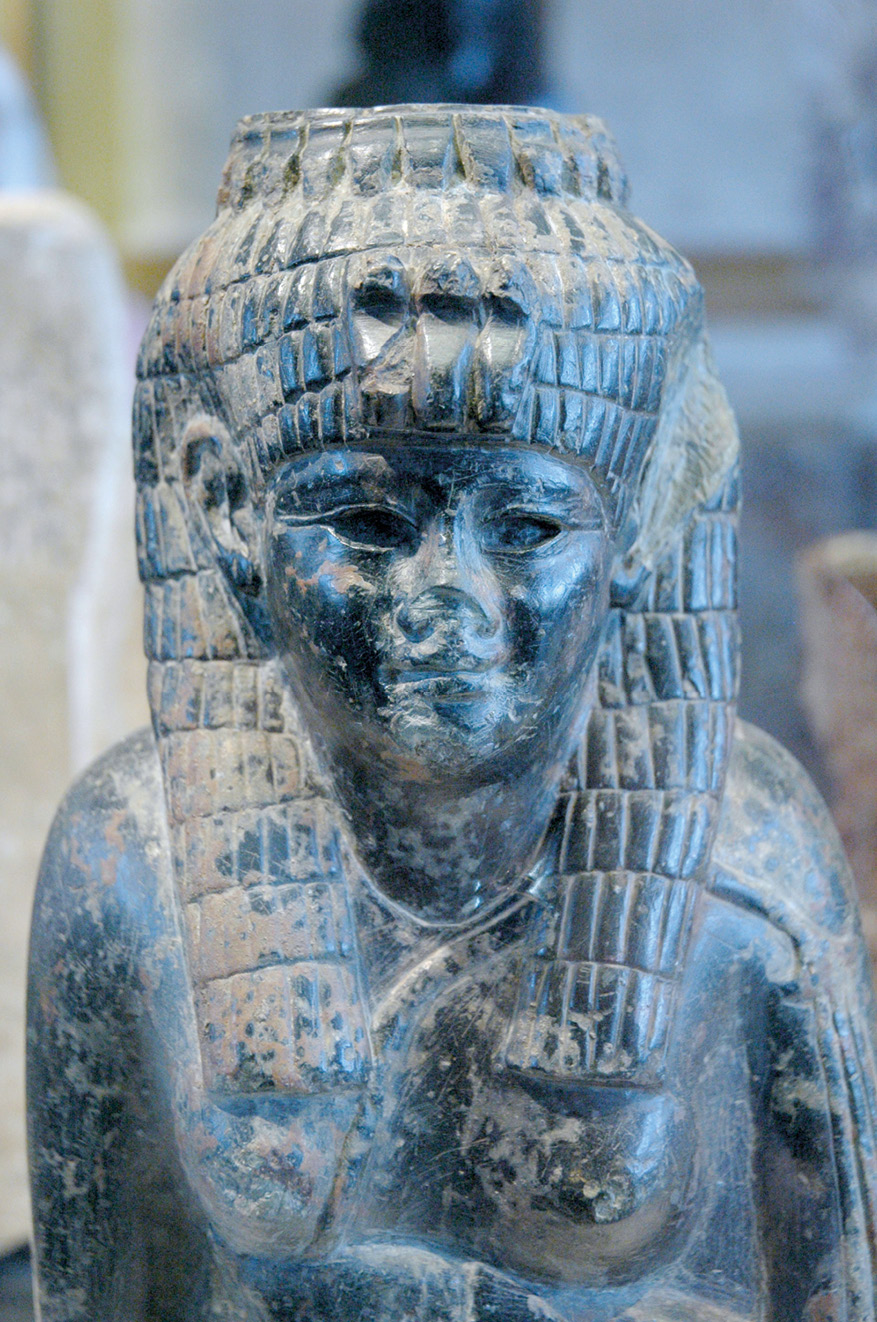
In all the surviving sources, Fluter’s sister-wife is distinguished as ‘Tryphaina’, which may have been her personal name before she became queen, but on her marriage to the new king she assumed the ‘traditional’ royal name ‘Cleopatra’ (there is no known instance where she is called ‘Tryphaina’ without also being called ‘Cleopatra’), just as her mother had done some years previously. Cleopatra VI Tryphaina was appointed as a co-ruler with Fluter, and both were crowned at a ceremony in Memphis where they were incorporated into the dynastic cult as the Father-loving and Sibling-loving Gods. At his coronation, if not before, Fluter also took the lofty title the ‘New Dionysus’ (or the ‘Young Osiris’ to his Egyptian subjects) – the only Ptolemy to give himself a cultic title at a coronation. He lived up to his Dionysian aspirations, being totally ‘corrupted by luxurious living… [and] general licentiousness,’ as Strabo observed. ‘He was not so much a man,’ wrote a contemptuous Athenaeus, ‘but more of a flute-blowing charlatan.’

Cleopatra VI Tryphaina gave birth to at least five offspring. The first was a daughter, Berenice IV, born around 79-75 BC; the second child was also a daughter, Cleopatra, who would become Egypt’s last queen as Cleopatra VII. Her birthday came in Year 12 of Ptolemy XII’s reign, probably in December 70 BC or early January 69 BC. There followed a third daughter, Arsinoë IV, in 63 BC, and finally two longed-for sons – the future Ptolemy XIII, born in 61 BC, and Ptolemy XIV, who arrived in 60 BC, shortly before the queen died, perhaps from postnatal complications. All five siblings were hailed as ‘Our Lords and Greatest Gods’ from birth, yet, curiously, each of them met with violent deaths (although at least Cleopatra VII got to choose the manner of hers).
It is also odd that debates over the parentage of Cleopatra VII have raged for decades. Some scholars have fancifully claimed that her mother was a Greek courtesan or else an Egyptian concubine, or that, at any rate, she was ‘non-Ptolemaic’. Cleopatra VII may be the most studied woman of antiquity, but the amount of misinformation that continues to be written about her is astounding. True, the name of Cleopatra’s mother is not given in any of the Classical Greek or Latin sources, but references to Cleopatra VI Tryphaina are preserved in the Egyptian evidence where, in fact, they are plentiful. An inscription at Edfu temple from 69 BC, for example, mentions her with Fluter and ‘their children’, and the date of the text chimes precisely with the arrival of Cleopatra VII into the family, so that the ‘children’ referred to in the text must equate to the first-born girls, Berenice IV and Cleopatra VII. Cleopatra VI Tryphaina’s name appears with that of her husband on the temple’s pylons, although the queen herself is not depicted; she had probably died earlier that year, and the inscription that named her was almost certainly commemorative.
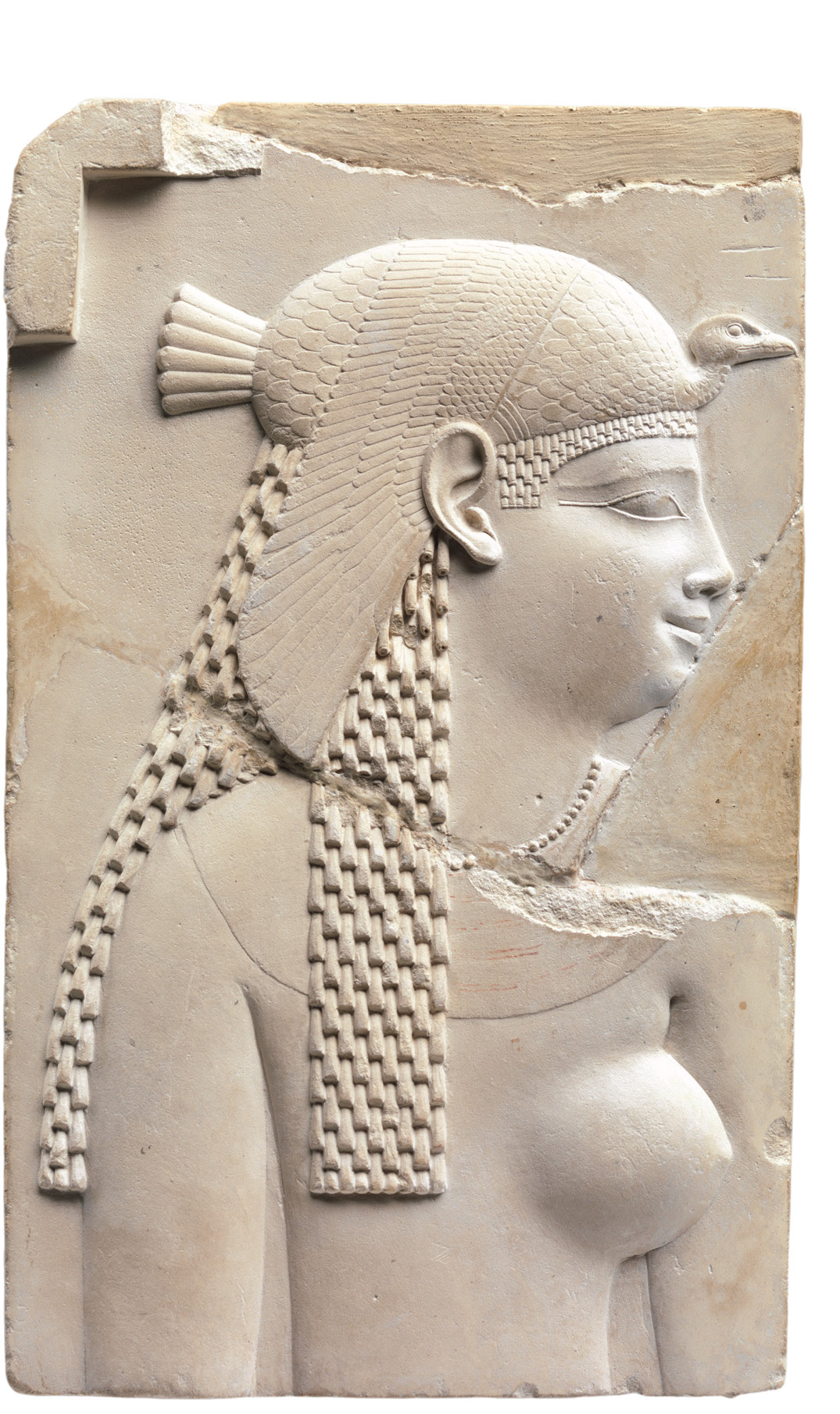
Cleopatra VI Tryphaina ostensibly made no impression on the course of events of her time, when Rome was intimidating Egypt and her husband was beleaguered by debts and political problems. And while she comes across of a woman of little authority, it is nonetheless a pity we do not know more about the mother who bore three daring and single-minded daughters. Significantly, the Romans never brought a charge of illegitimacy against Cleopatra VII or her four siblings, a detail which can only be explained by the fact that Rome saw them all as the legitimate offspring of Fluter and Cleopatra VI Tryphaina. If Cleopatra VII had been a bastard child of Fluter, it is inconceivable that the Roman propagandists would not have seized on that fact in the ensuing character-assassination of the queen undertaken immediately after her death.
The legacy of the Cleopatras
The life and reign of Cleopatra VII, the final Cleopatra, has been so studied and celebrated that I will not go into it here, but I do want to allude to her in a summation of the lives of all the Cleopatras. For all the fascination that orbits around her, Cleopatra VII was not unique to the history of the Ptolemaic dynasty; in fact, she is best understood in the familial, powerfully female context that had created her. Cleopatra VII comes into her own when we understand that she was one of a long line of extraordinary ruling women – that she was one of the Cleopatras.

These women lived full and dramatic lives, on a par with the plotlines of the very best Verdi operas or the most thrilling Latin American TV soaps. Perhaps this is why the Cleopatras have not fared well in scholarship: they are simply too melodramatic. In 1899, when John Pentland Mahaffy published his massive A History of Egypt under the Ptolemaic Dynasty, he had this to say of the Cleopatras:
These ladies show the usual features ascribed to Ptolemaic princesses – great power and wealth; mutual hatred; disregard of all ties of family and affection; their dearest object, fratricide – such pictures of depravity as make any reasonable man pause and ask whether human nature had deserted these women, and the Hyrcanian tiger of the poet taken its place.
The Cleopatras’ worst crime? Being women. And, worse still, being women with genuine power to wield. Mahaffy’s conception of the Cleopatras as uncontrolled viragos was upheld by Edwyn Bevan in his 1902 history of the Seleucid dynasty. He depicts the Cleopatras as unfeeling monsters, insisting that ‘the love of power seems to have overridden natural affection’. Michael Rostovtzeff, writing in 1941, calls them ‘ambitious and cruel’, while, in a famous 1958 study of the Ptolemies, Hans Volkmann referred to the Cleopatras simply as ‘diabolical’. The historiographic tradition has attempted to make the Cleopatras either sexualised fantasies (Cleopatra VII), or to turn them into harridan wives and domineering mothers (all the others). And yet these gender stereotypes say more about the history of scholarship than about the women themselves. The mixed emotions of male commentators through time reveal, perhaps more than anything else, the deeply contested nature of female rulership.
In this series (which I began in AE 137) we have explored how Cleopatra I Syra, the brilliant, capable, and astute mother of the equally remarkable Cleopatra II, provided the blueprint for what a queen was expected to do, could do in reality, and was actually able to get away with. In turn, we saw that Cleopatra II’s own influence undoubtedly extended to her Ptolemaic daughters and, later, to her granddaughters. The warlike Cleopatra IV, for instance, is often compared in character with her mother Cleopatra III, but her inspiration was perhaps Cleopatra II who had, in her younger life, raised armies and ousted kings from their thrones. By acknowledging this kind of matriarchal legacy, we can begin to explore how princesses learned to be queens, and how cultural and personal experiences informed decisions that affected both their family and the realm. Family mattered in the world of the Hellenistic dynasts. Within the Ptolemaic house, we have noted how the Cleopatras were tightly interrelated as mothers, daughters, sisters, half-sisters, and nieces. As a family, they were hereditarily close, if not necessarily loving.
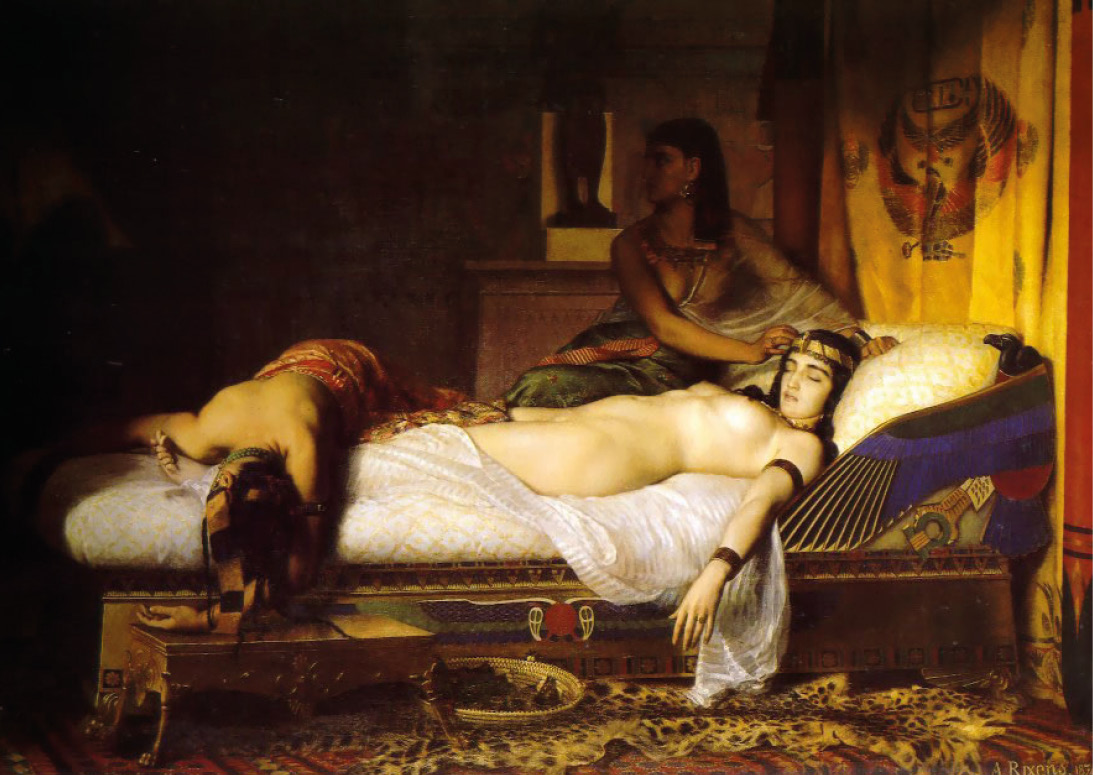
Exploring the motivations and the psychological drives that compelled each of the Cleopatras to be the women they became is not an easy job for any historian. There is a tremendous gap in the norms of behaviour and the cultural expectations of womanhood between Hellenistic Egypt and our own time. Nonetheless, we have tried to understand what motivated them, and to comprehend how they saw themselves. What is clear is that simply by their stamina and force of personality, the Cleopatras warrant their place in Egypt’s long history. They deserve to be remembered.

Lloyd Llewellyn-Jones is Professor in Ancient History in the School of History, Archaeology, and Religion at the University of Cardiff. His latest book, The Cleopatras: the forgotten queens of Egypt, is published by Wildfire in May 2024 and will be reviewed in a future issue of the magazine. You can read his previous articles in this series in issues AE137, AE138 and AE140.