inscriptions

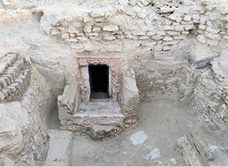
Newly discovered Qurna tomb

A Dutch team from Leiden University has discovered a previously unknown Ramesside tomb in Sheikh Abd el-Qurna. Wall inscriptions name the owner as an official called Paser. The tomb has a typical Theban layout, with an open courtyard containing a…
Ancient Egypt news in brief

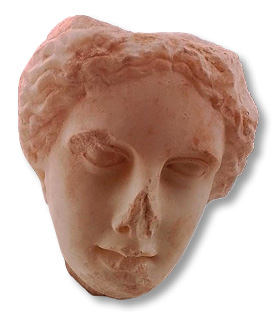
• At Ihnasya (ancient Herakleopolis Magna), an Egyptian team has uncovered the remains of a Roman basilica and a large marble head of the Greek goddess Aphrodite, along with terracotta coin moulds and an inscription of Senusret III (Twelfth Dynasty)…

Karnak developments

A residential settlement dating to the Middle Kingdom has been uncovered at Karnak by an Egyptian–French mission. The ‘city’ is in the south-east corner of the complex, dated to the reign of Nectanebo I (c.380- 362 BC), within its outer…

Tomb of a tax collector

The owner of a tomb discovered in the 1970s in el-Assasif has finally been identified by a joint Egyptian-Canadian (University of Ontario) mission. Following the first archaeological work since the discovery of the tomb, known as Kampp 23, the team…

Ramesses III in Jordan

The cartouches of an Egyptian king, discovered on a rock face in Jordan a decade ago, have now been documented, and confirmed as an inscription of Ramesses III (c.1184-1153 BC). The first such Egyptian inscription to be found in Jordan,…

Roman Chester: Excavating the CA archive

Roman Chester – Deva Victrix – is one of the unquestioned ‘great sites’ of Roman Britain. This was a major military centre from its late 1st-century AD origins through to its abandonment in the late 4th/early 5th centuries AD, and significant parts of the town survive beneath the medieval and modern city.

New Abydos pharaoh

Following the discovery of the Tomb of Senebkay at Abydos in 2014 (see ‘News’ in AE 82 and AE 89), a new mystery pharaoh has been found at the site, providing further evidence of a separate Abydos Dynasty (c.1700-1600 BC)…

Finds Tray – Nail cleaner

This object was found by a metal-detectorist in Roxby cum Risby, North Lincolnshire, and was subsequently identified by the local Finds Liaison Officer as a nail cleaner, or possibly a surgical instrument, dating to the late Roman period (c.AD 250-410).…

Military rest stop in northern Sinai

The remains of a royal fortified military rest area have been discovered at Tell Habwa (northern Sinai) by a mission from the Egyptian Ministry of Tourism and Antiquities. The team found the remains of a mud-brick building near the beginning…

Inscribed Roman projectile

What is it?  This almond-shaped lead object is a type of Roman projectile known as a glans inscripta (‘inscribed bullet’). Measuring 4.5cm by 2cm by 1.7cm and weighing 71g, it has a dent at one end, probably  the result of…

The power of mud bricks

Ancient bricks inscribed with the names of Mesopotamian kings are offering an important opportunity to identify variations in the Earth’s magnetic field thousands of years ago.

Ae140news 1c

Meretneith’s wine

New evidence found at Umm el Qa‘ab (‘Mother of Pots’) in Abydos has shed light on the importance of the First Dynasty queen Meretneith (or Merneith), and casts doubt on the theory of ritual human sacrifice as part of royal…