Subscribe now for full access and no adverts
Funding for Devon Roman villa
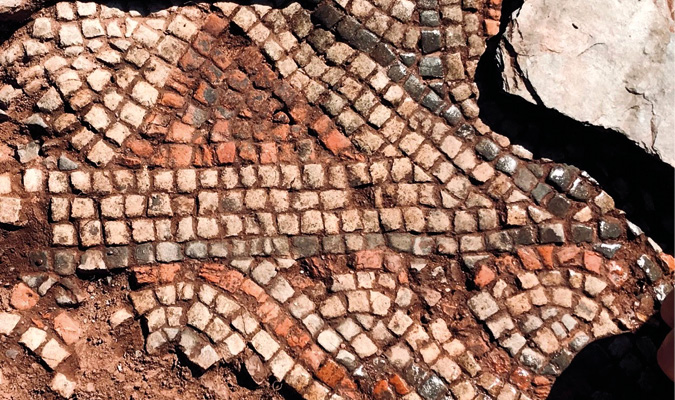
The SHARE project (Saving Halberton’s Ancient Roman Environment), which is being led by archaeologists from the University of Exeter in partnership with Devon County Council, Tiverton Archaeology Group, and the Sampford Peverell Society, has been awarded a grant from the National Lottery Heritage Fund to excavate a Roman villa at Halberton in Devon – a rare site-type in this region. It is believed that the villa contains several mosaics, which would be the most westerly examples found in Britain.
Dr Susan Greaney, who is leading the project, said: ‘This Roman villa, and its surrounding working areas, is an important site for understanding the “Romanisation” of Devon. Very few have been found in the county – this is just the fifth – so it’s important to record the details of the complex and recover the mosaics before they are inevitably damaged or lost as a result of the farming of the land.’
Evidence of Neolithic trade found at Crarae Garden
Excavations in front of the chambered cairn at Crarae Garden in Argyll, carried out by the National Trust for Scotland, have uncovered a range of Neolithic artefacts including quartz flakes, burnt and unburnt flint, and two pieces of Arran pitchstone, attesting to possible trade with the Isle of Arran, which is located 60km (40 miles) to the south.
Alice Connelly, Archaeology Trainee at the National Trust for Scotland, said: ‘The pitchstone fragments related to Arran show the interconnectedness of these Neolithic communities, and it is a privilege to be a part of piecing their story back together again.’
Heritage and health
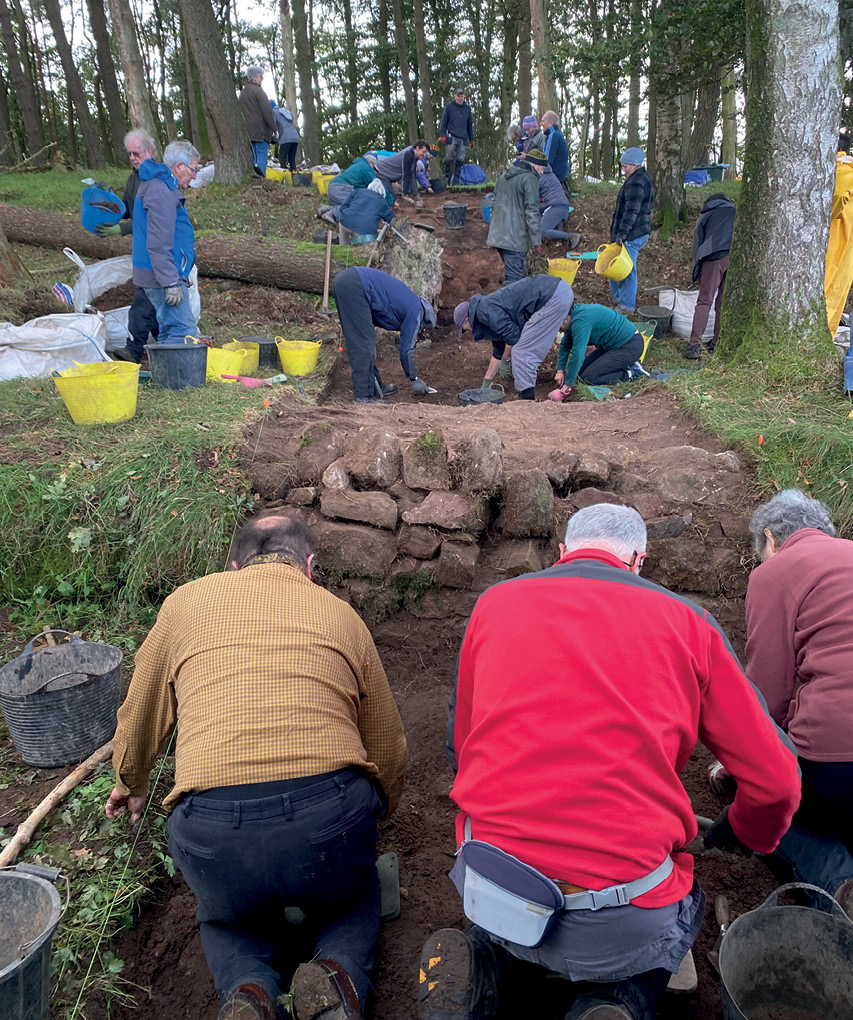
A new research report – commissioned by the Our Past, Our Future team, hosted by Historic Environment Scotland (HES), and carried out by Make Your Mark with the support of Volunteer Scotland – has shown that volunteering in the heritage sector increases resilience and well-being. This is the first data-led report on volunteering in Scotland since 2016, and it stresses the sector’s importance, despite underfunding and understaffing leading to fewer volunteering positions being available.
Dr Simon Gilmour, Director of the Society of Antiquaries of Scotland, who host the Make Your Mark campaign, said: ‘This research shows just how much heritage volunteering contributes to people’s well-being and skills, but it’s clear that not everyone has equal access to those benefits. To truly reflect Scotland’s communities, we need to make volunteering more inclusive, flexible, and welcoming to all. Volunteers are at the heart of the heritage sector, but they need investment and support to thrive.’
Text: Kathryn Krakowka / Photo: AC Archaeology Ltd