
Subscribe now for full access and no adverts
During the 1st millennium AD, across Europe, power and prestige were expressed in two portable materials: silver and gold. These precious metals underpinned the emergence of early medieval kingdoms by providing the raw materials for objects that were used to create, contest, and reflect status within and between societies. Today, they also provide a key source of evidence for understanding reactions to the political vacuum created by the disintegration of the Roman Empire.
Silver from this transitional period has formed the focus of 15 years of research at National Museums Scotland, working with the Leibniz-Zentrum für Archäologie in Germany to establish an international research network investigating regional pictures of silver use across northern Europe. Now a new volume, Silver beyond Empire (see ‘Further reading’), draws these contributions together to provide the first comparative, international, and cross-disciplinary study of this powerful and valuable material during a pivotal period in Europe’s history.
The roots of this project lie in the special status of silver in Scotland. While parts of temperate Europe favoured gold, silver was the most important precious metal in northern Britain for more than 700 years (c.AD 200-900). It was introduced to Scotland by Rome via subsidies, military pay, diplomacy, and loot, first as denarii and later as hacksilver, and rapidly became a vital means of expressing power and prestige in the lands beyond the Roman frontier. Indeed, silver’s imperial connotations may have been a key part of its attraction.

Shining insights
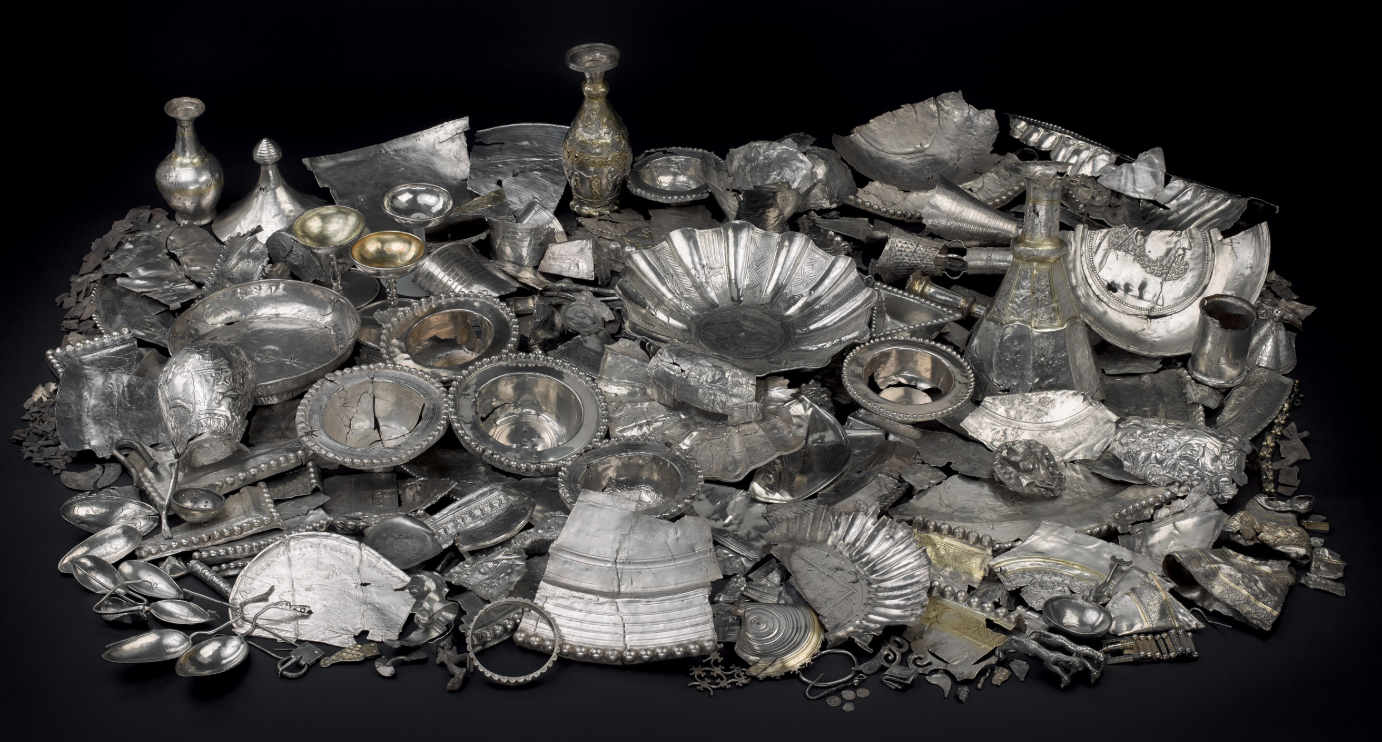
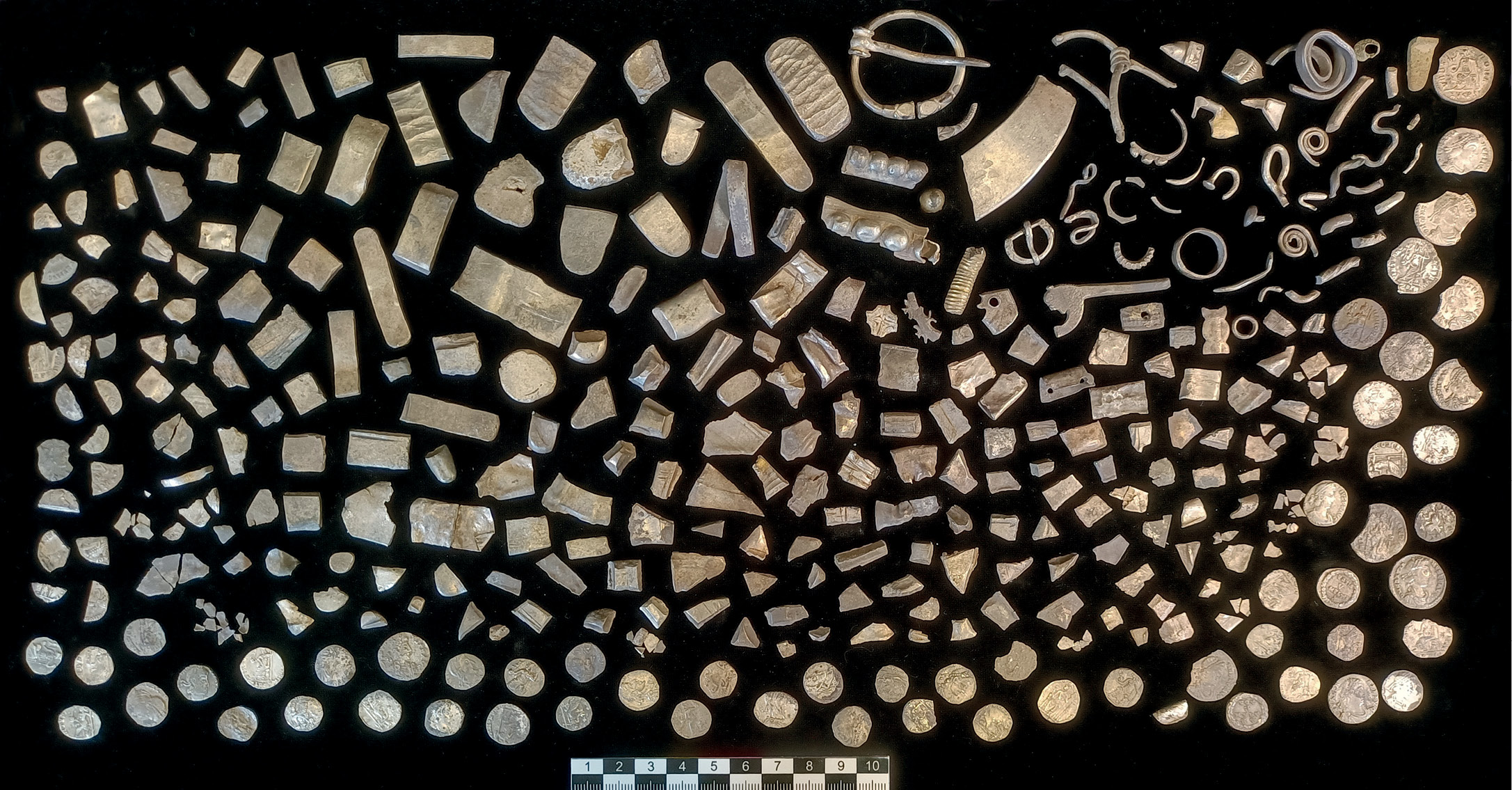
The origins of the ‘Silver beyond Empire’ project lie in three fascinating Scottish silver hoards discovered at Traprain Law (East Lothian; see CA 283 and CA 393), Norrie’s Law (Fife), and Gaulcross (Aberdeenshire). Found in 1919, the late Roman hacksilver hoard from Traprain Law is the largest such treasure known from anywhere within or beyond the Empire, comprising 327 pieces from some 120 late Roman vessels and other items, together weighing a staggering 23kg (50.7lbs). While, at the time of its discovery, it was suggested that the hoard could represent plundered loot, it is now clear that the vessels were hacked into standard Roman weights of bullion within the Empire and sent north of the frontier over an extended period of time as military payments and diplomatic gifts. This material was accumulated at a local power centre in southern Scotland, and ultimately deposited around the mid-5th century.
Although impressive in its own right, the Traprain Treasure is only part of a bigger picture of geographical variation in silver supply across and beyond the late Roman world. Within the Empire there was a preference among elites for whole, unhacked silver plate, while in military areas along the frontiers ingots were more usual. In Britannia, meanwhile, quantities of silver appear as hoards of late Roman siliquae coins, a habit rarely found elsewhere. Beyond the northern frontiers, different kinds of silver were supplied: whole vessels are found in elite graves beyond the Danube and around the Black Sea, whereas in parts of north-west Europe silver objects were supplied as hacked bullion weight. Silver was only one aspect of dealing with ‘barbarians’: for much of the Continent, gold was the currency of subsidy. In this wider perspective, the situation in Britannia stands out. As access to fresh silver was cut off in the early 5th century with the end of direct Roman rule, local solutions were found to deal with dwindling supplies: the hacking of silver, the making of ingots, and the trimming or ‘clipping’ of small slivers from late Roman siliquae to augment bullion supplies, a practice almost completely restricted to Britain.
Origins and associations
As well as the Treasure itself, the wider site of Traprain Law has produced a massive silver chain and evidence for the working of silver into small objects in local styles. This is the earliest known evidence of silver being used locally in this way, and the smaller object types are found in the two other previously under-studied hacksilver hoards from Norrie’s Law and Gaulcross. Traprain Law, then, embodies a vital part of the story – the reception of politically motivated payments by groups beyond the Roman frontier, the management of that bullion resource, and its transformation into local styles of object. But this is only part of the picture. Scotland boasts a wealth of other silver dating to this late Roman to early medieval transition. Though misunderstood and wrongly dated for many years, we now know that collections of silver from Norrie’s Law and Gaulcross are the first non-Roman hacksilver hoarding recognised from north of the frontier in Britain.
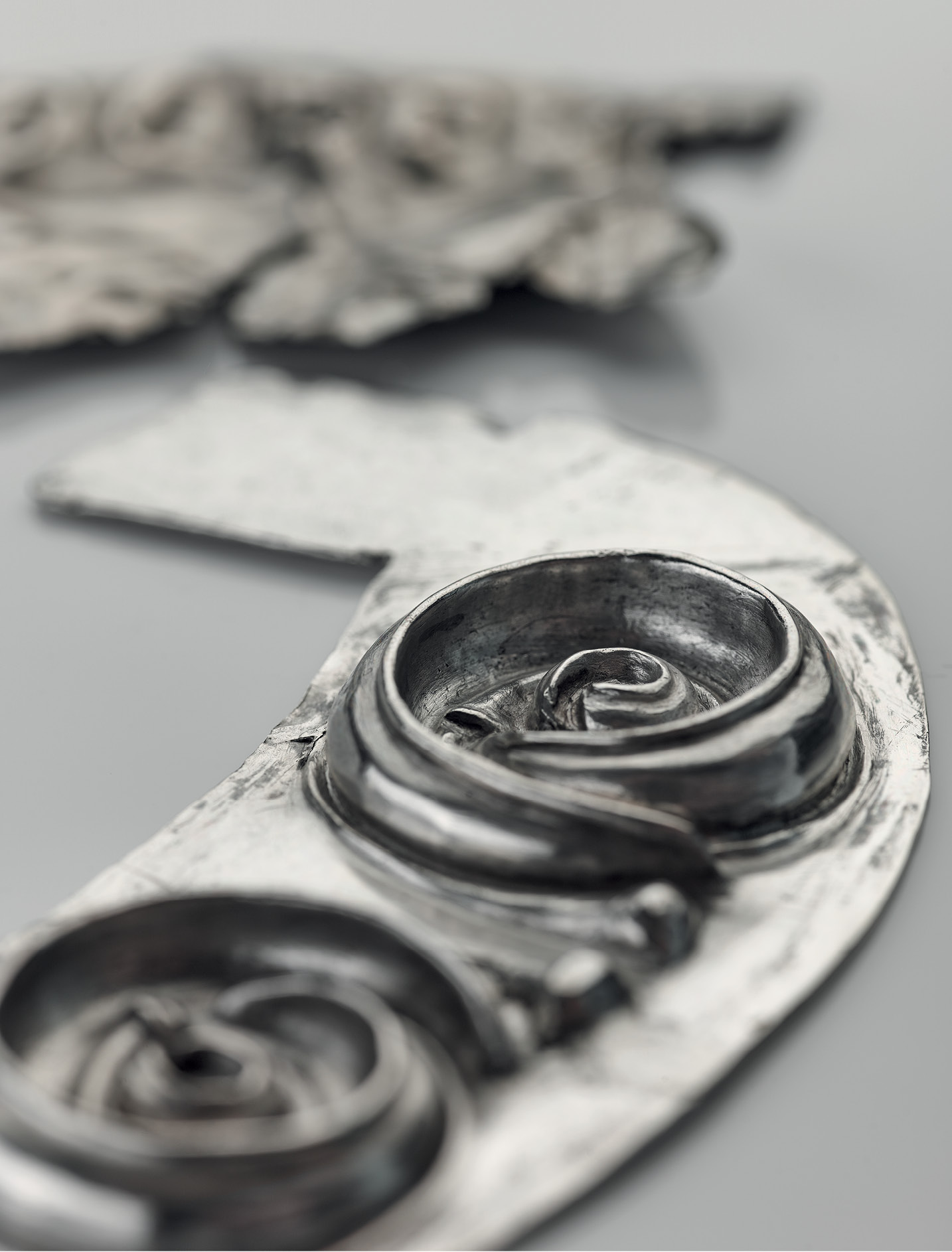
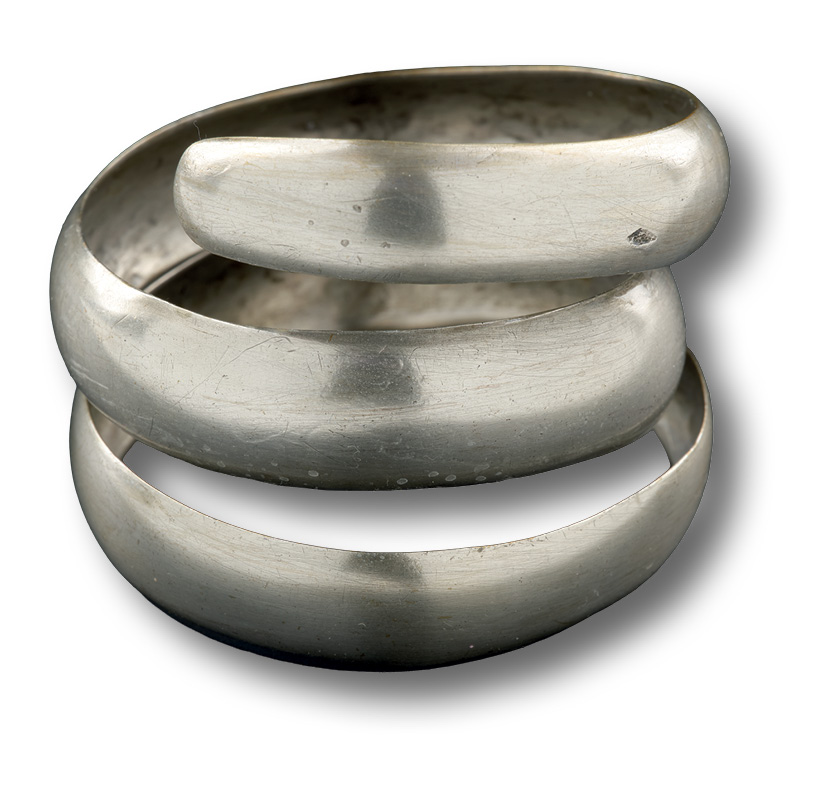
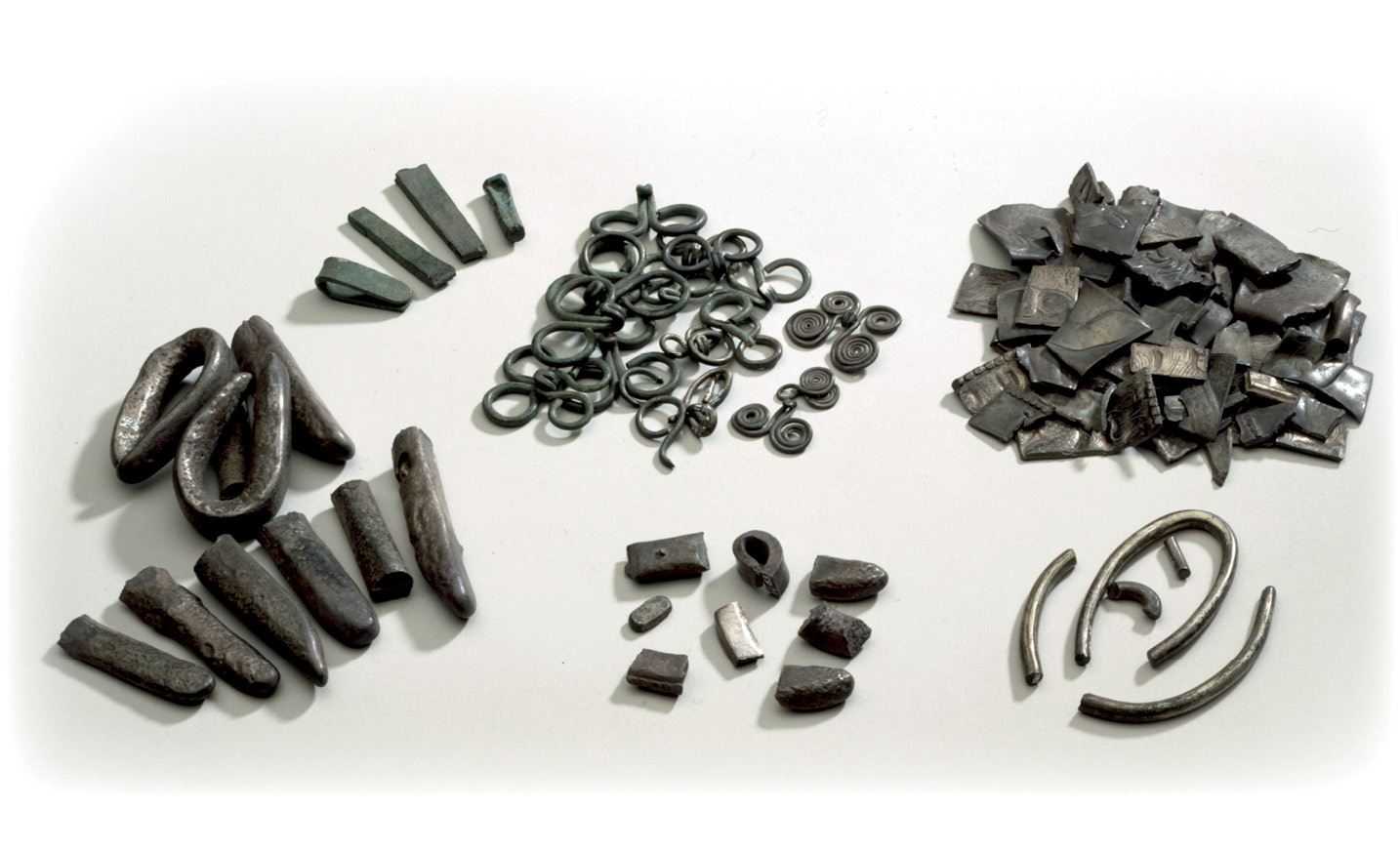
Both of these hoards were found in the 19th century and neither survives intact. Much of the silver from Norrie’s Law was melted down for bullion soon after it was discovered, while recent fieldwork at Gaulcross showed that around 80 pieces of silver remained in the ground, a discovery that radically altered the character of this collection and our understanding of the Norrie’s Law hoard. Though buried some 140 miles apart (225km), these two hoards are closely interlinked, sharing a very similar repertoire of otherwise rare or unique object types. Both include small hacked fragments of Roman silver objects alongside styles and types that are widely but thinly scattered across Britain and Ireland in the late 4th or 5th centuries. The most common find shared between the hoards was hacked parcels of spiral bracelets, which are rarely found elsewhere.


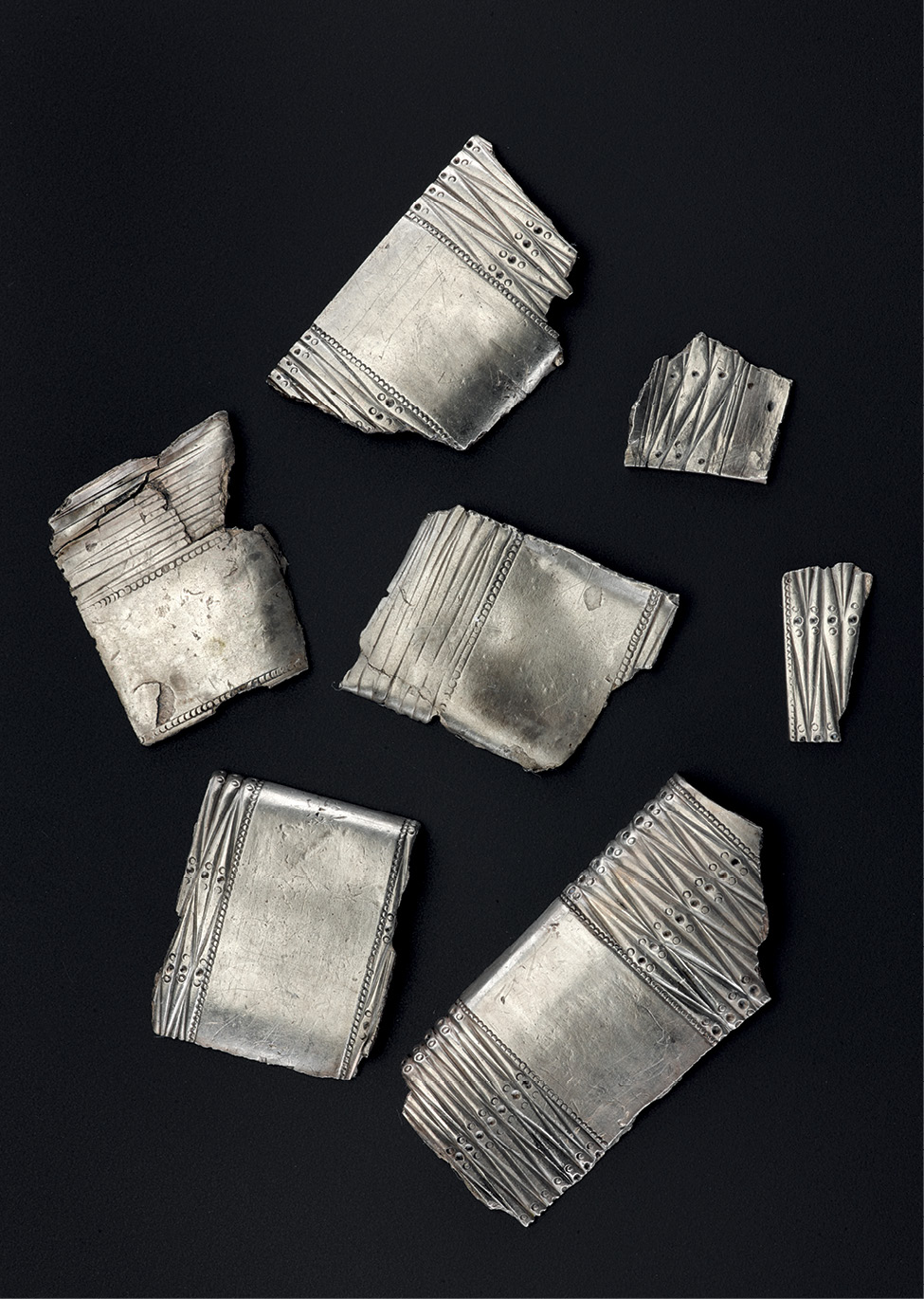
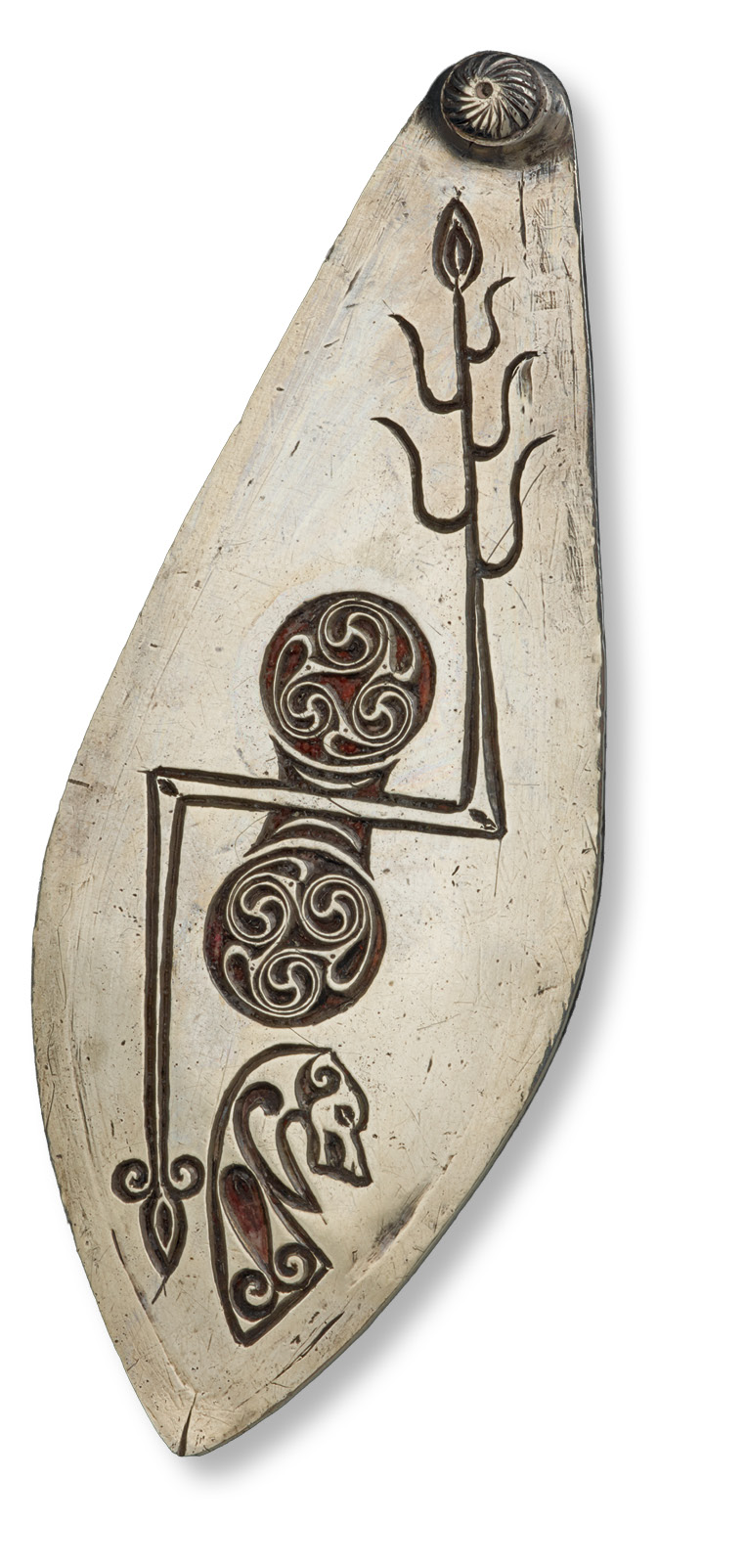
Many of these objects defy attempts to date them closely or to describe them in standard typological terms as Roman or non-Roman, suggesting a complex picture of origins and associations in 5th-century Britain. Some can be linked to a horizon in the late 4th and early 5th century when diverse copper-alloy object types, such as spiral rings and projecting-headed pins, were made in silver, often sharing motifs from a single consistent style that emerged in Britain at this time. Some may have been created within the Empire as gifts for individuals to the north, a process with parallels beyond other frontiers. There are also military items among the Norrie’s Law and Gaulcross hoards, including sword and shield mounts, decorated in the same shared style. Martial associations offer possible mechanisms for the widespread distribution across and beyond Britannia of many of the objects represented within these two hoards, as we will discuss below.

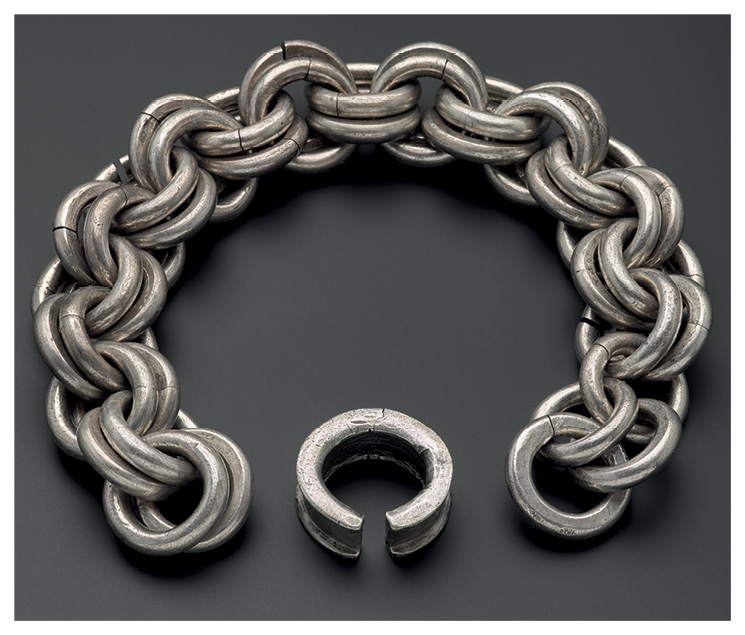
Other early silver from Scotland confirms this picture of connections across the frontier. A hoard from Tummel Bridge in Perthshire combines silver bullion with a 5th-century hanging bowl, a type found across Britain, with surviving examples mostly in the south and manufacturing evidence from Scotland. A series of 11 massive silver neck chains (of which nine survive today), unique to Scotland, may have been inspired by the wider tradition of late Roman military ornaments or earlier British forms of neck ornament. The neck diameter, where it can be reconstructed, is small, suggesting they were worn by adolescents and/or women, which might reflect important social processes such as gift exchange, marriage alliance, or fosterage. The heaviest of these chains weighs just under 3kg (6.6lbs) – weight spoke volumes in 5th-century northern Britain.
Among all this material we can see evidence of an interest in Roman units of weight extending well beyond Hadrian’s Wall, as well as hints of a shift towards a lighter ounce (akin to the Migration Period unit proposed elsewhere in Europe) that may have emerged in 4th-century Britannia. As for how the metal itself was worked, scientific analysis of these hoards also demonstrates that 5th-century silver use is more complicated than a straightforward dilution of highly refined Roman plate over time, as a wide range of alloys were circulating at the same time. While the treatment of the Traprain Law silver – with its hyper-pure silver alloys, hacked initially into Roman weights – feels akin to a diplomatic or official payment that was retained as a treasure-store on which local elites could draw, the Norrie’s Law and Gaulcross material speaks to a different but broadly contemporary system for the circulation of silver, with Roman plate fragments and object types shared across Britannia being gathered, recycled, reworked, and recirculated. These two groups of material present differing but complementary views on how silver was used in the 5th century in northern Britain.

Looking beyond hoard finds, important new evidence is emerging from recent excavations at the Craw Stane complex, Rhynie (Aberdeenshire; see CA 289) that adds another dimension to the management of silver supplies beyond the Empire. Among a rich artefactual assemblage, this high-status centre of production and trade has produced moulds for making ingots, a range of dress objects including projecting-headed pins, and unparalleled animal figurines. Silver was being cast alongside copper alloys, and a group of unusual stone metal-working vessels coated in lead-rich residues were probably used for silver-refining, the first such evidence recognised from Scotland.
Southern and Scandinavian silver
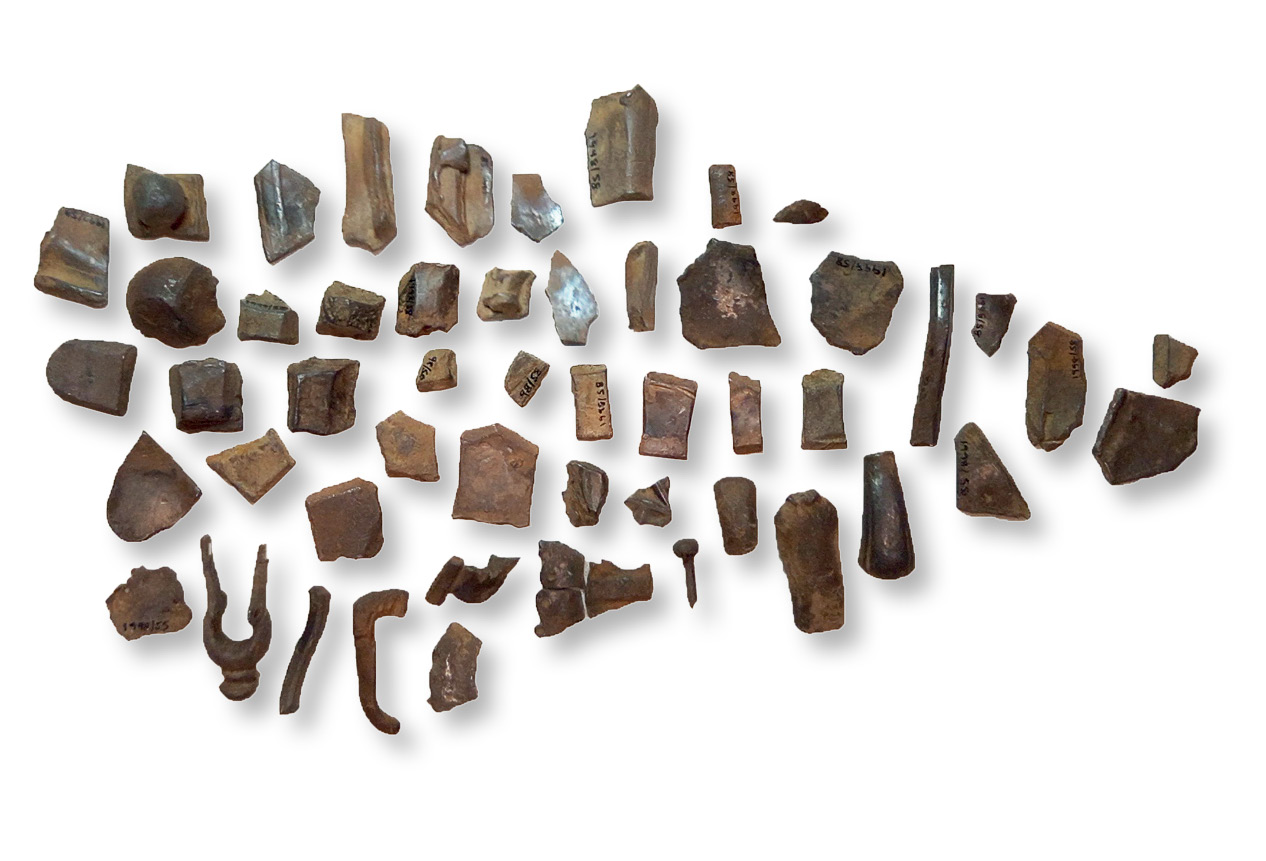
In contrast to the kilos of hacked and unhacked silver from Scotland, there are few silver objects known from within the military zone south of Hadrian’s Wall. Further south still, the silver picture is one of stark contrasts. Among a distinctive group of 5th-century metalwork found in south-eastern England and the north French coastlands, the Quoit Brooch Style offers evidence for highly judicious use of what must have been a very limited resource, seen in repairs, curation, and the use of small amounts of metal formed into thin sheet components. These limitations to supply must have varied in space and time in southern England, however, given the sheer scale of the early 5th-century hoard from Hoxne (Suffolk; CA 136 and 248), with 23.8kg (52.5lbs) of silver and 3.7kg (8.2lbs) of gold, and the late 5th-/early 6th-century hoard from Patching (West Sussex). Patching has become well known for its extraordinary coin component, including issues from the later 5th century, but the accompanying hacksilver was ripe for fresh attention. There, a pound of hacksilver included a diverse range of fragmented objects, alongside many ingots and part-worked material, showing the management and reworking of silver resources in late 5th-century southern Britain, just as in the north.
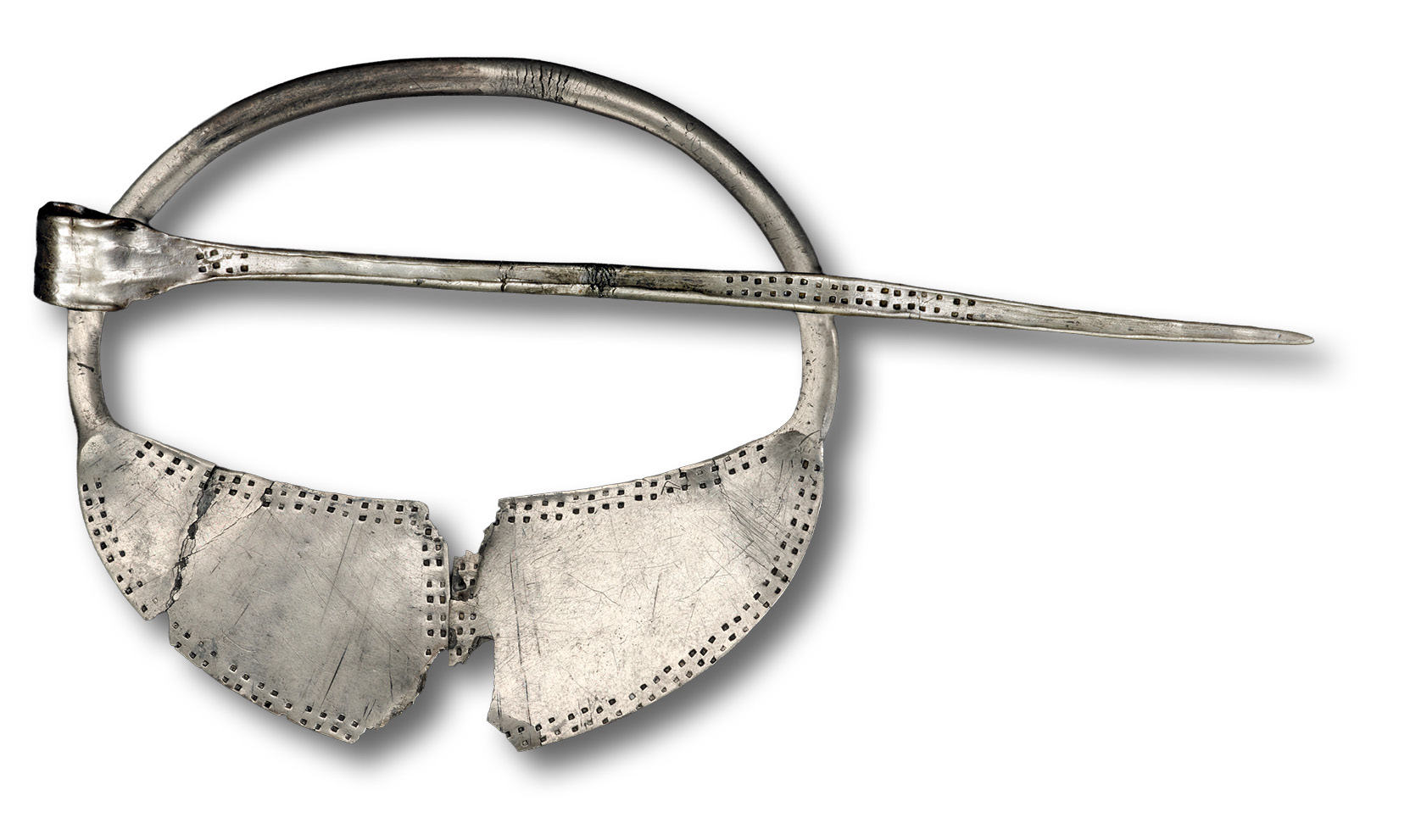
Excitingly, new evidence for the management of silver resources in the form of ingots and part-worked silver emerged during the life of the project from another part of Britain. A new hacksilver hoard from Wem (Shropshire; CA 357) includes all the stages of silver-processing, from whole and hacked objects through to ingots, worked bars, and strips that were destined to be made into objects. Recognisable Roman material is very much a residue by this stage, with tiny siliquae cut to halves and quarters as bullion ‘flakes’. Some objects in Wem offer direct links to the Scottish hacksilver hoards from Norrie’s Law and Gaulcross, including the first parallels for a type of penannular brooch hoop that was previously unique to the Scottish hoards.
This kind of evidence for the accumulation, hacking, hoarding, and deposition of silver is not unique to Britain. A series of hoards from southern Scandinavia stand out as a particularly close parallel for those from Norrie’s Law and Gaulcross. Around 20 hacksilver hoards are known, mainly from Denmark. They are typically a mixture of small and worn fragments of Roman hacksilver along with hacked and intact local ornaments and ingots. Two phases of hacksilver hoarding can be teased out, belonging to the earlier and later 5th century. The presence of clipped siliquae coins, a British phenomenon, suggests something more than analogy. Like Scotland, the Danish finds show a thriving local tradition of silver use for ornaments. Here, too, there are suggestions of a lighter uncial weight system, particularly in the treatment of ingots. As with Scotland, there is no evidence to suggest that silver, either as denarii or hacked bullion, was used as an economic currency. Instead, in southern Scandinavia its use was focused on social differentiation, with the horizon of hacksilver hoarding linked to the emergence of massive precious metalwork in the local Nydam style.
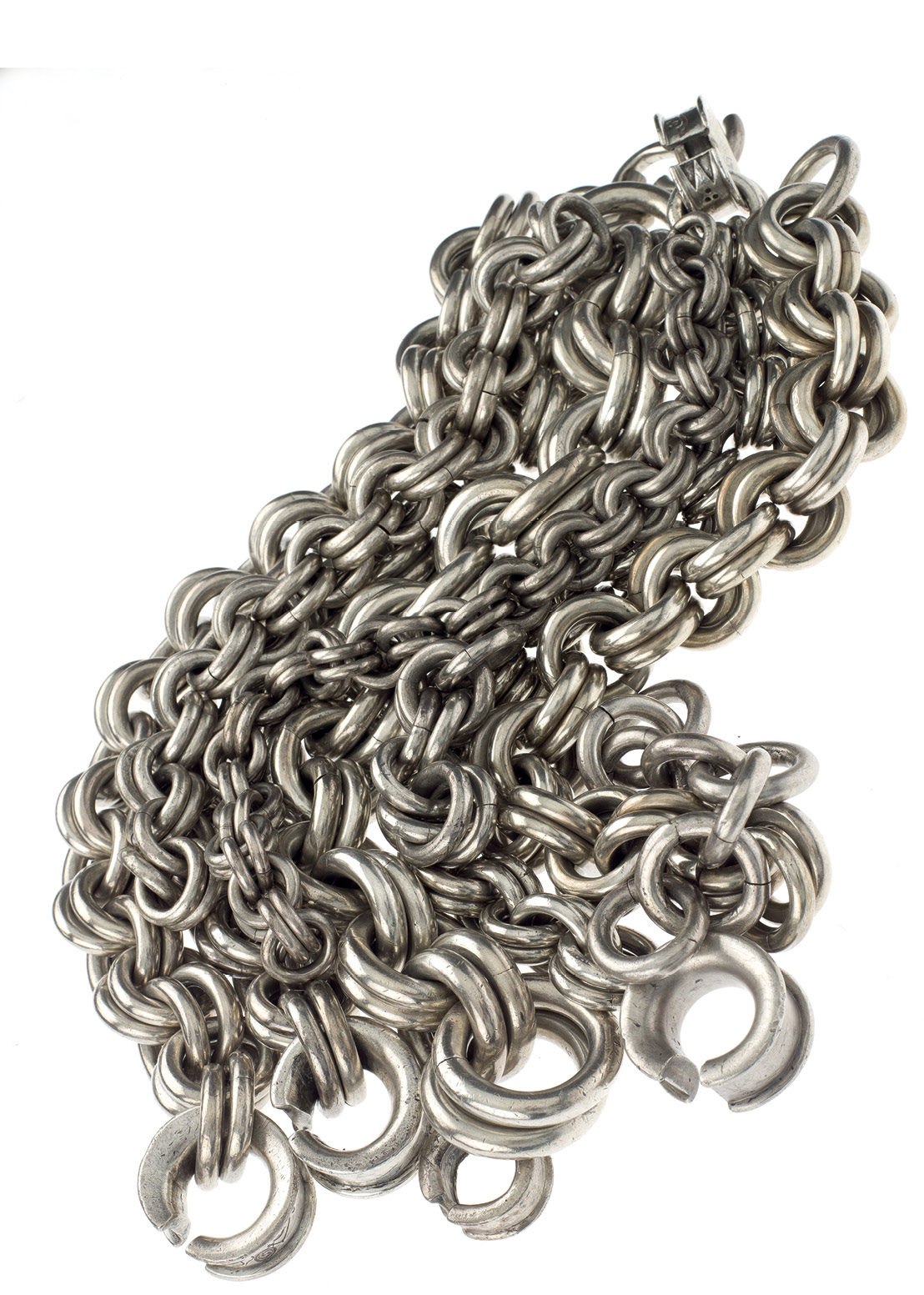
Above & below: Nine massive silver chains survive from Scotland; the inset example, from Parkhill, Aberdeenshire, shows how they would have looked when worn. Despite their impressively chunky design, their diameters are small, suggesting young or female owners.
Regional differences
As well as similarities, though, there are differences in this silver evidence. There are not the same suggestions of military connections in the southern Scandinavian material as are apparent in British finds. The contexts of deposition are also interestingly different, often associated with either buildings in settlements or uncultivated wetland in Denmark, but with older prehistoric landscapes in Scotland.
While there are threads that link the treatment of silver beyond the frontiers in southern Scandinavia and Scotland, there are clear regional differences between parts of Europe, relating both to access to silver and its use and deposition or, as in the case of Merovingian Gaul, the inheritance from the Roman Empire and the role of silver in the emergence of new kingdoms. This theme is echoed elsewhere, including, spectacularly, in the varying trajectories of Roman denarii coinage across Europe. In Scotland, denarii received as subsidies were deposited in the ground en masse, with no evidence for significant circulation. In contrast, in large areas of Continental barbaricum, denarii had very extended lives, circulating in quantity into the 5th century. Silver beyond Empire profiles a wealth of hoards from central and eastern Europe, demonstrating the extent to which imperial silver coinage continued to circulate extensively among a social elite and was brought back into the Empire as Germanic groups moved across the declining frontier in various roles. High-quality ‘barbarian’ imitations of denarii show a local need for such coins and extensive networks of contacts that stretch from Ukraine to Scandinavia.

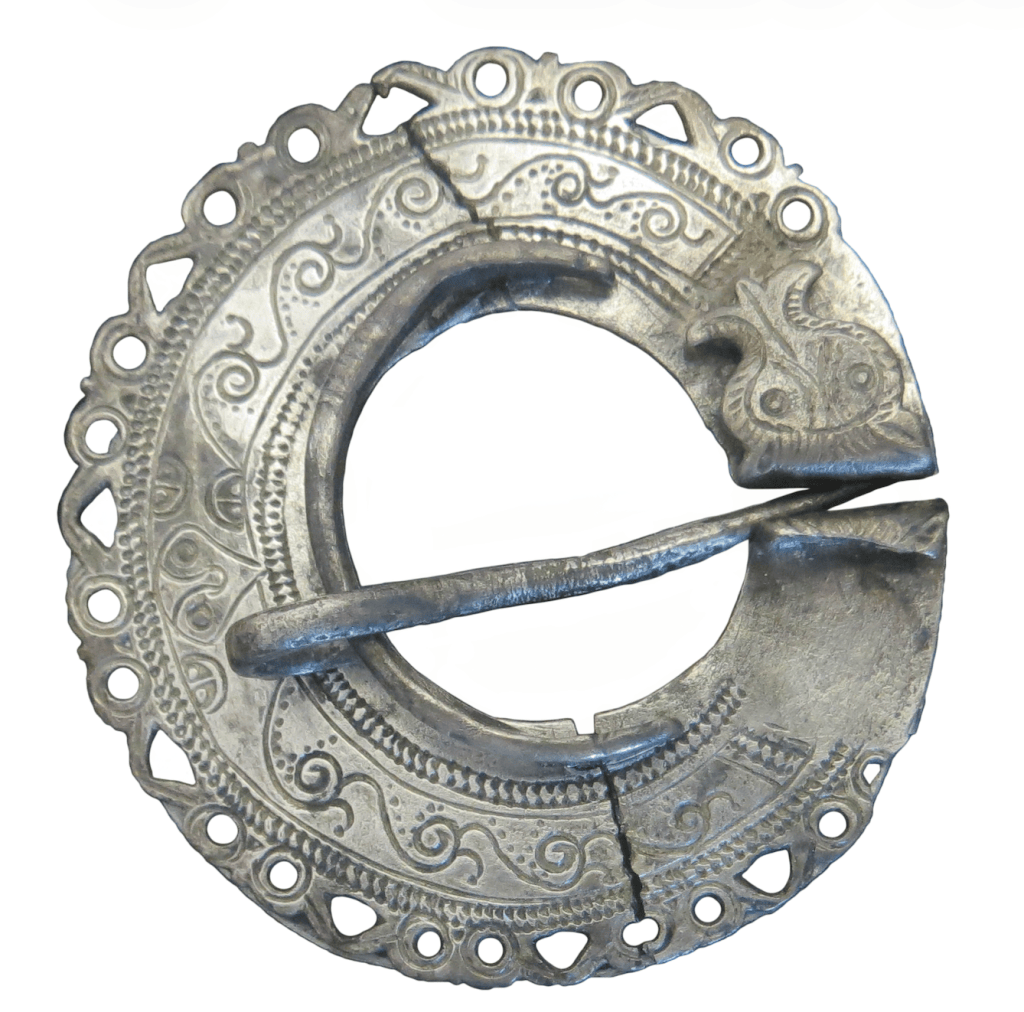
Among the Scottish material, there is a clear emphasis on dress objects and adornment: massive double-link chains for the neck, finger-rings, spiral bracelets, projecting-headed pins, and penannular brooches. Much of this suite of jewellery and dress accessories finds local pedigrees in concept or in detail from the pre-Roman and early Roman Iron Age, though not always a continuous tradition. The most common type shared between the hacksilver parcels in the Norrie’s Law and Gaulcross hoards are silver spiral bracelets, although only one is complete. They are extremely rare outside these two collections, but these Scottish patterns in silver objects reflect wider contemporary trends of adornment in precious metals. Torcs, armlets, and finger-rings became widespread status symbols beyond the frontier in continental Europe, especially from the 3rd century onwards.
It is striking that this material comprises torcs and arm-rings. Torcs and armillae were standard awards for military valour in the early Empire, while late Roman and Byzantine texts and inscriptions record military honours of torcs (neck-rings) and bracchialia (wristbands). Neck-rings and arm-rings often co-occur in rich burials or hoards beyond the frontier, sometimes as paired sets. Were they a recurring means of rewarding military leaders, among them ‘barbarians’? Might the Scottish neck-rings (double-link chains) and arm-rings (the spiral bracelets) be seen in a similar way? While there is no direct connection to later periods such as the Viking Age, where silver bracelets and arm-rings were gifted by military leaders and subsequently feature in hacksilver hoards, the similarity of the phenomena suggests there may well be related social processes behind them. The devil is in the detail here: the Scottish examples are in silver, not gold, and are not paralleled in other areas, whereas other recognised military awards such as medallions were widespread across barbaricum from Ireland to eastern Europe. There are examples of other Roman-made types produced for groups beyond the frontier with a similarly tight geographical focus, suggesting a shift through time to more regionalised and targeted patterns of reward. Might some of the Scottish material be part of similar processes?

Contact and context
One must be wary of the seductive power of good ideas. There is a case to answer, but it is unlikely to be the full story. The Scottish neck-rings do not seem to be designed for adult males. The presence of Pictish symbols on a plaque and two chains can make sense in terms of the inspiration of Pictish symbols from contact with the literate Empire, but it also removes a lot of local agency if we argue all these prestige items came from Rome. We cannot demonstrate dates as early as the 4th century for all these items, while some have argued that Pictish symbols actively reject alphabetic literacy and romanitas. There are plentiful parallels on the Continent for Roman weight standards continuing in use into the early medieval period, while the evidence from Rhynie has shown local skills in reprocessing (and thus purifying) silver.
This is unlikely to be an either/or situation. With the bracelets, for instance, the diversity of forms and alloys indicates a range of different sources and traditions, but that does not preclude some coming from the Roman world, whether as stimulus or as response to a local habit; there was no straight line of copying Roman prestige goods, but rather they were transformed into locally suitable forms. In the same way, the large silver pins of Norrie’s Law and Gaulcross are clearly responding to an existing tradition, with both finds and production evidence widespread across Scotland. Arm-rings, however, were handed out from eastern Europe to Ireland, to very different societies, and here we may see a tailoring for local tastes in object type and material.
Ultimately, contextualising the Scottish silver evidence suggests both similarities and differences to other areas beyond the northern frontier. In the earlier 4th century, Scotland and Ireland both received some ‘generic handouts’ of gold that occurred across barbaricum, but by the later 4th century this was much more regionally targeted. The lack of a direct connection with what was happening in other areas is no surprise, for there is little evidence of sustained direct contacts between ‘barbarian’ groups across the North Sea. In the course of their career, soldiers could have served on both the British and the German frontier, but the distribution of distinctive late Roman belt-fittings suggests the field army in Britain was mostly in the southern half of the diocese.
In contrast, the wide spread of habits such as chip-carved belt sets across the Rhine and Danube frontiers and other evidence of wide-ranging connections within the Germanic world show an intensely connected zone. For the communities in eastern Scotland that we study through silver, their links were to other parts of modern Scotland, south into Britannia, and across the seaways to Ireland, a much more feasible sea-route than the northern North Sea at this time, and one which clearly saw sustained connections in silver and much else.
In sum, these connections with late Roman military awards and pay-offs provide a striking potential context for much of this silver, and one meriting further study. From our perspective, bringing Scotland into a broad comparative framework with the rest of Europe suggests that these unprepossessing fragments of hacked silver have opened new ways of understanding the shift out of a world dominated by Empire to a world that was emerging beyond Empire, both spatially and chronologically. Late Roman and early medieval have too often been considered as two separate periods, but this one crucial material, silver, provides connections, comparisons, and contrasts across this transitional time.

Further reading:
Alice Blackwell, Fraser Hunter, Andreas Rau, and Martin Goldberg (eds) Silver beyond Empire is published by Sidestone Press and available to order at http://www.sidestone.com. It is free to read online at doi.org/10.59641/k1n7h8i9j0.
All images: National Museums Scotland, unless otherwise stated