
The pectoral of Ramesses II, Musée du Louvre
Campbell Price describes a New Kingdom pectoral made of electrum and glass.

Campbell Price describes a New Kingdom pectoral made of electrum and glass.
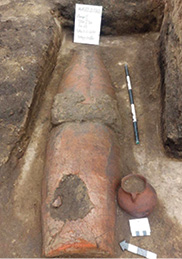
An Egyptian team excavating the multi-period cemetery at Tell Kom Aziza (Beheira) in the Delta has uncovered a section dating to the Graeco-Roman Period with diverse human funerary practices. Burials ranged from simple pits and mud-brick-lined tombs, to decorated gypsum…

A recently discovered high-status burial offers rare insights into ancient funerary practices and Colchester’s late Roman past. Carly Hilts spoke to Laura Pooley at a new exhibition about the finds.
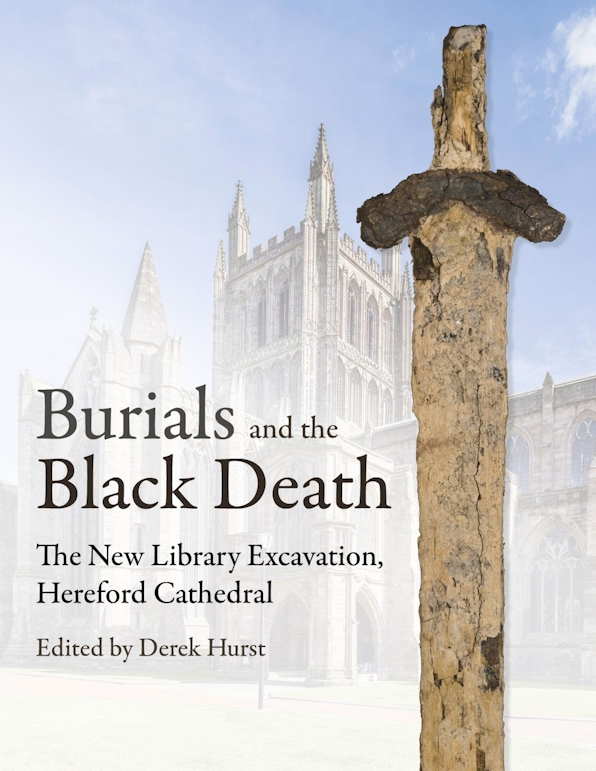
Excavation reports often have a long gestation, and the publication of the City of Hereford Archaeology Unit’s 1993 excavations on the site of Hereford Cathedral’s new Mappa Mundi museum has been eagerly awaited. Yet any frustration at the delay quickly…

Highdown Hill is an extraordinary place. It stands detached from the great chalk spine of the South Downs, dominating the coastal plain across to the English Channel. The Bronze Age saw the hill crowned with an enclosure, perhaps a redistributive…

The diverse grave goods excavated at a 6th-century cemetery in Nottinghamshire testify to a wealthy community with wide-ranging trade links – but, as well as new objects and materials, did these networks help to spread deadly diseases, and might this explain the unusually high number of multiple burials identified at Broughton Lodge? Carly Hilts visited a new exhibition about the site and spoke to Ann Inscker, Professor Chris Loveluck, and Dr Clare Pickersgill to learn more.

Excavations along the A66 in Cumbria are revealing how this area formed a vital corridor for transport, travel, and trade over millennia. After an initial evaluation in 2022-2024 and ahead of proposed upgrades to the route, Oxford Cotswold Archaeology (OCA,…

Maiken Mosleth King explores life in Terenouthis, an important mining and trade centre that rose to prominence in the Graeco-Roman era.

There are lots of great ways to get involved with history and archaeology over the next few months, including exhibitions, lectures, and conferences exploring a wide range of subjects. If you would prefer to get your heritage fix from the comfort of your sofa, though, there is a variety of resources on offer online, too, from virtual site tours and digital offerings by museums to podcasts, TV shows, and more. Kathryn Krakowka has put together a selection of some of the options available.

Researchers from Canterbury Christ Church University have developed a novel method for visualising Roman footwear, even in cases where the leather has completely disintegrated, by using radiography on soil-blocks containing hobnails. The study was based on a Romano-British (late 3rd…

Recently published research from one of the largest cemetery excavations of its type outside London has shed vivid light on the experiences of almost 2,000 men, women, and children who lived and died in Lancashire around 200 years ago. Carly Hilts spoke to Julie Franklin to learn more.

Vampires and zombies are not just the fictional creation of 19th-century novelists, nor modern film directors and creators of computer games – John Blair’s new book, Killing the Dead, shows that there is a long history of belief in the ability of the dead to leave their graves and cause harm to the living. Making sure this cannot happen results in extraordinary burial practices, as Chris Catling reports.

To conclude my mini-series on the towns of Roman Britain, I will head to what may be the most famous Romano-British city of all: Verulamium, modern-day St Albans. With much of the city surviving, unexcavated, beneath modern-day park- and farmland, and upstanding elements visible alongside the award-winning museum that was founded by Tessa Verney Wheeler and Mortimer Wheeler in the 1930s .

Highgate Cemetery, consecrated on 20 May 1839, was created to provide a more hygienic alternative to ‘intramural’ burial (within church walls) or in overcrowded church- and chapel yards. Today, Highgate is known as one of the so-called ‘magnificent seven’ cemeteries…
French researchers using AI to analyse more than 500 intact early graves at the cemetery of Adaïma (8km south of Esna) have revealed an evolution in funerary practices that helped to shape early Egyptian statehood. The earliest First Dynasty burials…

REVIEW BY RP This volume compiles the findings of excavations carried out by Wardell Armstrong at Botchergate, a main street to the south-east of Carlisle’s city centre. There, works undertaken ahead of the construction of a new municipal building revealed…

A line of pits unearthed during excavations in Dijon contained rare examples of Iron Age individuals buried in a seated position. Hervé Laganier reveals what has been found, and how it compares to other examples of this enigmatic phenomenon.

A rare stone sarcophagus is among more than 20 Roman burials that have been uncovered by archaeologists working on a road improvement project between Wansford and Sutton. The investigation, undertaken by Headland Archaeology, revealed 15 burials within an enclosed cemetery,…

Archaeological work centred on an early medieval cemetery near Canterbury has uncovered a number of high-status graves, one of which produced an exceptionally well-preserved 6th-century sword. The weapon is being worked on by archaeologists from the University of Central Lancashire…

A large Viking Age burial ground has been discovered in Halland, western Sweden. Archaeologists Anders Kjellin and Petra Nordin tell us about their findings.

A curious composition New analysis of an inhumation burial unearthed in the 1970s at a Gallo Roman cemetery in Pommerœul, Belgium, has revealed that this ‘individual’ in fact comprises bones from at least four different Late Neolithic people, as well…

Archaeological work on the site of a Victorian workhouse and hospital has revealed the remains of almost 4,500 individuals, offering a rare opportunity to study the lives and deaths of the institution’s residents. Blackberry Hill Hospital was originally founded as…

Human remains discovered on Lindisfarne in 2022 have been identified as disturbed burials that were potentially associated with an early medieval chapel and cemetery at the island’s famous medieval monastery. The bones were initially discovered during a watching brief undertaken by AOC…

A prehistoric cemetery excavated at Winterborne Kingston, near Bere Regis in Dorset, is providing evidence of how locals adapted during the aftermath of the Roman invasion. Among the grave goods, excavated by students from Bournemouth University and a team of…

Dozens of Anglo-Saxon burials have been uncovered on the site of the Old Bell Hotel, which is located next to Malmesbury Abbey in Wiltshire. Some 24 articulated skeletons and the disarticulated remains of 22 more individuals were excavated by Cotswold…

Excavations ahead of a new housing development in Banbury, Oxfordshire, have uncovered a previously unknown Anglo-Saxon cemetery of more than 50 burials, many of them richly furnished. These findings were recently announced by Border Archaeology, who excavated the 8,300m2 Calthorpe…

REVIEW BY GEORGE NASH I have always thought that, for many archaeological projects, the process of data-gathering and reporting on previous archaeological activity is as important as the archaeology itself; the investigative activity at Rushen Abbey, including more than 100…

Cambridge Archaeological Unit (CAU) have discovered archaeological material ranging from the prehistoric to the medieval period during work on the new Springstead Village development in Cherry Hinton, Cambridge. The extensive findings of the excavations, which started in 2022 and will…

Medieval cemeteries often contain individuals whose names have been lost to history, buried in strikingly uniform ways. How can we understand their experiences as individual people? Craig Cessford and John Robb describe analysis of hundreds of skeletons from Cambridge that has helped to reconstruct the lives of those who were laid to rest at the Hospital of St John.

Last month I began a tour around the final county of the UK that I had yet to visit in these pages: Wiltshire. I began in the north and headed south as far as the Vale of Pewsey. This month I will continue into what is popularly seen as the most fertile of all archaeological hunting grounds: the county’s central belt around Salisbury Plain

A rare early medieval cemetery containing the remains of several women has been found near Fonmon Castle in South Wales. The remains, estimated to be of roughly 80 individuals, were buried around 1,500 years ago and are believed to have…

Another Anglo-Saxon cemetery associated with Bronze Age monuments was recently uncovered by Wessex Archaeology in Lincolnshire. The discovery was made during excavations in advance of the National Grid’s ambitious new infrastructure project, the Viking Link, which will allow for the…

Excavations this past summer have revealed the remains of three Bronze Age barrows, as well as a large Anglo-Saxon cemetery in New Alresford, Hampshire. Led by PCA Winchester and the environmental consulting group RPS, the project was carried out last…

Burials in the Arctic? A recent re-evaluation of the Tainiaro site in Finnish Lapland, c.80km south of the Arctic Circle, suggests that it could be one of the most northernly prehistoric cemeteries known in Europe. Although the site was first…

Archaeological investigations ahead of a road improvement scheme near Roscommon town have uncovered traces of more than 1,000 years of medieval life, as well as a major multi-generation cemetery. Carly Hilts spoke to Shane Delaney, Eileen Murphy, and Martin Jones to find out more.

An Egyptian mission working at Tuna el-Gebel, the ancient site of Hermopolis Magna, has discovered an elite New Kingdom cemetery containing intact burials of senior officials and priests. The team uncovered rock-cut tombs containing painted wooden coffins, mummies, and a…