Subscribe now for full access and no adverts
REVIEW BY JACQUELINE A NOWAKOWSKI
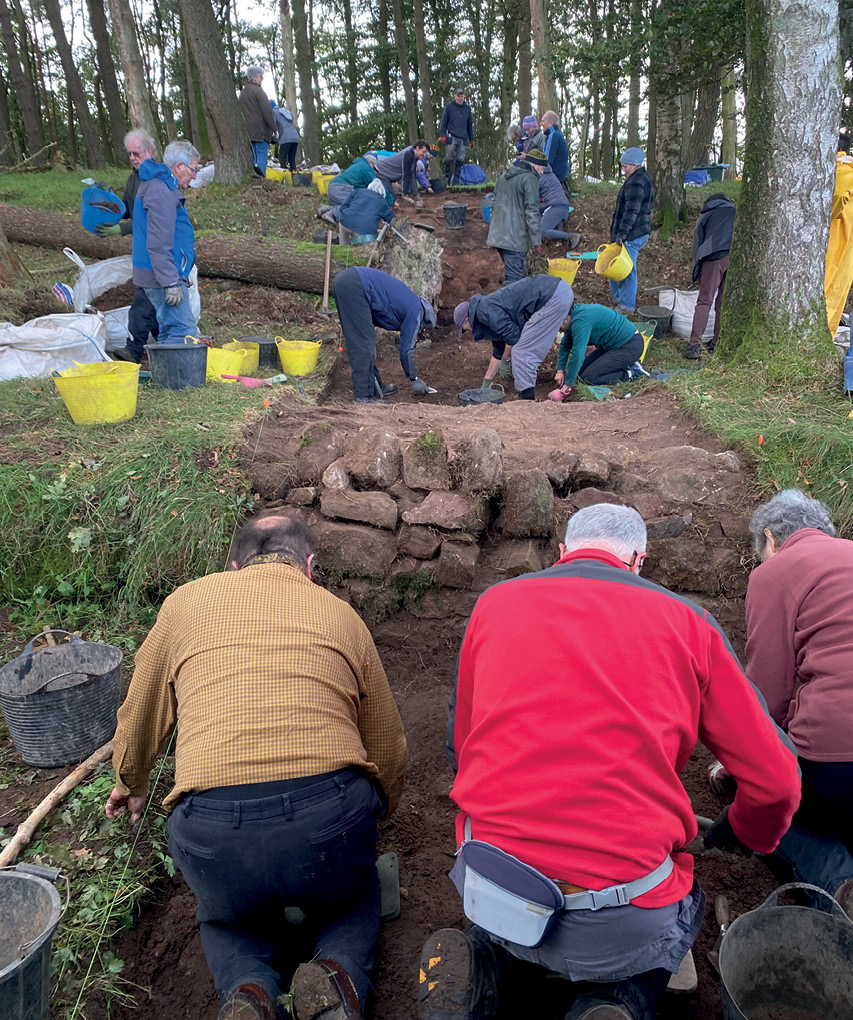
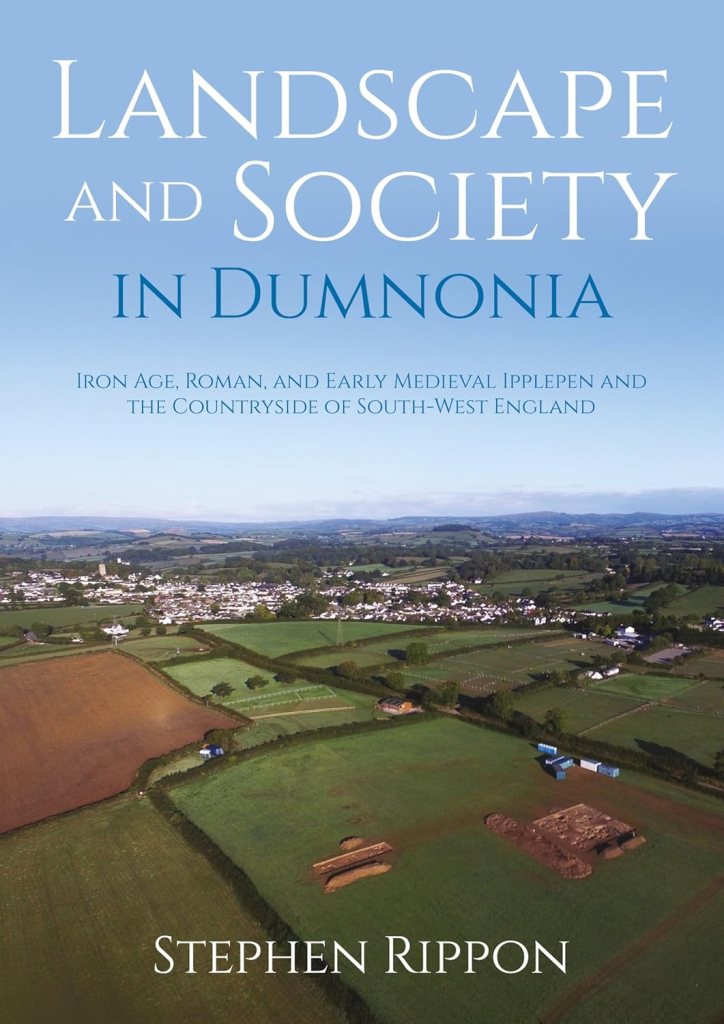
Diligent reporting of a dispersed hoard of more than 50 Roman coins by metal-detectorists to the Portable Antiquities Scheme (PAS) in 2009 led to a major landscape study of an unexplored area of Devon. Landscape and Society in Dumnonia is a comprehensive account of the survey and excavation of an Iron Age, Roman, and early medieval settlement discovered at Dainton Elms Cross in Ipplepen, south Devon, investigated from 2012 to 2019. Ipplepen has been a community archaeology initiative and public engagement opportunity, part of the Understanding Landscapes project. It was led by Stephen Rippon, Professor of Landscape Archaeology, University of Exeter, in partnership with the British Museum/PAS, Devon County Council, and Cotswold Archaeology. Volunteers worked with professional archaeologists investigating local heritage. The focus on Ipplepen has been an exploration of the distinct character of settlement in pre-Conquest times in the Devonshire lowlands. Results from archaeological fieldwork combined with historic landscape research, which draws on maps, field, and place-names, set out to explore themes of change and continuity, place-making, and identities of communities living on the edge of the Western Roman empire in the ancient British kingdom of Dumnonia.
Significant discoveries were made at Ipplepen. The site lies at the watershed of Devon’s two major rivers, the Dart and the Teign: a location well-placed to link arable resources in the hinterland of (modern-day) Torbay, as well as grazing animals on upland Dartmoor. At Dainton Elms Cross, early settlement comprised a small middle-to-late Iron Age farmstead. This was supplanted by a busy roadside settlement during the Roman period. Evidence for wooden and rectangular houses, granaries, blacksmith forges, and craft workshops, as well as the footprint of a rare (wooden) Romano-Celtic temple, animal enclosures, wells, and sections of a Roman road were all discovered. The final (excavated) tally of 308 Roman coins, dating from c.211-228 BC to c.AD 402, is a large assemblage for Devon: analysis suggests an initial military presence, which later shifted to that of civil authorities who presided over a significant roadside settlement. Stephen argues that Roman Ipplepen served as a ‘central place’, a redistribution hub. Specific husbandry and agricultural practices are identified with the slaughter of locally and distantly sourced animals, and the storage (and redistribution) of processed arable crops as well as animal products. By the 6th century AD, an early medieval cemetery (in use for up to 200 years) appeared in this landscape, showing persistence of place as 1,200 years of continuous activity are documented. By the 8th century all had disappeared under an open field system.
This substantial monograph is in two parts. Chapters 1-7 discuss the archaeological surveys, excavations, and analyses of key datasets: Roman coins, faunal and archaeobotanical assemblages, stone and metalwork artefacts, and human burials. Chapters 8-13 contextualise the significance of early settlement on a broader landscape canvas. Stephen and his team delve deep in documentary research to model historical processes that make up its distinctive landscape character: the underlying social structure of a ‘pays’, an ‘early folk terrority’, may explain Ipplepen’s enduring significance. The project produced compelling data, particularly as archaeological and geophysical evidence for this ‘central place’ spreads over 6ha. The spatial map of buried structures, largely identified in narrow trenches with dense, complex, plough-damaged stratigraphy, is sometimes hard to grip. I wonder what lies beneath, in the gaps between? The standout chapters for me were interpretation of the Roman coins, discussions of a Roman road network, and the forensic analysis of the archaeobotanical and faunal data.
This is a bold book, ambitious to place south-east Devon on the map of Roman Britain. The emerging archaeological story is tantalising and points the future direction of travel towards enhancing our understanding of the varied regional character of Romano-British and early medieval settlement and their legacies. It also contributes to discussions of the ‘romanisation’ of rural landscapes in south- west Britain.
Landscape and Society in Dumnonia
Stephen Rippon
Oxbow Books, £50
ISBN 978-1789259773