Subscribe now for full access and no adverts
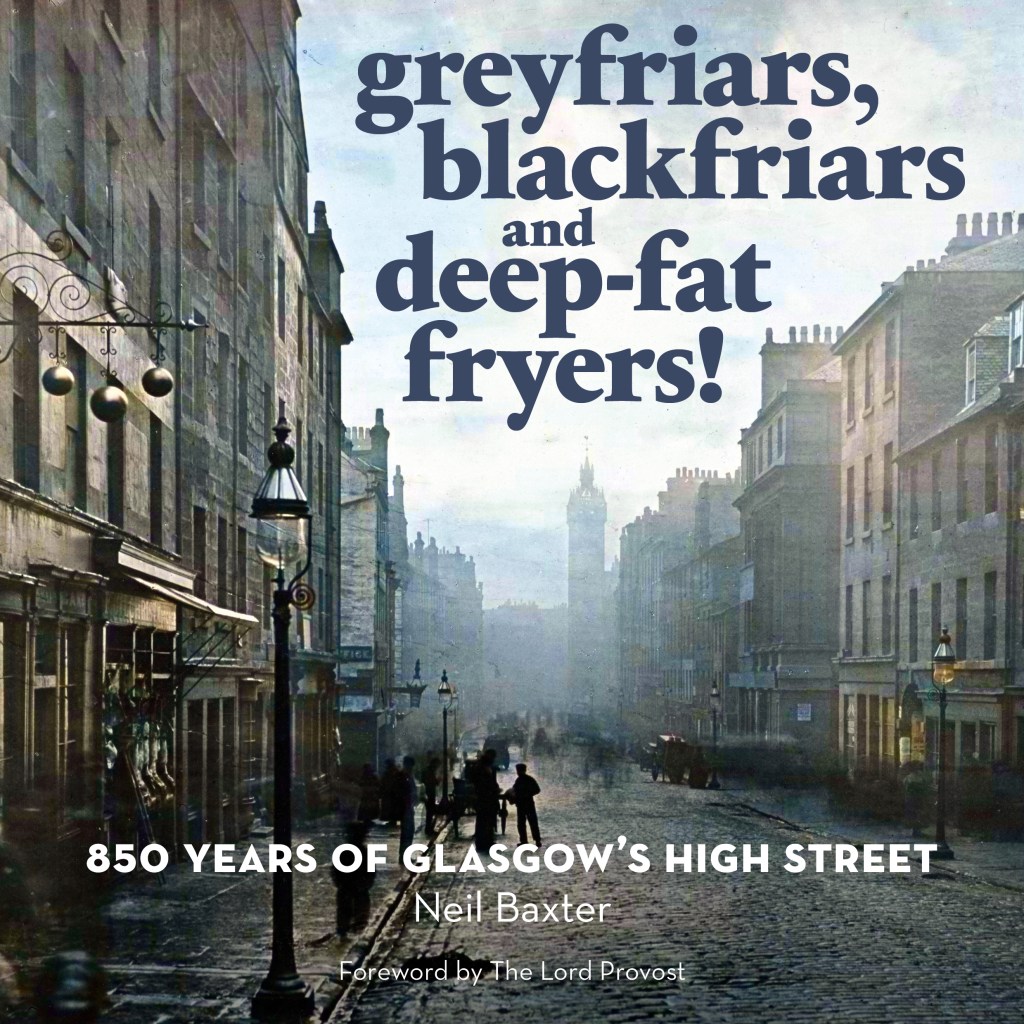
This volume was occasioned by the anniversary of the foundation charter of the burgh of Glasgow in 1175. The tongue- in-cheek title obscures the serious intent to recount the history of Glasgow through an examination of its central throughfare, which connected the cathedral precinct to the burgh’s commercial heart and the Clyde. The establishment of the diocese and burgh of Glasgow was a major political initiative of the growing kingdom of the Scots. In effect, the formation of the diocese in the early 12th century annexed the previously independent kingdom of Strathclyde, but the grant of a royal charter to the bishop ensured its future economic success. The focus of this account homes in on the most significant elements of the medieval settlement, which only lost its importance with the rapid expansion of the late 19th-century city.
The book is organised into ten chapters, dealing with a century each, and draws on sound historical evidence but presents it though imaginary narratives. These are effective in evoking the changing moods and values over time, but favour hypothetical scenarios over solidly documented evidence. The non-technical narrative style makes it accessible to native Glaswegians and anyone with an interest in the growth of medieval cities. The great strength of the book is the treatment of its buildings, many of which are gone or have been significantly modified. This emphasis on the built heritage is not surprising given that Baxter is a past president of the Royal Incorporation of Architects of Scotland. The buildings are presented knowledgeably and are very well-illustrated. This is not a book for plans or footnotes but nevertheless offers fresh perspectives on familiar places with a particular emphasis on the ecclesiastical heritage.
Archaeologists will be disappointed by the limited engagement with the excavated evidence, but to be fair to Baxter many of the most important excavations in the medieval burgh, conducted in the 1970s and 1980s, have never been published. Less excusable is the over-reliance on random medieval images drawn from miscellaneous sources with little relevance to Glasgow, or indeed Scotland. The temptation to use these images to animate a popular book is understandable, but drawing on the actual archaeological evidence would have been an even more valuable contribution to the literature on Glasgow.
REVIEW STEPHEN DRISCOLL
Greyfriars, Blackfriars, and Deep-fat Fryers! 850 years of Glasgow’s High Street
Neil Baxter
Baxter Jardine Ltd, £14.99
ISBN 978-1917741040