
Kynren – the storied lands
A cultural regeneration charity focused on Bishop Auckland in County Durham has opened an immersive attraction featuring historically inspired live-action shows. Carly Hilts visited to learn more.

A cultural regeneration charity focused on Bishop Auckland in County Durham has opened an immersive attraction featuring historically inspired live-action shows. Carly Hilts visited to learn more.

A Roman relief of a Genius – a protective guardian spirit – has recently been found at the Roman fort of Vindolanda, hidden underneath the floor of a barracks. While inscriptions dedicated to genii have been found across Roman Britain,…

A recently discovered high-status burial offers rare insights into ancient funerary practices and Colchester’s late Roman past. Carly Hilts spoke to Laura Pooley at a new exhibition about the finds.

The discovery of a 1,400-year-old die-stamp in Kent, bearing imagery strikingly similar to one of the motifs on the Sutton Hoo helmet, raises intriguing questions about whether elite armour like this – often interpreted as a Scandinavian import – could have been made in Anglo-Saxon England. Carly Hilts reports.

Starting with the opening of the UK’s first science park in 1970, Cambridge has grown from the sleepy market town of 60 years ago into an internationally renowned centre of technical research and innovation at the centre of a metropolis…

Recent archaeological investigations at the Bronze Age site of Haughey’s Fort – next to the famous Navan Fort, an Iron Age monument in County Armagh, Northern Ireland (see CA 406) – have revealed new details about the complex, demonstrating that…

A Roman mosaic thought to be the most westerly example of the polychrome style yet found in Britain is among the discoveries emerging from a large Roman villa complex near Halberton in Devon. Excavations by the SHARE project (Saving Halberton’s…

New Mudlark-in-Residence role at Southwark Cathedral Lara Maiklem has been named as the first Mudlark-in-Residence for Southwark Cathedral, in what is thought to be the UK’s only permanent mudlarking role within a cultural or heritage organisation. With almost 25 years…
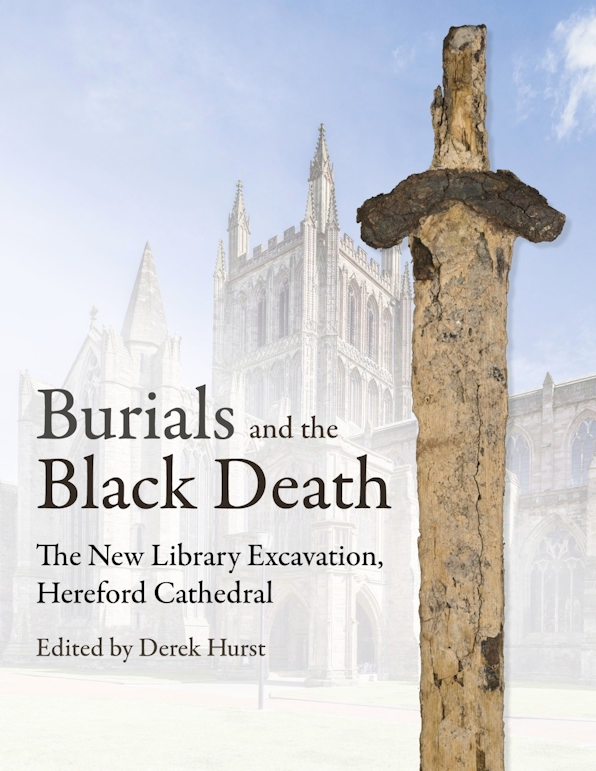
Excavation reports often have a long gestation, and the publication of the City of Hereford Archaeology Unit’s 1993 excavations on the site of Hereford Cathedral’s new Mappa Mundi museum has been eagerly awaited. Yet any frustration at the delay quickly…

Aberdeenshire is known for its Pictish symbol stones, but until recently evidence for Pictish settlements in the region was sparse and our understanding of Pictish sites even more tenuous. This has now changed dramatically, in large part due to a…

First discovered nearly 30 years ago, the wreck of a ship that sank in Salcombe Bay, Devon, in 1633 has now been comprehensively re-examined in this new British Museum volume. On its discovery, the ship was found to be carrying…

The latest in the British Archaeological Association’s regional conference volumes covers Shropshire. The 16 contributions might seem at first sight to concentrate on the county’s best-known Roman and medieval sites – such as Wroxeter, Shrewsbury, Much Wenlock Priory, Buildwas Abbey,…

The Archaeology of Industrial Cheshire in 20 Digs is a well-illustrated introduction to Cheshire’s industrial past. Each concise chapter combines documentary evidence with excavation results to trace the development of the county’s key industries across two millennia. The book opens…

The idea of a guidebook is an ancient one – Pausanias’ Guide to Greece is perhaps the first – but these days the idea of wandering around sites clutching a book conveying detailed information might be thought to be superfluous…

The latest on acquisitions, exhibitions, and key decisions.

• Scotland’s first warriors: tracing 4,000 years of conflict
• Life and death by the river Great Ouse
• Surveying Roman and medieval York
• Community and congregations: exploring Cornish churches
• “Prototype” for Stonehenge’s solar alignment found
• Festival of Archaeology

Fifty years ago, one of the most daring expeditions in modern times left Ireland’s Dingle Peninsula. Tim Severin set out with a crew of three in a curragh – a skin-boat shaped like a banana – from Brandon Creek to…

A new project is examining the traces of Roman mining associated with extracting
a particularly prized stone. Guillermo León, Catalina Urquijo, Dionisio Urbína,
José Luis Córdoba, and the spelunkers of the Cuenca Ara Club of Speleology describe the demands of archaeological investigation deep within the bowels of central Spain.

In our high-speed modern world, it can be easy to forget that the ancient world was experienced at a slower speed. Rubina Raja shares the insights that can spring from exploring the edges of the Roman world on foot.

A recent discovery in Sweden has revealed details about the final moments of a Mesolithic man. Caroline Arcini, Ann Westmark, Gracijela Bozovic, and Marie-Louise Aurumskjöld take us through what unfolded.

It was found by a walker in a rock crevice. What is it? This spectacular sword scabbard fitting dates to the 6th century, during Norway’s Migration Period. The rectangular object measures 6cm wide by c.2cm high and is just a…

Janice Kinory examines an early photograph of a Roman emperor’s palace.

The first permanent exhibition of the plaster casts of Pompeii has opened at the Archaeological Park.

Sometime in the 1st century AD, a crass graffiti artist carved a 2m-long graffito into the wall of a stairwell within the House of Julia Felix at Pompeii. The mudslinger didn’t mince words. In it, they mocked a man who…

In Travels through Prehistoric Spain, Jude Brown and Gary Lock provide a richly rewarding and deeply engaging exploration of Spain’s prehistoric heritage. Written with enthusiasm, knowledge, and genuine affection for both archaeology and the Spanish landscape, their book succeeds not only…

Analysis of two votive offering vessels from Pompeii is enhancing our understanding of Roman domestic rituals.

Analysis of two votive offering vessels from Pompeii is enhancing our understanding of Roman domestic rituals.

Analysis of two votive offering vessels from Pompeii is enhancing our understanding of Roman domestic rituals.

Analysis of two votive offering vessels from Pompeii is enhancing our understanding of Roman domestic rituals.

As the Bayeux Tapestry returns to England for a major new exhibition, Edmund West assesses the latest thinking about 1066 and all that.

From ‘Big Bertha’ to exploding motor boats, Germany’s military engineers were the source of much innovation during the First World War, as David Porter explains.

Your thoughts on issues raised by the magazine.

When Anita Lasker came to Britain in March 1946, 80 years ago, having survived Auschwitz and having been liberated at death’s door from Belsen, she found that no one wanted to hear about her terrible experiences in the camps. Britons wanted to move on from the horrors of the past and look to the promise of the future.

Taylor Downing reviews the latest film and television releases.

The academic, historian, and author on war stories, shifting interests, and some memorable moments.

Don Hollway’s account of the life of the Norse warlord Olaf Tryggvason (king of Norway in the years c.995-1000) covers a period of momentous social and religious change in the lands bordering the Baltic Sea. The author tracks his hero’s…