
Ain Khadra
Amir Ebrahim Elkorashy explores an archaeological landscape around a spring in the Western Desert.

Amir Ebrahim Elkorashy explores an archaeological landscape around a spring in the Western Desert.

An Egyptian team working in the Bahariya Oasis have discovered three tombs from different periods at the site of Sheikh Sobi, the necropolis for the priests and governors of the oasis from the Late Period. The first tomb was carved…

Archaeologists from Egypt’s Supreme Council of Antiquities have uncovered the remains of a residential city dating to the 4th and 5th centuries AD at the Ain Al-Sabil archaeological site in the Dakhla Oasis, New Valley Governorate, in Egypt’s Western Desert.…
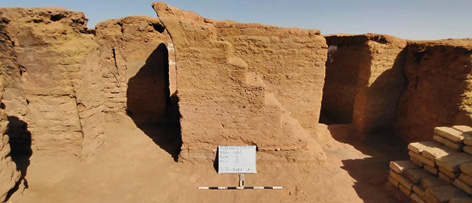
An Egyptian mission excavating the Byzantine-era city at Ain el-Sabil in the Dakhla Oasis has uncovered the overall plan of the settlement and several new mud-brick structures. The city was built on a grid pattern with two main streets running…
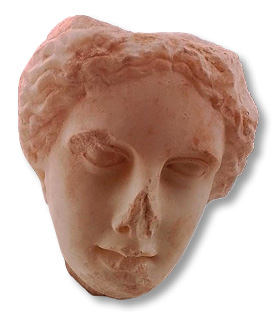
• At Ihnasya (ancient Herakleopolis Magna), an Egyptian team has uncovered the remains of a Roman basilica and a large marble head of the Greek goddess Aphrodite, along with terracotta coin moulds and an inscription of Senusret III (Twelfth Dynasty)…

The remains of a Coptic monastery have been discovered by an Egyptian mission at Wadi el-Natrun, in Beheira Governorate. The structure, which dates from the 4th to the 6th centuries AD, sheds light on the architectural planning of the first…

This new publication brings a welcome focus to the creative individuals behind the artistic achievements of the New Kingdom. Building on a 2022 conference in Madrid, the collection’s 12 papers examine a broad range of interconnected themes: the role and…

A recent study has successfully carried out full genome sequencing of a person from ancient Egypt for the first time.

‘The unknown town now had a name… All that day “Naukratis” rang in my mind, and I sprang over the mounds with that splendid exultation of a new discovery, long wished for and well found.’ The prospect of discovering ancient cities, lost for centuries in the depths of jungles or deserts, was part of the original lure (and original sin) of archaeology.

In the first of a two-part article on the symbolism attached by the ancient Egyptians to beasts with horns, Hilary looks at cattle.

REVIEW BY ROGER FORSHAW This volume is a collection of papers published in recognition of the retirement of Professor Steven Snape from the University of Liverpool. Over his distinguished career, Steven has pursued a diverse range of research interests and…

• Twelve 5-metre-high subterranean cisterns, part of an extensive Ptolemaic water supply system, have been excavated at Darazya (ancient Derhis). • TT39, the Tomb of Puyemra (Second Priest of Amun in the reign of Thutmose III), has been reopened to…

A small white marble head of a Ptolemaic princess or queen has been discovered in a foundation deposit at the Taposiris Magna Temple by an Egyptian–Dominican mission. The team believes the queen, shown with a ‘melon’ hairstyle and wearing a…

Two Roman Period rock-cut catacombs have been discovered by an Egyptian mission excavating at the site of Zawyet Umm el-Rakham, west of Marsa Matruh (about 300 km west of Alexandria). The tombs are approached through a stairway leading to a…

Geoffrey Lenox-Smith goes off the beaten track to explore an unusual Late Period temple.

REVIEW BY MICHAEL TUNNICLIFFE Ancient Kellis was a site in the Dakhla Oasis that was occupied from Late Ptolemaic times to the end of the 4th century AD. Excavations have exposed houses, cemeteries, temples, and churches. Important documents were found…

REVIEW BY MICHAEL TUNNICLIFFE This work comprises 14 essays spanning the late Roman Period to the present day, focusing on the daily life of the Copts, who have always been a minority community. The aim is to understand daily concerns…

Do you recognise this place?

Continuing his series of articles on Predynastic Egypt (see AE 127, 135, and 137), Julian Heath now looks at evidence for the disputes that arose between different groups of early settlers.

Dinosaur bones discovered in 1977 in the Kharga Oasis have recently been identified as a species of herbivorous dinosaur new to science. The remains, which included vertebrae and limb, pelvis, and shoulder bones, date to about 75 million years ago,…

In the first part of a new series on deception in World War II, Taylor Downing tells the story of Lieutenant-Colonel Dudley Clarke, Britain's flamboyant pioneer of misinformation.

MHM’s round-up of the latest military history titles

REVIEW BY ROGER FORSHAW This brief book by W Benson Harer discusses the controversial question of what caused the death of Tutankhamun, with the author strongly supporting the view that the king was killed by a hippopotamus. Within the publication…

A 1.3 km tunnel has been discovered 13 metres beneath the Ptolemaic temple of Taposiris Magna, west of Alexandria. The massive 2 metre high structure appears to be similar to the Eupalinian Aqueduct on the island of Samos, and is…

Following his exploration of rock art in the Western Desert in AE 127, Julian Heath continues his occasional series exploring Egypt’s prehistoric past, looking for evidence for the earliest settlements in the Western Desert.

Graham Goodlad assesses the career of Britain’s best-known and most controversial general of the Second World War.

Graham Goodlad analyses Montgomery’s epic clash with Rommel’s forces, which signalled the end for Nazi Germany’s ambitions in the Middle East.

REVIEW BY SIMON BAKER Anyone with more than a passing interest in the history of the SAS may well be familiar with the regiment’s genesis myth: in 1941, a tall Commando called David Stirling, in hospital after a nasty parachute…

CA explores the latest archaeological news from across the globe, including the discovery of the world's oldest Christian monastery.

Inscriptions were also found on the walls of several buildings, with passages from biblical and early Christian texts written in Greek.

The letter is dated 6 October of that year, just weeks before the battle that marked a turnaround in Allied fortunes in the war.

The battle scenes are, in the main, well made, especially in showing what it was like for men hiding in dugouts and wadis in the desert under intense artillery-fire.