
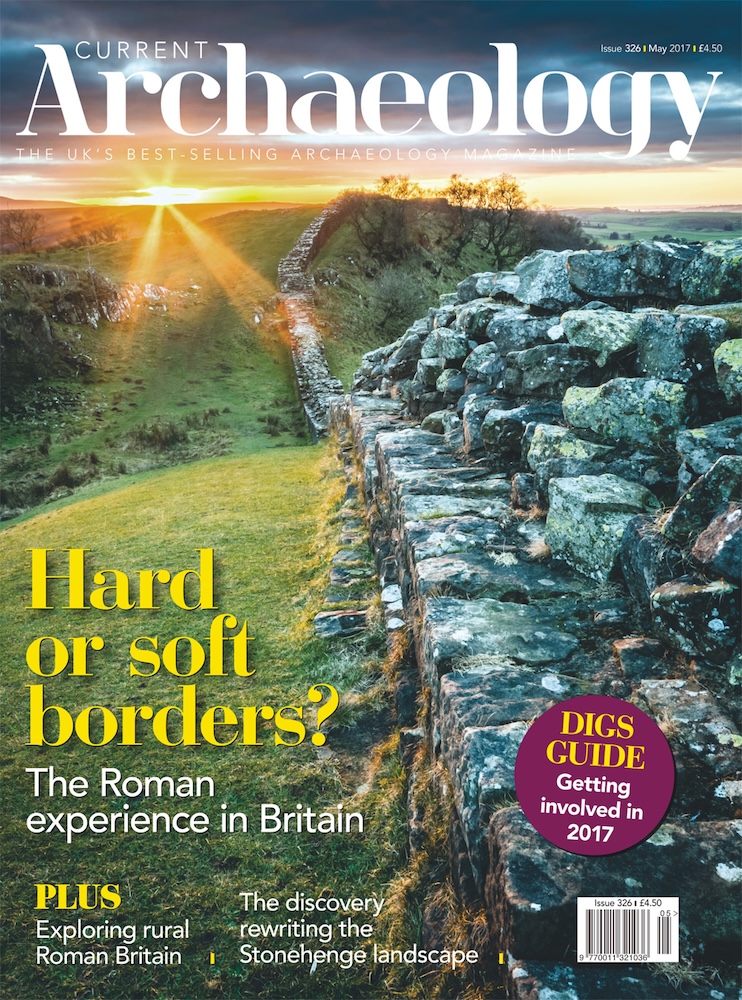
Description
In this issue:
– Hard or soft borders? The Roman experience in Britain
– The Larkhill causewayed enclosure: rewriting the Stonehenge landscape
– Richard de Wispeton: coming face-to-face with a medieval Lincolnshire priest
– Rome’s homes on the range: revealing the Romano-British countryside
– Digs Guide 2017: how and where to get involved in archaeology this summer
Plus: News, Reviews, Comment, Sherds, Odd Socs, and more!
From the Editor:
What are borders for? It is a question that has recentlygone mainstream. Debate about ‘hard’ or ‘soft’ bordersfinds a parallel in attempts to determine whether Romanborders blocked or simply regulated movement. In thisregard, the true nature of Hadrian’s Wall and the Antonine Wall remains a mystery. As the modern world is remindingus, though, the nature of the controls they imposed couldhave far-reaching consequences. We examine the impactof Rome’s most remarkable border systems.
Behind the frontiers, the vast majority of Britons lived in the countryside. Although Roman villas have long attracted attention, recent decadeshave delivered an explosion in information about more modest farmsteads. Muchof this has emerged from excavations linked to development work, and now a majorproject is drawing it together to tell a remarkable story of everyday farming folk.
A major discovery during construction work at Larkhill, Wiltshire, dates back to well before the Roman period. The remains of a previously unsuspected causewayedenclosure have been found on a hillside just outside the Stonehenge World HeritageSite, raising questions about the early Neolithic focus of this landscape.
Meanwhile, at Thornton Abbey, Lincolnshire, excavations provide a rare glimpseinto the life of a named individual from the distant past, bringing us face to face with a medieval priest.
Finally, this issue brings the 2017 Digs Guide. I’m looking forward to meeting some of you outin the field over the summer.
Matt Symonds
Cover Date: May-2017, Volume 28 Issue 2