
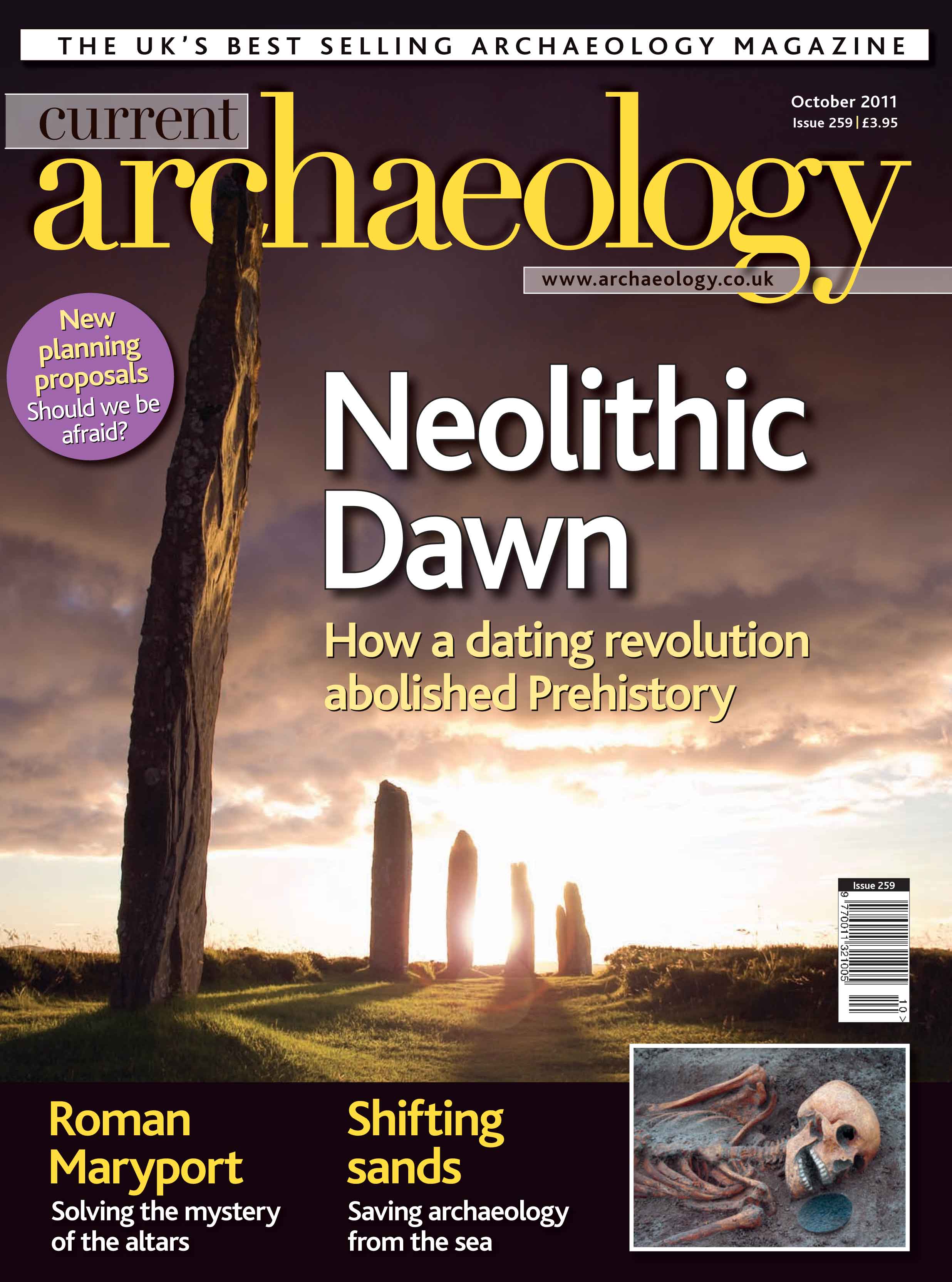
Description
In this issue:
– Interview: Simon Thurley
– Ireland: royal Rathnadrinna
– Maryport: Roman Jupiter altars
– Radiocarbon dating: abolishing prehistory
– Scotland: protecting eroding heritage
Plus: News, Reviews, Comment, Sherds, Odd Socs, and more!
From the Editor:
The Neolithic is being rewritten. New techniques of radiocarbon dating based on Bayesian statistics are allowing a greater precision than ever before and enable Neolithic dates to be tied down to within 50 years or less. This reveals that long Barrows and long cairns, the earliest form of Neolithic monument, were built from around 3800 BC, and the first causewayed enclosures were built a century or so later. Current Archaeology 259 explains how the new dating works and outlines the new picture of the Neolithic that is being revealed.
History is also being rewritten at the Maryport Roman fort. Here a number of altars were excavated in the 18th century but their purpose has always been a mystery. Now new excavations reveal that they were mostly buried as packing stones to a large timber building erected in the fourth or fifth century A.D. CA 259 has the full story.
In central Ireland, the kingdom of Munster is generally considered to have been centred on the mediaeval ruins of the Rock of Cashel. However the rock is surrounded by numerous earthworks and one of these, at Rathnadrinna 2 miles to the south is particularly fine, and has now been surveyed by geophysics. This reveals that the interior appears to have been empty of occupation: does this mean that it was ‘ritual’? Does the ring of Stonehenge-type post holes in the centre mean that it goes back to the Bronze Age? In the latest Current Archaeology the researchers Richard O’Brien, Heather Gimson, and James Bonsall tell the tale.
In Scotland many sites are falling into the sea, and we look at rescue efforts at Sandwick and Bressay in Shetland, a wheelhouse on the island of Baile Sear in North Uist, and 18th century saltpans at at Brora near Inverness.
Other articles include an interview with Simon Thurley, the Chief Executive of English Heritage, and Andrew Selkirk’s welcome for the new National Planning Policy Framework and his condemnation of the ‘political sloganeering’ of the National Trust
Cover Date: Oct-2011, Volume 22 Issue 7