Subscribe now for full access and no adverts
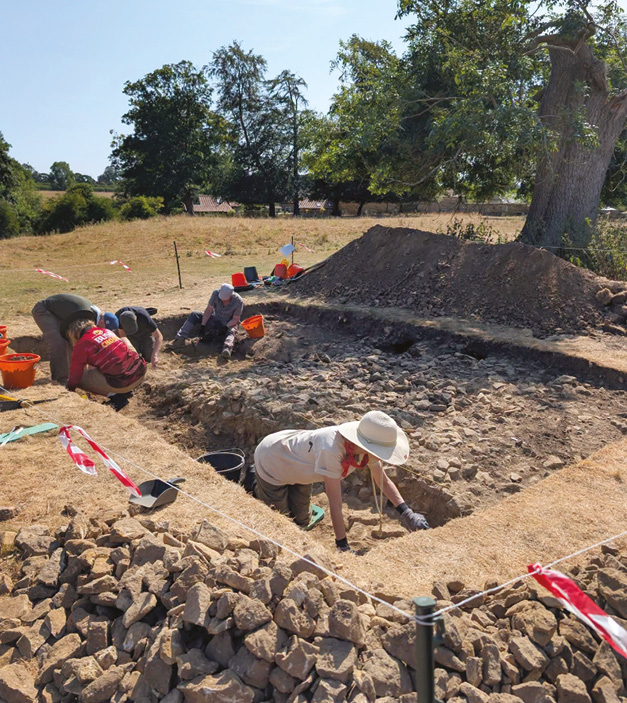
This season’s excavation at Huttons Ambo in North Yorkshire has uncovered new details about the small village’s medieval past, including potentially one of the most high-status buildings yet found on the site.
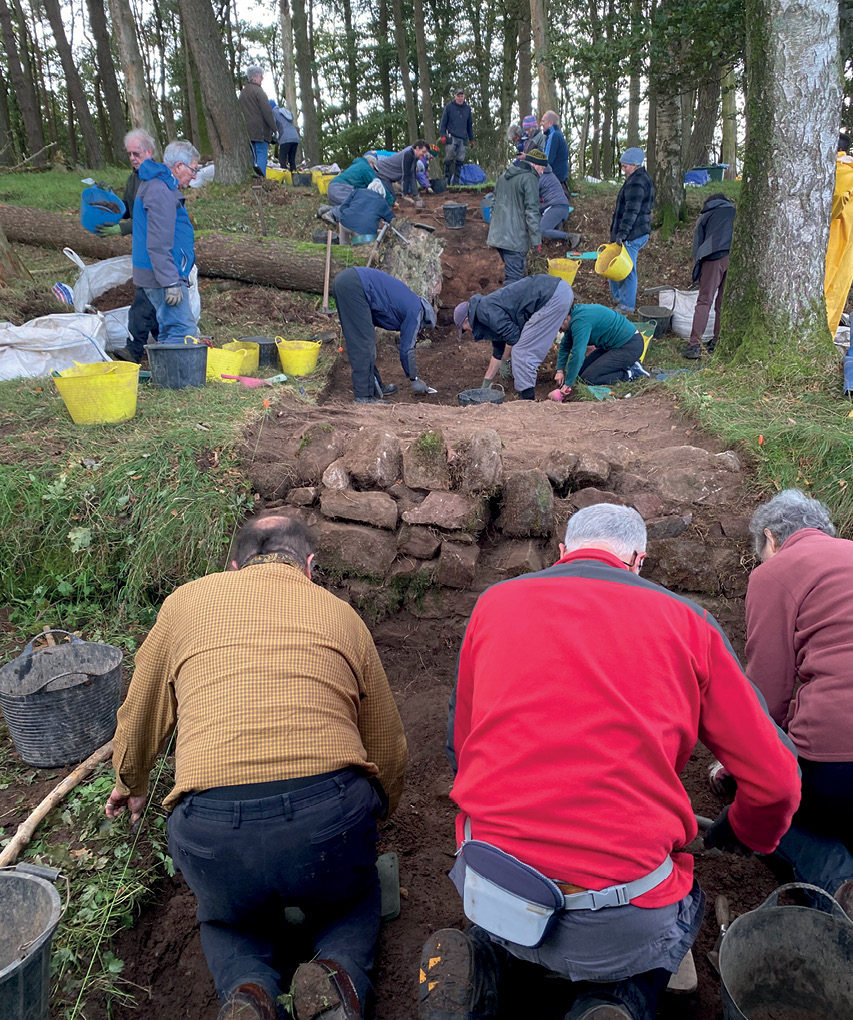
This is the fourth year the project has been running, led by Ethos Heritage CIC in partnership with the Huttons Ambo Local History Group. Previous excavations had revealed a number of medieval buildings, probably dating to between the 12th and 13th centuries and potentially connected to the nearby Hutton Colswain fortified manor, about 400m (1,300ft) away from the site (see CA 417).
This year’s excavation uncovered one of the most substantial medieval structures yet identified in the village, measuring approximately 4m by 3m (13ft by 10ft). The thick walls, floor surfaces, and associated features suggest that this was a building of status – possibly linked to organised agricultural or administrative activity. Over 5kg (11lbs) of 12th- to 13th century pottery was found, both within the footprint of the building and in its immediate surrounds, along with lots of butchered animal bone, possibly indicative of a sustained period of use.
In another part of the site, a series of pits were uncovered, all containing locally produced pottery also dating to the 12th century. This makes these pits contemporary with the building and they were perhaps used for storage, waste disposal, or even small-scale industrial activity.
In addition to the medieval finds, this year’s work revealed the site’s Second World War history, when Huttons Ambo was used as a base for Allied units training for D-Day. Finds include belt buckles, cap badges, uniform buttons, equipment fittings, and personal items associated with soldiers not only from Britain but also from France, Poland, and the United States.
Further notable finds included a Bronze Age axe and a Viking Age weight. The axe, which appears to have been deliberately broken, was perhaps a ritual offering, while the weight shows that this area was used for trade and craft production even in the early medieval period.
Rianca Vogles, the Site Director, said: ‘I cannot emphasise enough how important it is for villages like Huttons Ambo to have the chance to explore their own archaeology and heritage. This work doesn’t just uncover the past, it strengthens community identity, pride, and understanding. What has made this season truly exceptional is the way the villagers have embraced the project and welcomed more than 70 participants from around the world into their community. Their enthusiasm, hospitality, and. curiosity have created a unique atmosphere where global expertise meets local heritage, and the village benefits from both. It’s exactly the kind of partnership that brings archaeology to life.’
As post-excavation continues, there are already plans to continue excavations next year.
Text: Kathryn Krakowka / Image: Ethos Heritage CIC