An early Syriac translation of the New Testament has been discovered in fragments of a 6th-century AD manuscript from the Vatican Library.
The text represents one of the earliest-known translations of the Gospels.
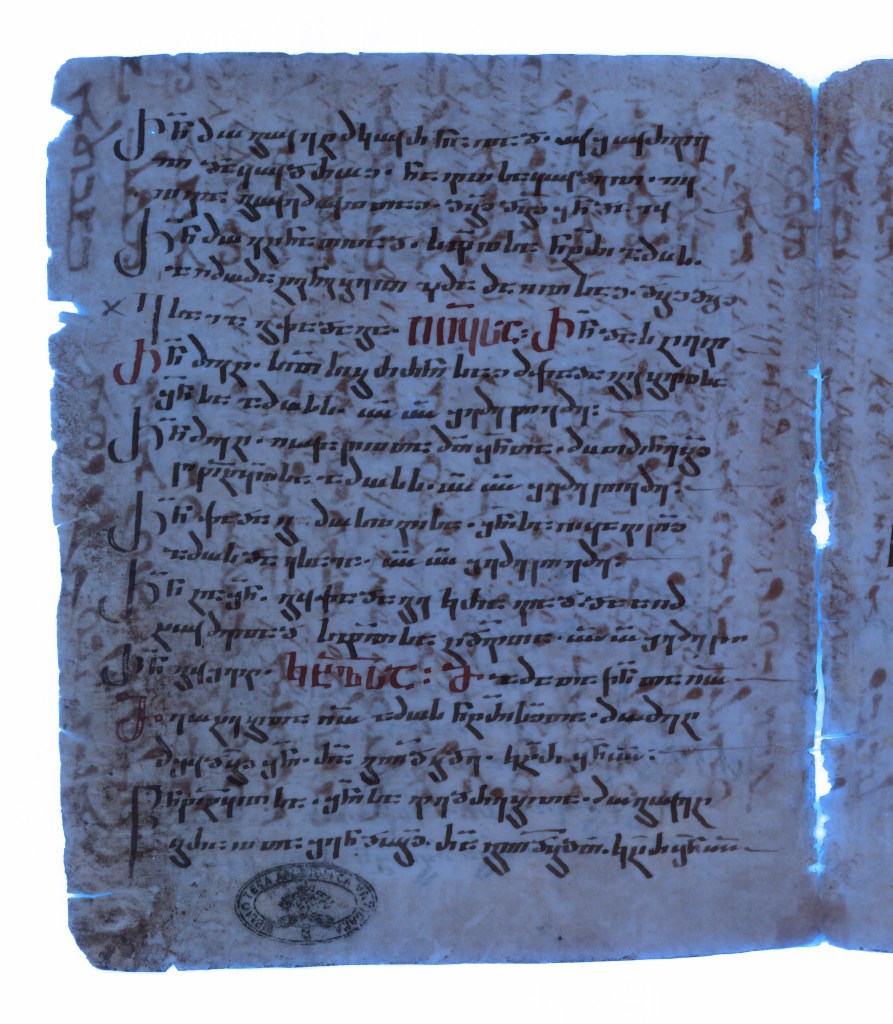
The folios had originally belonged to a manuscript kept at the monastery of Saint Catherine on Mount Sinai, before being acquired by the Vatican Library in the mid-20th century.
Considered lost for several decades, the manuscript (known as Vat. iber. 4) was rediscovered in 2010.
Medievalist Grigory Kessel from the Austrian Academy of Sciences (OeAW) examined the folios using ultraviolet photography, revealing the manuscript to be a palimpsest, with the Syriac translation identified as the third layer of text.
During the Middle Ages, parchment was scarce in the desert, and manuscripts were often erased and reused.
According the study, the results of which have been published in the journal New Testament Studies, comparison with dated Syriac manuscripts indicates the translation was copied down on parchment in the 6th century AD. Two centuries later, a scribe in Palestine then erased and wrote over the text.
It is now one of only four manuscripts known to contain the Old Syriac translation of the Gospels.
The Curetonianus Gospels, now kept in the British Library, was found at the Syrian monastery of Saint Mary Deipara in Lower Egypt.
The Sinaitic Palimpsest and the fragment of another manuscript were also discovered at the monastery of Saint Catherine on Mount Sinai. The latter was identified by the Sinai Palimpsests Project, aimed at deciphering and digitising the manuscripts in the monastery’s collections.
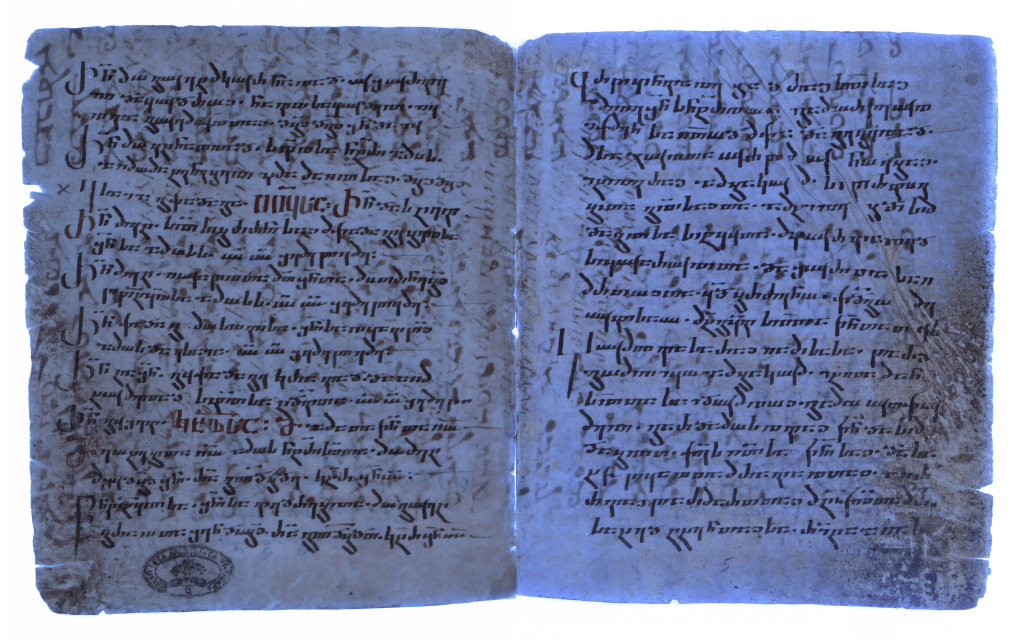
According to Kessel, the newly discovered text – which contains the Gospel of Matthew verses 11:30-12:26 – is virtually identical to that in the Curetonianus manuscript, and so offers new insight into the history of the textual transmission of the Gospels in Syriac.
The Old Syriac translation predates the oldest Greek translation of the Christian testaments by at least a century. This includes the Codex Sinaiticus, the earliest-known complete copy of the New Testament, which is thought to have been written in the mid-4th century.
Claudia Rapp, Director of the Institute for Medieval Research at the OeAW, said: ‘This discovery proves how productive and important the interplay between modern digital technologies and basic research can be when dealing with medieval manuscripts.’