


‘I am Darius the Great King, King of Kings, king of countries containing all kinds of men, king in this great earth far and wide, son of Hystaspes, an Achaemenian, a Persian, son of a Persian, an Aryan, having Aryan lineage.’
These words appear in an inscription on the tomb of Darius I (r. 522-486 BC) at Naqsh-e Rustam, a necropolis near the ancient ceremonial capital of Persepolis in Iran. The third of the Kings of Kings of the Achaemenid dynasty (550-330 BC) tells us that he is Persian – the Achaemenid kings were ethnic Persians who settled in Fars, south-west Iran – but also that he is ariya (‘Aryan’), a word that shows that by his reign people in Iran were calling themselves Iranians. Centuries later but at the same site, a king of a different dynasty, the Sasanian Shapur I (r. AD 240-270), gives the first written reference to Eranshahr (‘Empire of the Iranians’).
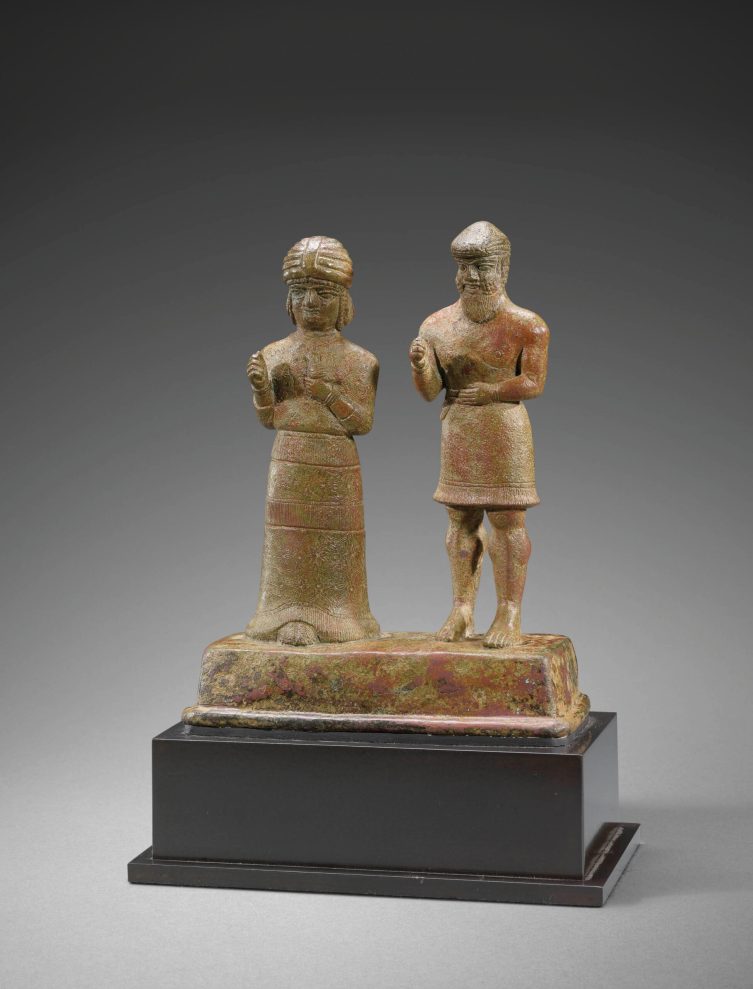
But Iran’s history runs much deeper than this, reaching back long before these words for Iranians and their empire begin to appear, long before the powerful Achaemenids came to unite Iran politically under one Persian empire, dominating lands ‘far and wide’ across the whole of the Middle East, and as far as North Africa, the Aral Sea, and the River Indus. Epic Iran, a major new exhibition at the Victoria and Albert Museum in London, is the first in the UK since the 1930s to explore the full sweep of this extensive history – from the beginnings of civilisation right up to vibrant works of contemporary photography, sculpture, painting and more.


