

Subscribe now for full access and no adverts
Sir John Gardner Wilkinson (1797-1875) – antiquary and traveller – was the foremost Egyptologist in Regency-era Britain. Like William Flinders Petrie, Wilkinson used an unusual middle name, which was originally the first part of a double-barrelled surname, as if a first name. His father was John Wilkinson, while his mother’s maiden name was Mary Anne Gardner. Unfortunately, both passed away while Wilkinson was a young child, but they had already given him an avid interest in other societies and in travel, an aptitude for languages (primarily Greek and Latin), and an excellent artistic hand. Today Petrie is conventionally regarded as the foremost pioneer – even ‘founding father’ – of British Egyptology in the 19th century, though he was only active in the final two decades. For most of the preceding three-quarters of the century, and above all in the 1820s to 1840s, Wilkinson was regarded as the subject’s leading light, domestically and internationally.
Europe and Egypt
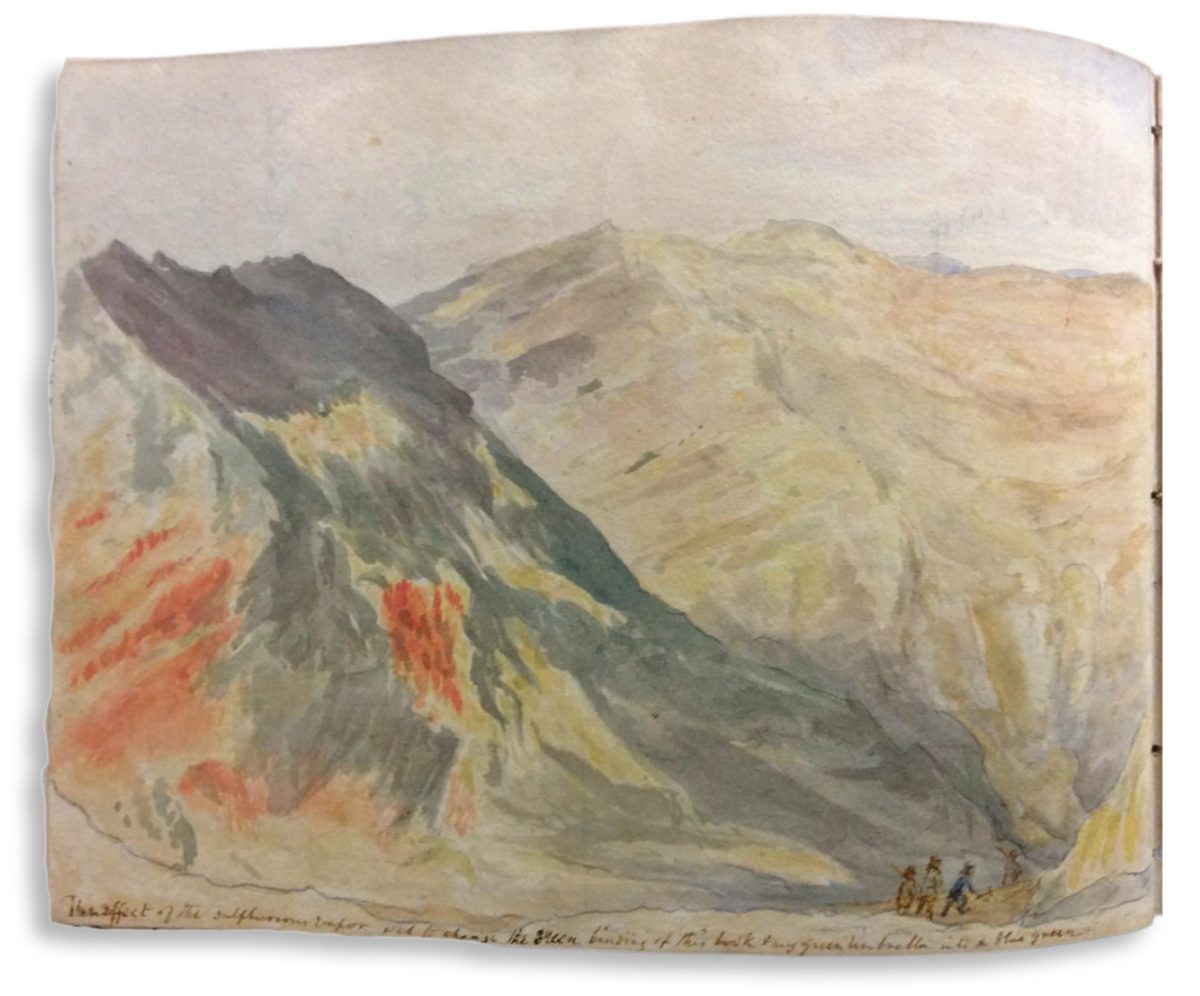
Wilkinson, like many relatively wealthy young people of his day, embarked on the Grand Tour of Europe after finishing at the University of Oxford, visiting the historic towns and cities of France and Italy, and courted some danger by climbing Mount Vesuvius. He might never have ventured to Egypt were it not for a meeting in Naples with the British antiquarian William Gell. It is no exaggeration to say that this meeting changed his life. Gell suggested that Wilkinson might accomplish useful scholarly work in Egypt, and he put his extensive personal library at the disposal of the young man, enabling him to catch up on all the hot topics of the day. Wilkinson’s notebooks from this time contain copious notes from respected works including Frederick Lewis Norden’s Travels in Egypt and Nubia, Vivant Denon’s Travels in Upper and Lower Egypt, and William Richard Hamilton’s Aegyptiaca. Gell provided tutoring in hieroglyphs as well. Sometimes he was correct, at other times wildly off-course. Within a short time, Wilkinson (at the age of 24) embarked for Egypt with a travelling companion, James Samuel Wiggett. The journey, by sail, took the best part of a month. The two men first set foot in Alexandria in November 1821.
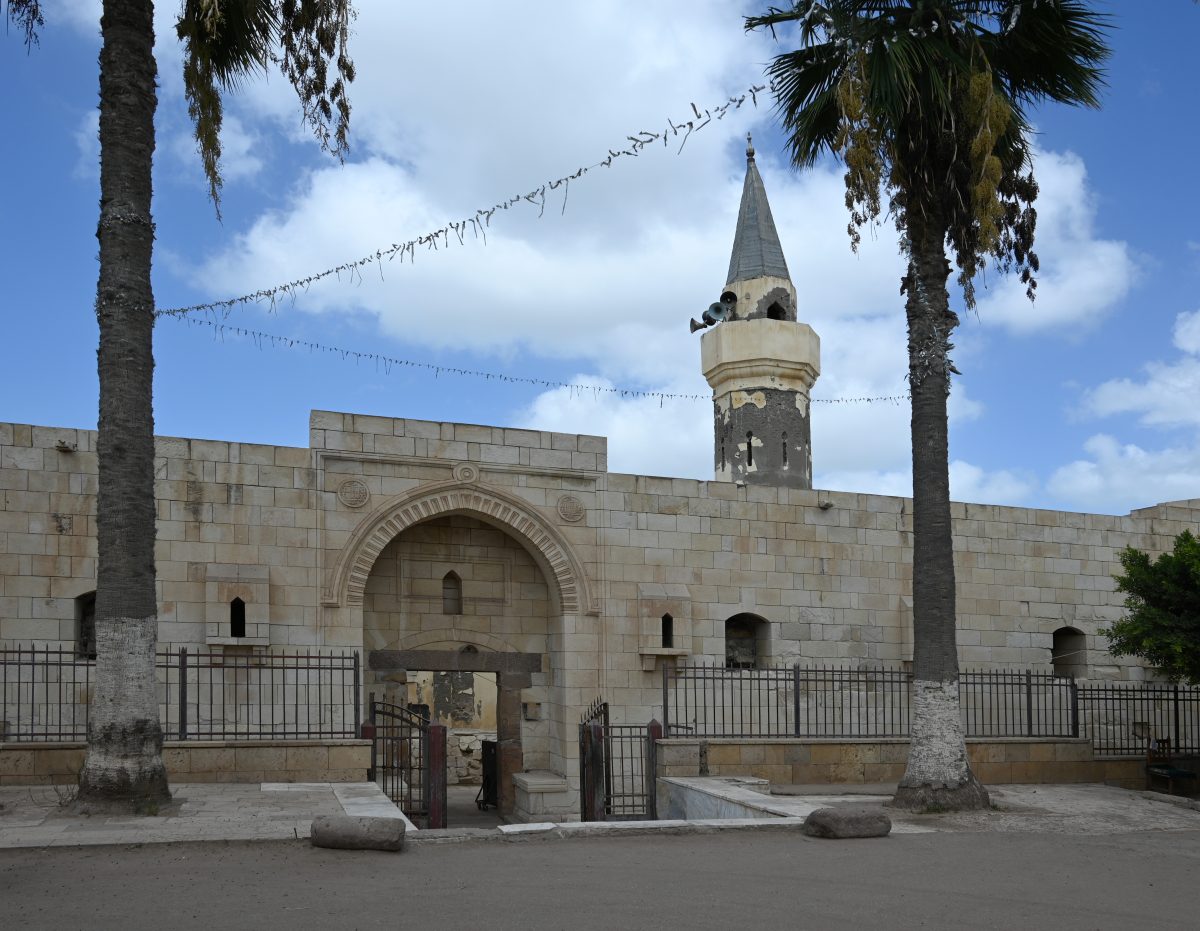
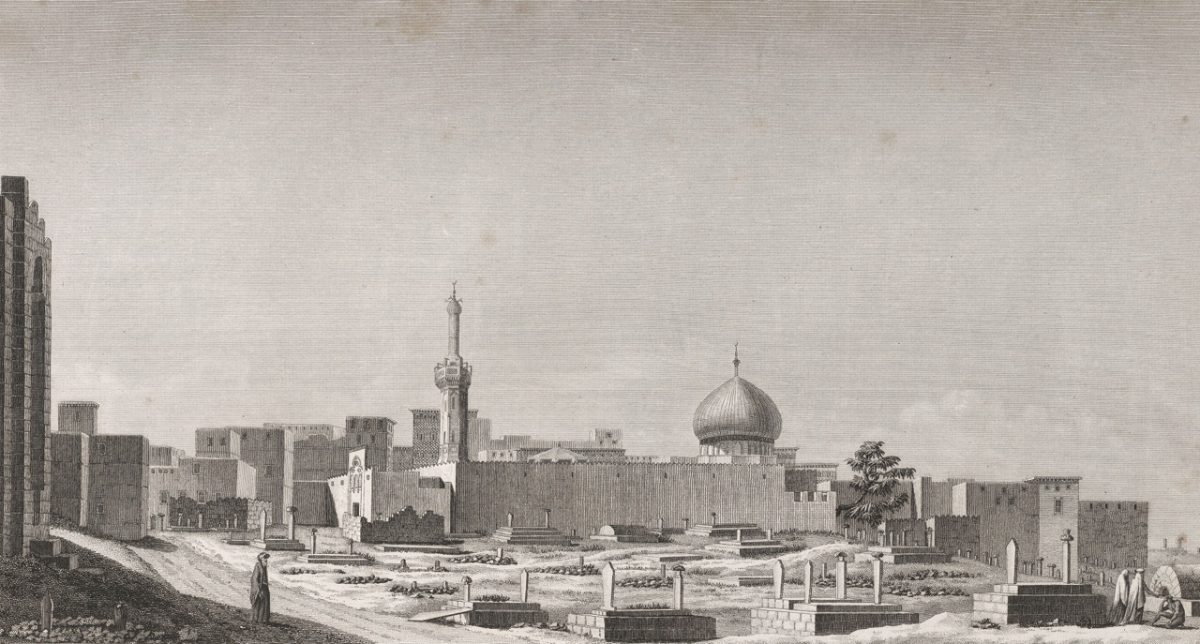
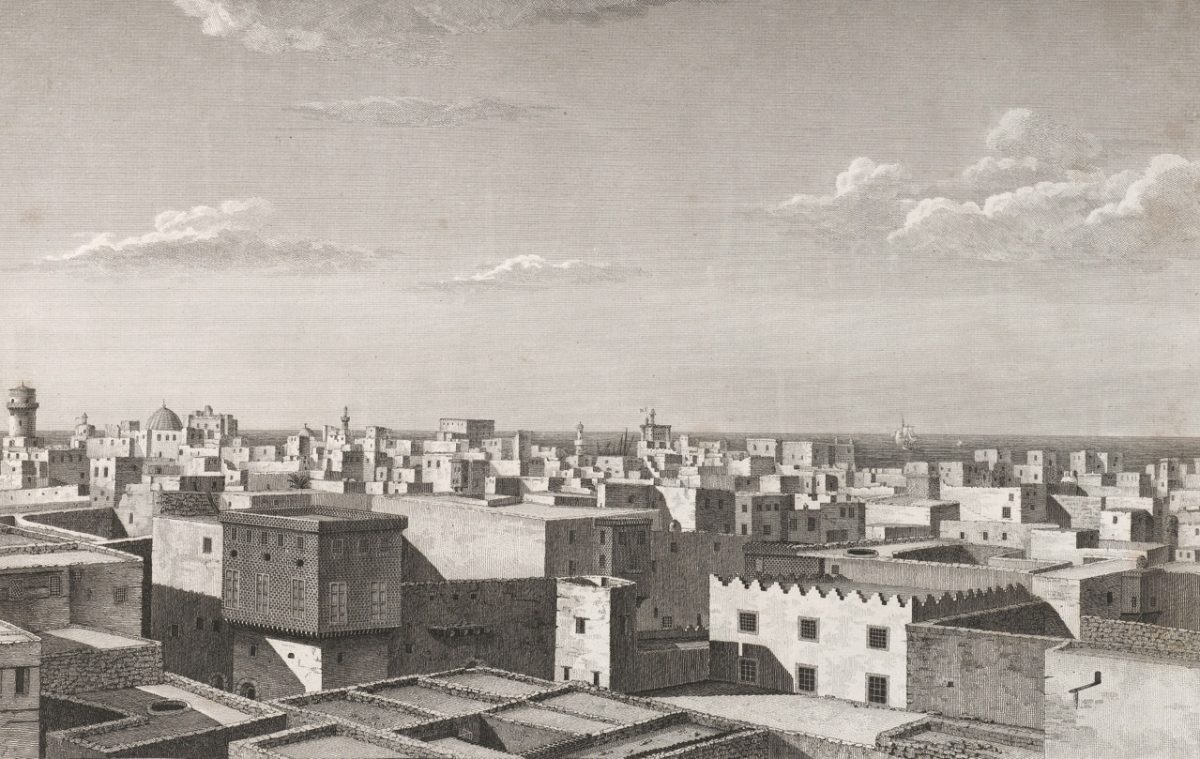
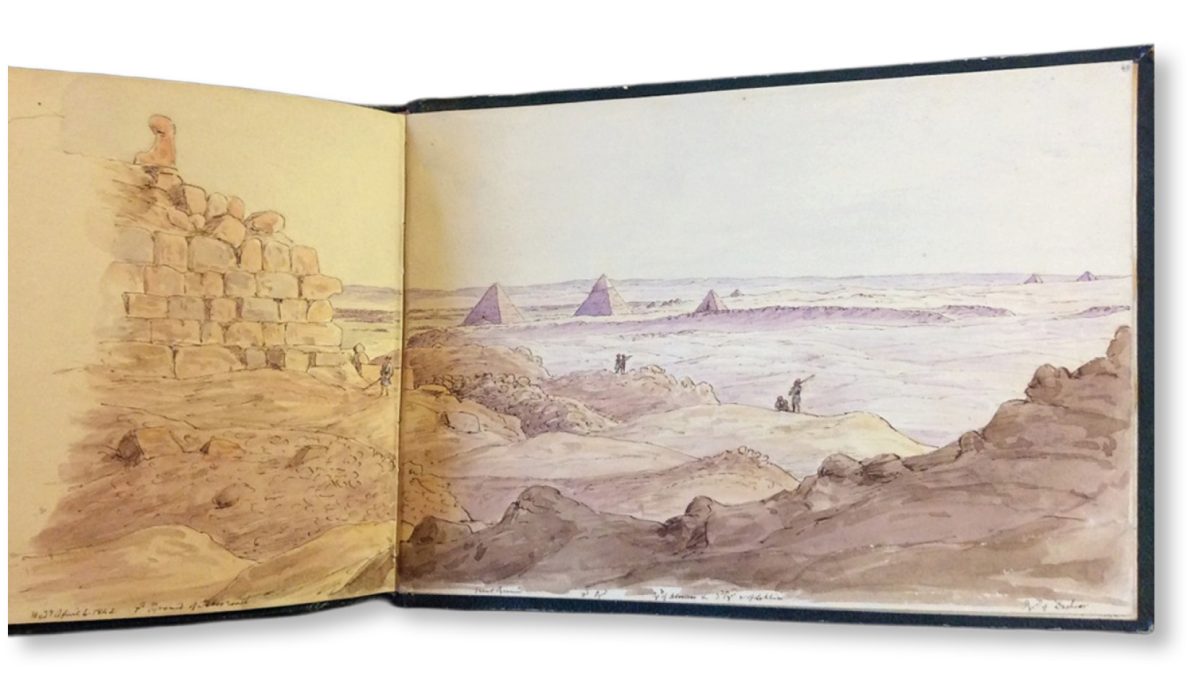
Wilkinson, like most travellers of his day, was underwhelmed by Alexandria, which had shrunk considerably since antiquity, so there were few traces of its most famous monuments. Cairo, with its dozens of mosques and Islamic architecture, was more impressive, as were the Giza pyramids. Unlike visitors today, Wilkinson was able to climb the pyramids of both Khufu and Khafra. He then ventured up the Nile, stopping on the way at ancient sites including Luxor and Aswan, and reaching as far as Abu Simbel. At this point, Wiggett turned back, but Wilkinson stayed on for 12 years, embarking on a study programme exactly as Gell had suggested.
Collecting inscriptions
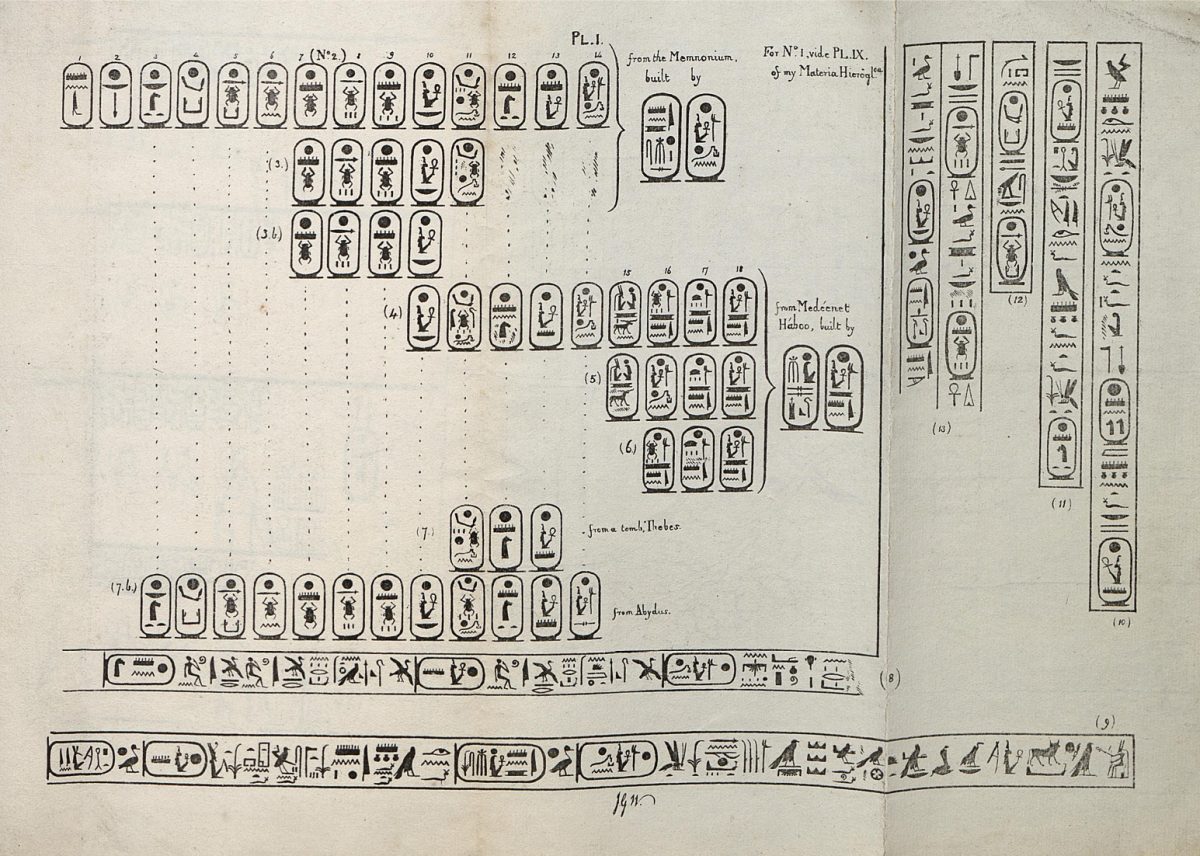
There were far fewer ancient Egyptian artefacts in Europe in the early 19th century than today, and Wilkinson’s first priority was to collect as much primary source material as possible – in the form of copies of inscriptions, rather than portable antiquities. He filled countless pages with inscriptions, often copied so clearly that they can still be read with ease. In this respect, he diverged from the practice of many of his predecessors, such as the French savants, whose copying was seldom as carefully done. The most important outcome of all this work was the creation of an improved list of the pharaohs who ruled Egypt. By cross-referencing between different king lists on the walls of Sety I’s temple at Abydos, the later Ramesseum (then called ‘the Memnonium’), and Medinet Habu at Thebes, among other sources, Wilkinson was able to create a master list that is still recognisable for the rulers of the New Kingdom. The principles were grounded in logic reminiscent of Petrie’s seriation, or of dendrochronology (tree-ring dating).
Some of Wilkinson’s acquaintances and admirers probably saw him as more knowledgeable in reading hieroglyphs than he actually was, but he certainly improved in time, recognising key names, terms, and longer phrases. Sometimes he used them playfully, swapping from English to hieroglyphs in letters to his friends. On one occasion, he vented his anger at a group of French Egyptologists by using the throw-stick sign for ‘foreigner’ in a private letter. However, Wilkinson was open-minded enough to become an early convert to Champollion’s system. And, thanks to Champollion’s finding that hieroglyphs are gendered (like contemporary French), Wilkinson was among the first to realise that there had been a powerful female pharaoh (known today as Hatshepsut).
Ancient Thebes
Much of Wilkinson’s work centred on Luxor. He eagerly explored the tombs of the elites on the low hills of the West Bank, recording scenes from the paintings. He crossed over the cliffs into the Valley of the Kings, too. Wilkinson did not actually discover any new tombs there, though he provided a semblance of organisation by numbering each of the tombs, giving scholars a useful shorthand. Formerly, tombs had multiple names.
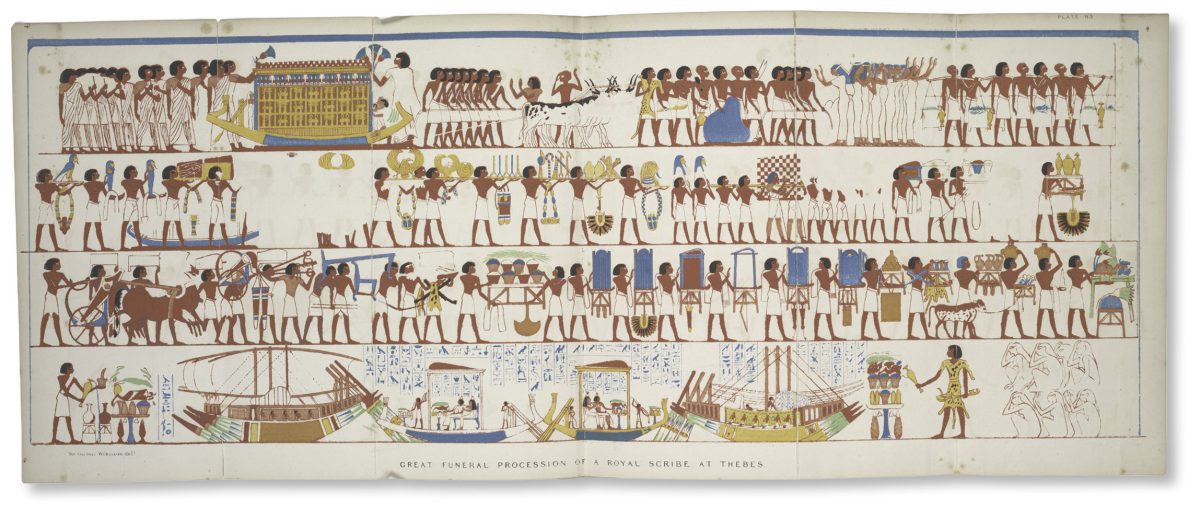
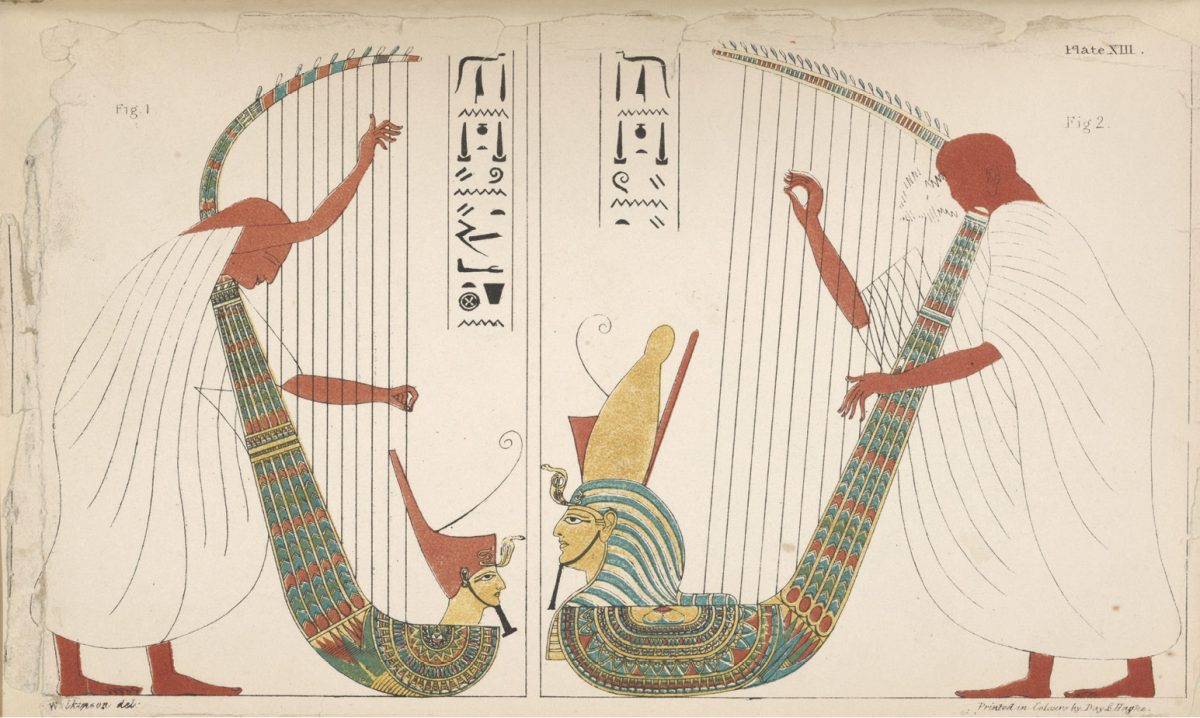
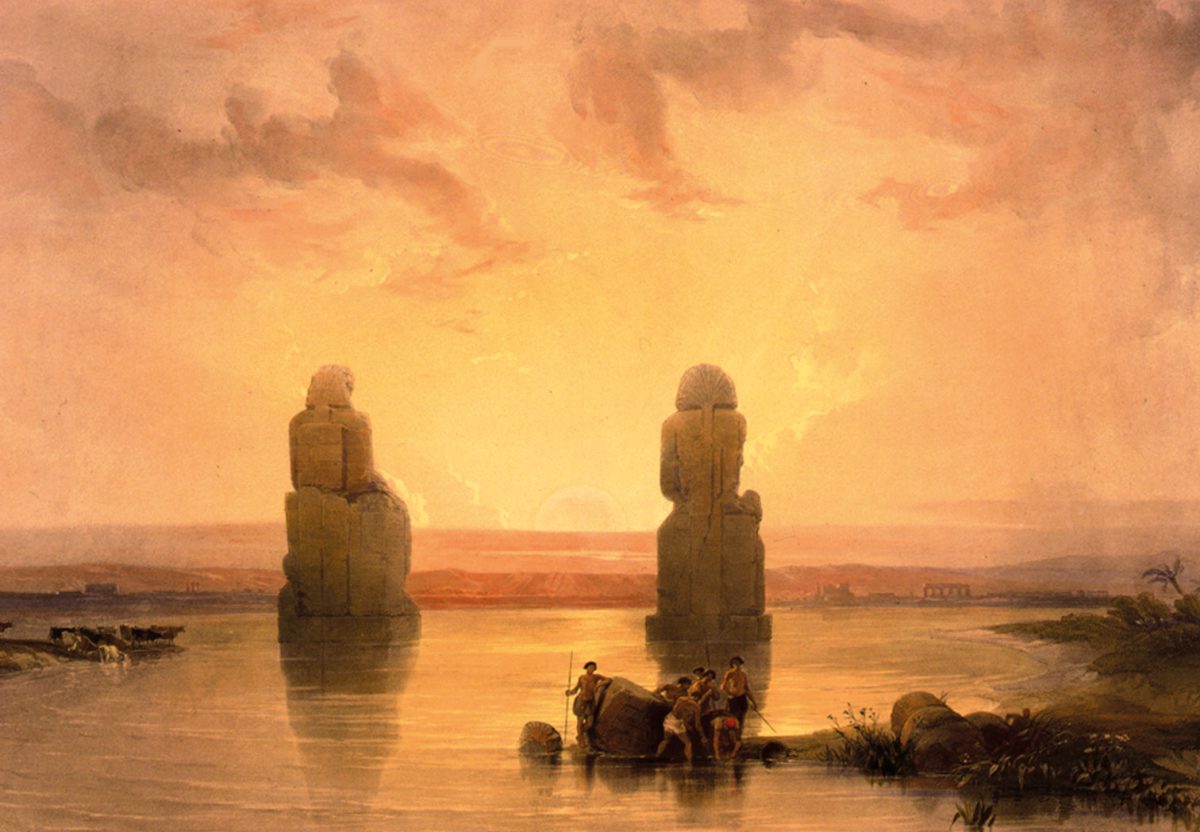
KV11, for instance, which belonged to Ramesses III, was then referred to as ‘Bruce’s Tomb’ after the Scottish traveller James Bruce, but also as the ‘Tomb of the Harpists’, after a notable painting that it contained. Wilkinson went as far as painting Arabic numerals above the entrance of each tomb. While only some of these have survived, the system is still used in a modified form, although it can cause confusion since it makes no distinction between full-sized royal tombs, smaller tombs belonging to non-royal nobles, and simple pits. Another notable project at Luxor was an investigation to determine the nature of the environment in ancient times. Like many travellers, Wilkinson noticed that the 18-metre-tall (59 feet) Colossi of Memnon were frequently engulfed by the waters of the inundation, but few others had wondered whether this had always been the case.
By measuring out a transect extending from the Nile back toward the Colossi, Wilkinson found proof that the fertile agricultural land was being built up over time, in the form of deposits that were deepest by the river, and shallower near the Colossi. Digging next to the Colossi, he found that they had actually been set up on sandy ground – in other words, in the desert. From this, it seemed that far less land had been available for cultivation in ancient times. Research in the late 20th century by the Theban Harbours and Waterscapes Survey has largely substantiated Wilkinson’s conclusions.

Life in Luxor
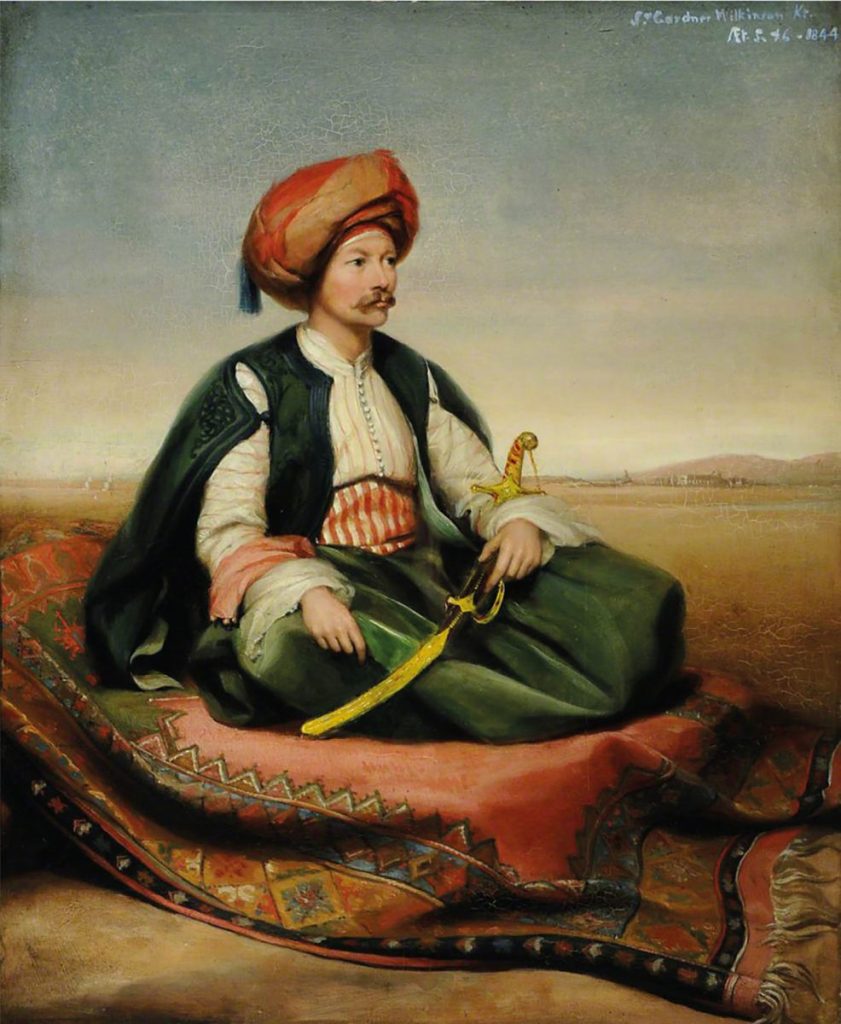
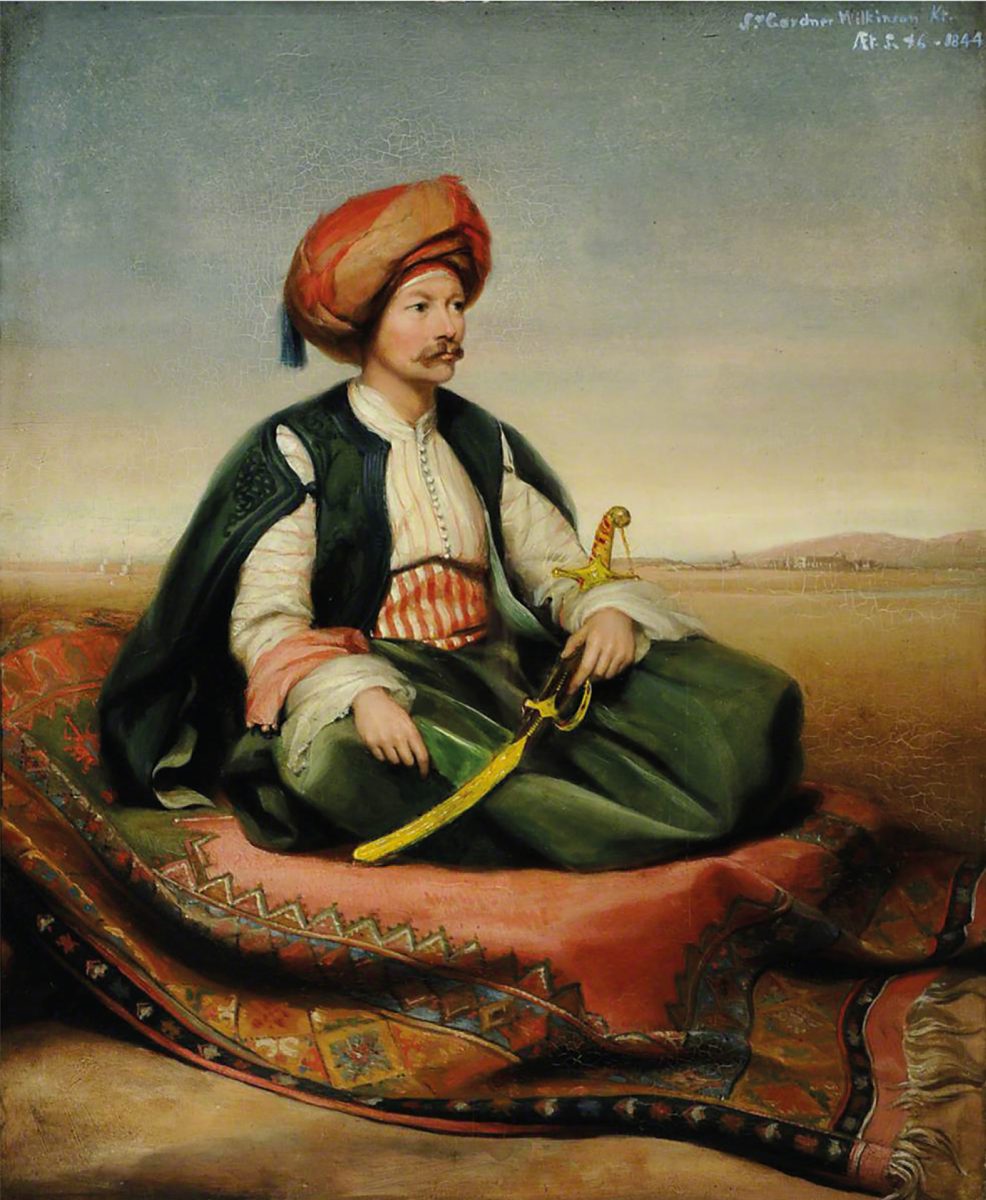
Wilkinson ultimately spent most of his time at Luxor, and he actually settled there, converting a New Kingdom-era tomb into a house. The tombs of the nobles and the Colossi of Memnon were within easy walking distance, but the Valley of the Kings was more of a trek. One invariable difficulty of living in a region so far-removed from communication with the Western world – journeying to Cairo at that time took at least a week – was how to obtain supplies such as food and clothing. Unlike later Western explorers, Wilkinson looked to local supplies, going as far as donning the quasi-native Turkish dress that was worn by Egypt’s wealthier classes. In later life, Wilkinson sat for a portrait wearing these clothes, including bag-like shirwal trousers, a jacket, and a turban. The clothing was practical in more ways than one, as it was loose, comfortable, and had layers that could be put on or removed when needed. He took a dim view of an order posted by British consul Henry Salt for Britons to wear their own national dress with pride, with the presumption that this would overawe Egyptians and reflect Britain’s ever-increasing power in the Mediterranean following the Napoleonic Wars. Wilkinson and another travelling friend, James Burton, objected, and the order was rescinded.
In 1839, Wilkinson was knighted for his significant contribution to Egyptology.
Manners and Customs
The most substantive work to result from Wilkinson’s long sojourn in Egypt was The Manners and Customs of the Ancient Egyptians – not be confused with Manners and Customs of the Modern Egyptians (1836), written by a close colleague, Edward William Lane, which focused only on 19th-century Egypt.
Wilkinson’s Manners and Customs was first published in three volumes in 1837, and then reissued in an expanded version of five volumes in 1841. The book was a truly visionary work for its time. Georgian and Victorian travel books frequently featured chapters about the ‘manners and customs’ of different peoples, describing cultural traditions, food, dress, material goods, and so forth. Yet the approach was seldom applied to the ancient past. Wilkinson used the same themes. Readers learnt everything from how the country was governed by a monarchy and priesthood, to details about ancient partying, and what sort of furniture filled up the houses of the time. Many parts of Manners and Customs appear curiously modern, presaging the modern academic cultural turn toward investigating the ‘little things’ of everyday life. At the same time, the work contains throwbacks and conjectures that have long-since passed from acceptability.
Manners and Customs reached a wide audience. A large part of the attraction lay in the rich selection of images featured. A few of these were in colour, but the majority were black-and-white wood-cuts. Sometimes these were of artefacts, such as Egyptian soul-houses from tombs, statues, storage boxes, or pieces of furniture. Others were sketches of paintings from tombs or reliefs from the walls of Egyptian temples. For these, Wilkinson included annotations, directing readers how to read the scenes as connected narratives or to offer extra clarifying detail. Although it is sometimes said that Wilkinson’s book was overly reliant on inappropriate sources, such as Graeco-Roman authors and the Bible, even a quick glance through the work will show that Wilkinson drew extensively on the indigenous Egyptian sources that were then available.
Manners and Customs was a resounding financial success. His publisher, London-based John Murray, paid an advance of £600 for the first three volumes, the equivalent of £50,000 today. Another £300 for the fourth and £150 for the fifth volume added up to serious money for the time; it was a bestseller in any sense of the word.
Wilkinson’s other major work, also published by John Murray, was a series of guidebooks. In the 1820s, curious Western travellers in Egypt were forced to carry an extensive library, ranging from Classical literature, such as Herodotus, to a series of 17th-, 18th-, and 19th-century travel books. Wilkinson compressed everything that the traveller needed to know into a single work, The Topography of Thebes, and General View of Egypt (1835). Although he had finished this book by 1830, its publication was delayed by five years, as his Alexandrian publisher succumbed to the plague. Shortly after Manners and Customs, Wilkinson expanded his initial guidebook into a far longer work, now extending to two volumes, entitled Modern Egypt and Thebes (1843). In its final iteration, Wilkinson’s guidebook ended up as the Handbook for Travellers in Egypt (1847) – part of a series covering other popular Victorian tourist destinations, such as Italy, Spain, and Turkey.
In 1839, Wilkinson was knighted for his significant contribution to Egyptology, but this was not the only area where Wilkinson made an intellectual contribution. After a return trip to Egypt in 1844, he and two friends explored the Dalmatian coast, visiting the ruined palace of the Emperor Diocletian at Split and other historic Roman cities. In Montenegro, he made an extensive visual record of contemporary culture, notably the traditional costume, publishing a travelogue Dalmatia and Montenegro in 1848.
In the last 25 years of his life, Wilkinson became involved with an ever-increasing number of projects, limiting his ability to pursue more sustained work. It is impressive that he managed to produce a new book or essay at a rate of one each year up until his death. One of these was a guidebook for the Egyptian sections of the Crystal Palace, after it reopened in Sydenham in south London. He also created a full-colour facsimile of the Turin Papyrus for the benefit of scholars working on the chronology of ancient Egypt. He continued to visit Egypt, writing short articles about things to do or features to look out for, and was persuaded to co-write a commentary on Herodotus as well.
Wilkinson received a constant stream of letters, ranging from ‘fan mail’ from admirers of Manners and Customs, to those seeking specialist advice on anything even loosely related to ancient Egypt. In some cases, Wilkinson’s responses run to many thousands of words: had they been properly collated, they would themselves have qualified as short articles.

Wilkinson received many letters from ‘fans’ of his books and scholars needing help, and he was himself a prolific letter writer. Image: New York Public Library Digital Collections
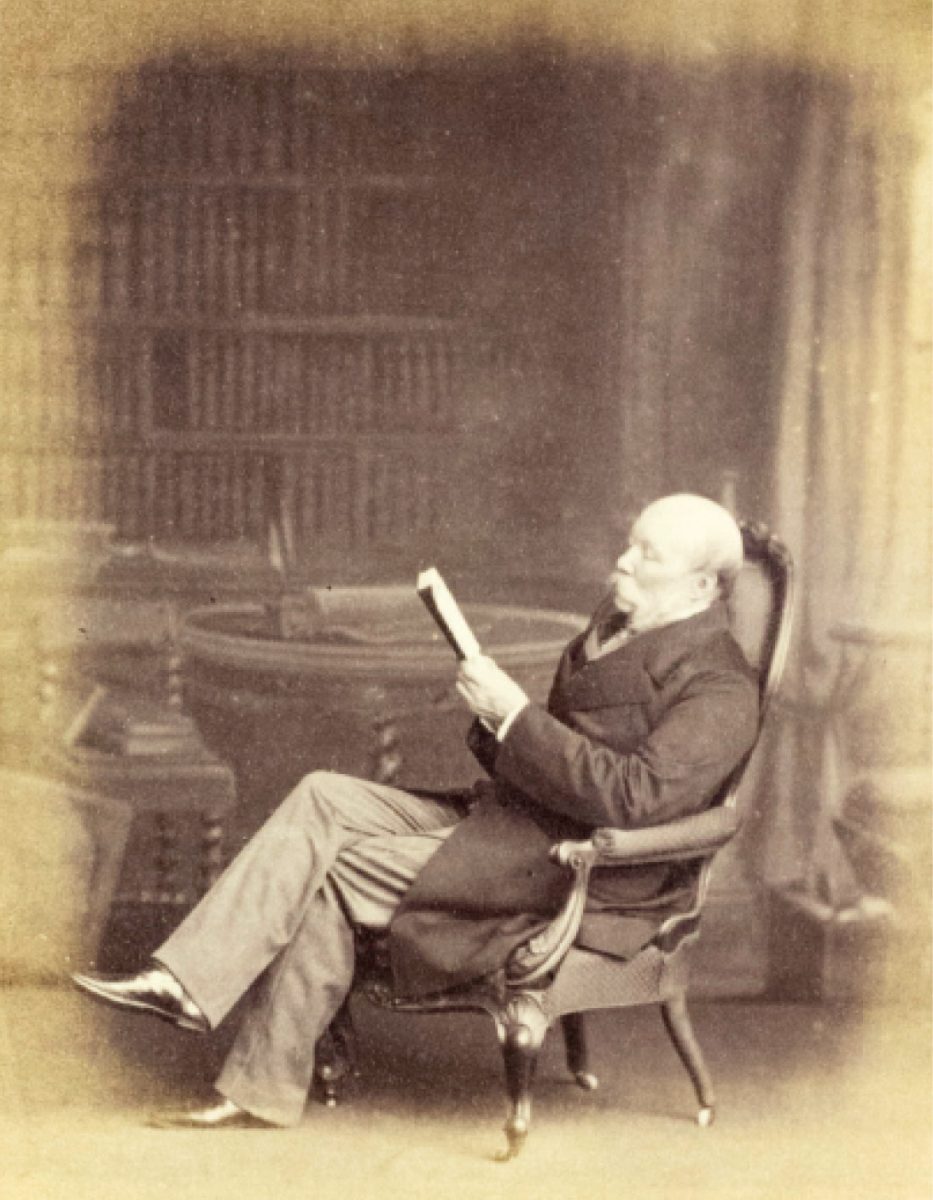
Given all this, it is surprising that Wilkinson developed a new interest in prehistoric Britain, moving to the archaeologically rich Gower peninsula of South Wales. Wilkinson shared this interest with (and later married) Caroline Lucas, who published her own books and articles on geography and botany. Wilkinson passed away at the age of 78 in Llandovery, in central Wales. At no point in his life did he hold a university or institutional post, nor take on a student. Yet, if the study of Egyptology in the Britain of his time was disjointed, his legacy in the longer term was considerable: both Amelia Edwards, co-founder of the Egypt Exploration Society, and Flinders Petrie, the most influential of the new generation of Egyptologists, were inspired by his works; the best of them remained continuously in print for decades.
Robert R Frost is a historical geographer based at the Centre for Urban History at the University of Leicester. Following a doctorate about the work of Sir John Gardner Wilkinson, he is now working
on a project assessing how Egyptologists have used maps to showcase their findings, supported by the Leverhulme Trust. You can read his article on the Palestrina Mosaic in AE 150.
• J G Wilkinson (1835) The Topography of Thebes, and General View of Egypt; (1837) The Manners and Customs of the Ancient Egyptians; (1848) Dalmatia and Montenegro (London: John Murray).
• J Thompson (1992) Sir John Gardner Wilkinson and His Circle (Austin: University of Texas Press).