Subscribe now for full access and no adverts
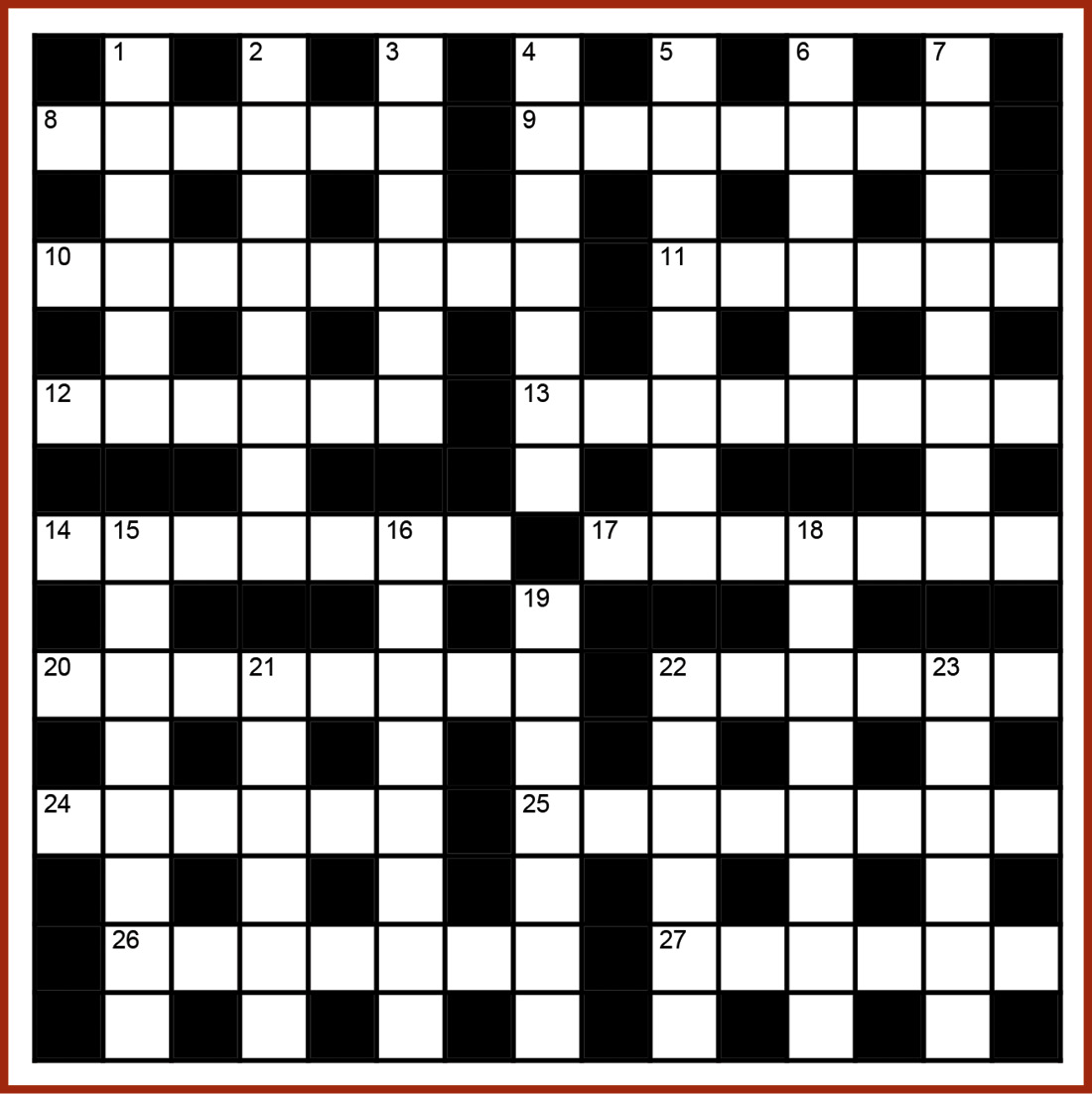
Across
8 Greek island, location of the Loizos Cave archaeological site (6)
9 ___ limestone, sedimentary rock made of small grains of calcium carbonate (7)
10 Kathleen ___, British archaeologist, author of Ancient Sparta (8)
11 Location of a Makah village site in Washington State (6)
12 Priests often associated with the ancient Celts (6)
13Term describing a period when pottery was not made or used (8)
14 Name given to an early human fossil discovered in Indonesia in the late 19th century (4,3)
17 US state containing the Forest Dale Ironworks site (7)
20 Small pieces of stone used in mosaics (8)
22 Neolithic site near Volos in northern Greece (6)
24 American term for a throwing stick (6)
25 Max ___, British archaeologist who married Agatha Christie (8)
26 Maternal grandfather of Romulus and Remus in Roman mythology (7) 27 ___ stones, sandstone blocks used at Stonehenge and other megalithic monuments (6)
Down
1 Pre-Roman British coin (6)
2 Roman building with colonnades and apse used as a court (8)
3 US state, location of the Paint Creek archaeological site (6)
4 Interglacial stage of the British Quaternary System (7)
5 Tertiary epoch following the Miocene (8)
6 Greek goddess of wisdom (6)
7 Member of a nomadic people of the Black Sea steppes (8)
15 One of the seven hills of Rome (8)
16 Statue, especially of ancient Greece, made of wood and marble (8)
18 US state, location of the Renner Village archaeological site (8)
19 Country where the Ladby ship burial was discovered in the 1930s (7)
21 Medieval port on the Gulf of Aden (6)
22 Indigenous peoples of the north-western USA and Canada (6)
23 Richard ___, palaeoanthropologist whose books include The Origin of Humankind (6)
For answers to #139, see next issue.
150 years ago…
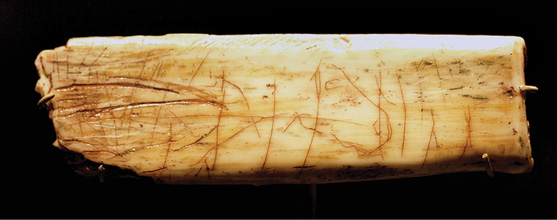
The Robin Hood Cave Horse was discovered at Creswell Crags in Derbyshire, England, in July 1876. The fragment of rib bone engraved with an image of a horse has been dated to c.12,500-13,000 years ago, and remains the only example of Upper Palaeolithic portable art depicting an animal ever found in Britain. The carefully engraved drawing shows the head, neck, and forequarters of a galloping horse with an upright mane; over the top of the animal are thin, widely spaced vertical lines. The image is cut off by a break in the bone, and has been crossed through with deep horizontal lines, perhaps intended to erase the figure of the horse. The object was found by Reverend J M Mello during excavations of Robin Hood Cave led by William Boyd Dawkins; it was initially the subject of some controversy, but is now accepted to be a genuine piece of Ice Age art.
Technology + archaeology: Conserving ceramics
A team from Koç University has developed a new method for conserving damaged ceramics from archaeological contexts. The novel approach uses photogrammetry to create a digital model of the vessel and reconstruct the missing sections; 3D printing is then employed to produce customised fill. Within this fill, sensors are incorporated that can detect changes in temperature, humidity, and physical stress on the individual object, providing valuable information for conservators. The methodology has been tested on two collections of amphorae recovered from underwater conditions – the results are published in the Journal of Cultural Heritage (https://doi.org/10.1016/j.culher.2025.09.012).

Answers Answers to Crossword #138
Across: 7 Phaedra, 9 Avalon, 10 Virgil, 11 Anglesey, 12 Excalibur, 14 Balsa, 16 Florida, 18 Impasto, 19 Oscan, 20 Gallienus, 24 Antonine, 25 Ishtar, 27 Berlin, 28 Piggott.
Down: 1 Sphinx, 2 Tang, 3 Xanadu, 4 Largs, 5 Matera ware, 6 Somerset, 8 Dalriada, 13 Adrianople, 15 Smelting, 17 Lysander, 21 Aleppo, 22 Urartu, 23 Diana, 26 Hood.