Subscribe now for full access and no adverts
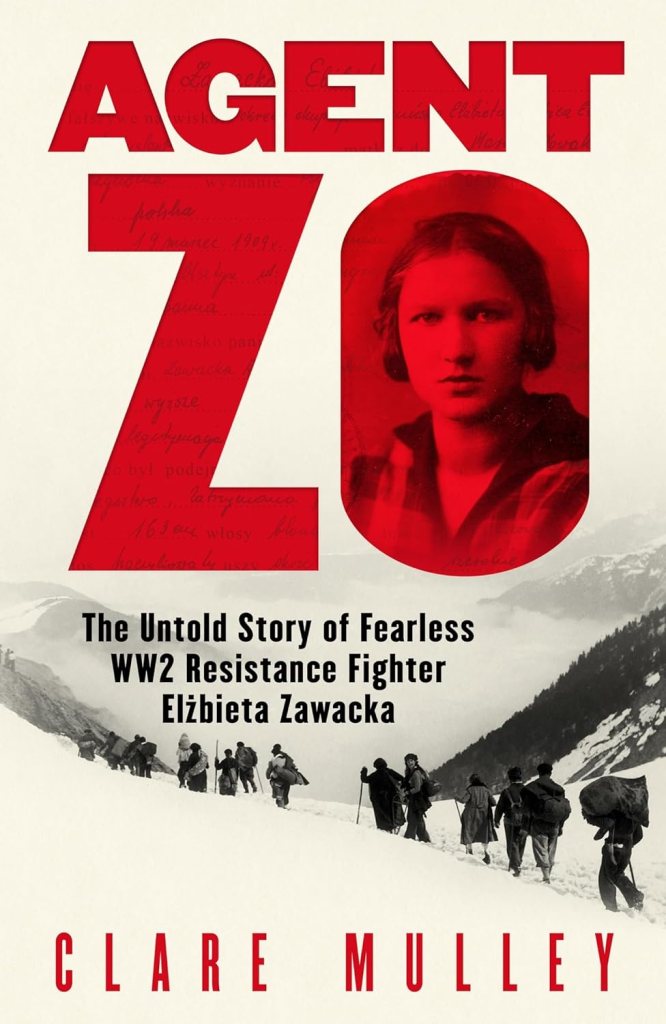
REVIEW BY ANDREW MULHOLLAND
This latest book from biographer Clare Mulley goes way beyond the astonishing life story of Elżbieta Zawacka. For it also provides an important overview of 20th-century Poland, as well as a reminder of the horrors of tyranny and the price paid by individuals for realpolitik. As Zawacka herself would havewished, it gives due prominence to the role of women in the political and military struggles of Poland and elsewhere. Without being polemical, the book sets that record straight with the skill and sympathy of a diligent historian. All of this done in an accessible, page-turning style.
Zawacka herself was a prominent member of the Polish Home Army during World War II, a political campaigner, writer, archivist, historian, teacher, and academic. The cliché ‘a long and full’ life doesn’t quite cover it. For those wondering to what extent is this actually military history, the answer is that the heart of the book deals with Zawacka’s wartime experience.
She participated in the ten-day siege of Lwów in 1939 and also in the 1944 Warsaw Uprising. Apart from that, she worked primarily as a senior commander in the ‘Farmstead’ overseas communication section of the Home Army. This involved extensive travel across occupied Europe, with enough close calls to fill a dozen spy novels. She trained with the SOE in Audley End and parachuted back into Poland from an RAF Halifax.
Such exploits meant that she worked alongside an impressive cast of mainly Polish resistance fighters. For those with a particular interest in this aspect of the war, the story is replete with operational detail. The interactions of these characters, too, their heroism and tragedies, are deftly woven into the narrative. The contrasting, meticulously reconstructed accounts of life in wartime Warsaw, London, Paris, and Berlin add to the colour. Thus, for the most part, this is a brilliantly researched and detailed account of Polish resistance during World War II. Zawacka’s extraordinary exploits serve as window on this world.
Wartime relationships
The broader themes that shaped the struggle are well drawn as well. For example, there is plenty of material on the wartime relationship between the British and Polish governments, as well as the perfidy of the Soviet Union. Poland’s geo-strategic position, caught between two powerful and aggressive dictatorships, plays out through the eyes of those directly involved, and who suffered accordingly.
The final section of the book moves beyond military history, but is arguably the most fascinating. With the Red Army advancing through the rubble of Warsaw and the establishment of a Stalinist government in Poland, Zawacka and her comrades have difficult choices to make.
For the next 45 years, she works tirelessly in defence of Polish free-dom and to challenge the perverse version of history that the new regime imposes. She is particularly determined to secure full recognition of the role of women. Many of the people she worked with during the war continue to work with her. Indeed, there is plenty more drama and tragedy. For the reader, this is a timely reminder of what went on in Eastern Europe during this period. It is intriguing, too, to read exactly what it was like to work within the later Solidarity revolution that many of us will remember only from our television screens.