Roman & Byzantine Egypt

AE157 News 1a

Bathing complex found at Tell Nasser 

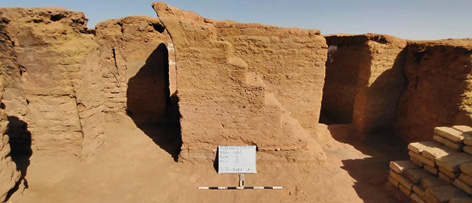
A Roman Period bath complex has been discovered by an Egyptian team working at Tell Nasser in Port Said – the first such structure to be found in the area. The discovery was made during the site’s first excavation season. Cypriot…

Byzantine city discovered in Egyptian oasis

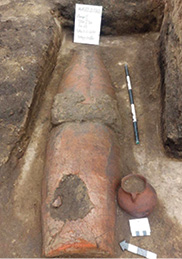
Archaeologists from Egypt’s Supreme Council of Antiquities have uncovered the remains of a residential city dating to the 4th and 5th centuries AD at the Ain Al-Sabil archaeological site in the Dakhla Oasis, New Valley Governorate, in Egypt’s Western Desert.…

Tell Kom Aziza cemetery finds

An Egyptian team excavating the multi-period cemetery at Tell Kom Aziza (Beheira) in the Delta has uncovered a section dating to the Graeco-Roman Period with diverse human funerary practices. Burials ranged from simple pits and mud-brick-lined tombs, to decorated gypsum…

Marina el-Alamein tombs

An Egyptian mission at Marina el-Alamein (the site of the Graeco-Roman city of Leukaspis) has discovered 11 deep rock-cut tombs and 7 limestone surface tombs, many of which are still sealed and well preserved. One of the burials was originally…

Byzantine city plan revealed

An Egyptian mission excavating the Byzantine-era city at Ain el-Sabil in the Dakhla Oasis has uncovered the overall plan of the settlement and several new mud-brick structures. The city was built on a grid pattern with two main streets running…

Ancient Egypt news in brief

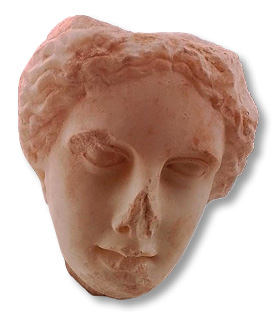
• At Ihnasya (ancient Herakleopolis Magna), an Egyptian team has uncovered the remains of a Roman basilica and a large marble head of the Greek goddess Aphrodite, along with terracotta coin moulds and an inscription of Senusret III (Twelfth Dynasty)…

AE155 News 3a

Circular temple at Pelusium

The Egyptian mission excavating in North Sinai at Tell el-Farma – the site of the ancient border fortress of Pelusium – has uncovered a huge circular complex thought to be the remains of a temple to the local god Pelusius.…

AE155 News

Coptic monastery 

The remains of a Coptic monastery have been discovered by an Egyptian mission at Wadi el-Natrun, in Beheira Governorate. The structure, which dates from the 4th to the 6th centuries AD, sheds light on the architectural planning of the first…

AE155 News 5b

Coptic guesthouse

Further north from Wadi el-Natrun, another Egyptian team has found a Coptic guesthouse, dating to the 5th century AD, in the Qalaya area of Hosh Issa (also in Beheira). The building has 13 multi-functional rooms for individual and communal living,…

AE155 News 2a

Gold tongues and Homer

A Spanish mission working at the ancient site of Oxyrhynchus (Bahnasa, in Minya) has found a Roman tomb containing wooden coffins and a number of mummies, three with gold tongues, and one with a tongue of copper. Some of the…

AE155 News 6b

Ramesses III gate and Tiberius stela

A mission from the Egyptian-French Center for the Study of the Karnak Temples (CFEETK) has successfully completed the reconstruction of a Ramesses III gateway in the north-western sector of Karnak. The gate appears to have been built over an earlier…

AE155 News 1a

Urban villa and baths in Alexandria

An Egyptian team working in the northern area of Alexandria has uncovered the remains of a residential villa and circular public baths. The villa, dating to the Roman Period, had mosaic floors in a variety of styles, reflecting the diversity…

A rare religious site 

Excavations at the ancient Egyptian port city of Pelusium have identified a unique 2,000-year-old temple believed to be dedicated to the local deity Pelusius. In 2019, archaeologists from Egypt’s Supreme Council of Antiquities working at the site of Tell el-Farama…

Ancient Egypt April listings

A BESTIARY OF ANCIENT NUBIA A Bestiary of Ancient Nubia reveals the animal world of ancient Nubia from the A-Group culture to the medieval period, including lions, crocodiles, birds, cattle, and insects depicted in statues, paintings, and other artefacts. INSTITUTE…

The Temple of Esna restored to splendour

Once hidden beneath layers of soot and bird faeces, the stunningly colourful painted scenes and elaborately carved columns adorning the Temple of Khnum at Esna (Latopolis) can now be seen in all their glory following decades of painstaking work by…

New Graeco-Roman tombs in Aswan

A joint Egyptian–Italian archaeological mission (University of Milan) has discovered more rock-cut Graeco-Roman tombs in the necropolis surrounding the Aga Khan Mausoleum on Aswan’s West Bank (for previous finds, see AE 144). The most impressive tomb to be found so…

Restoration work

The Ministry of Tourism and Antiquities has completed the conservation of a Roman Period tomb at Athribis (Naga‘a el-Sheikh Hamad, west of Sohag). The brightly painted tomb, consisting of a square antechamber leading to a triangular burial chamber, belonged to…

Fortress of the East

Recent excavations at Tell Abu Saifi in the Qantara region (Ismailia) have revealed new military architecture at the site of two fortresses dating back to the Ptolemaic and Roman periods. Located in the northern Sinai Desert, the ‘Fortress of the…

Sohag pottery workshop

A complete Byzantine-era pottery workshop has been found in the village of Banawit, 24km north of Sohag, by an Egyptian mission. The complex, one of the largest pottery- and glass-manufacturing centres ever found, included a large range of ovens and…

Post 1 image0

Golden tongues

Thirteen mummies with golden tongues in their mouths have been discovered at el-Bahansa (Minya) by the Oxyrhynchus Archaeological Mission, a joint Spanish–Egyptian team led by the Institute of Ancient Near East Studies of the University of Barcelona. The mummies were…

Restoration at Edfu and Esna

The original colours of scenes inside the Temple of Edfu are now visible following cleaning and restoration work by a team from the University of Würzburg and the Supreme Council of Antiquities. The team removed the surface dirt, bird debris,…

Armenia’s earliest church

Excavations in the ancient city of Artaxata have uncovered the remains of a church dating to the early days of Christianity in Armenia. Artaxata was the capital of the Kingdom of Armenia from the early 2nd century BC, and remained…

Roman catacomb discovery

Two Roman Period rock-cut catacombs have been discovered by an Egyptian mission excavating at the site of Zawyet Umm el-Rakham, west of Marsa Matruh (about 300 km west of Alexandria). The tombs are approached through a stairway leading to a…

Sacrificial crocodile

A large crocodile mummy from the Birmingham Museum & Art Gallery in the UK has revealed new insights into the popular crocodile cults of ancient Egypt. Used as votives to the Nile god Sobek, huge numbers of animals were killed…

Berenike discoveries

Fragments of four letters have been discovered at Berenike on the Red Sea coast. They were written on papyrus by Roman commanders stationed in Egypt in the reign of Nero (AD 54-68) and name three centurions: Haosus, Lucinius, and Petronius.…

Centurions’ correspondence

Archaeologists working in Berenike, Egypt, have discovered the remains of several letters written by Roman centurions. In the early centuries of the 1st millennium AD, the ancient port of Berenike, located on the west coast of the Red Sea, was…