

Radnorshire’s Cwmhir Abbey (meaning ‘the abbey of the long valley’) now consists of a fishpond and the walls of the abbey church, set in an ‘amphitheatre of hills of stupendous grandeur’ according to an early traveller in Wales. Suppressed in 1537, the abbey was plundered for its stone and five out of the 14 delicately carved 13th-century arcades ended up beautifying the church at Llanidloes, some ten miles distant.

Drone photography taken by local archaeologist Julian Ravest has revealed a rich buried landscape of walls, ditches, field boundaries, and ridge and furrow in the fields surrounding the village, including the possible site of a post-Dissolution house built by William Fowler (who acquired the core of the abbey estate in the early 1560s) and defensive earthworks put up by the Royalist garrison during the Civil War. Aerial photographs taken by Toby Driver of the Welsh Royal Commission during the drought summer of 2018 revealed the existence of a probable monastic cemetery in the farmyard to the west of the abbey, which was excavated by Clwyd–Powys Archaeological Trust in 2019 (see Archaeologia Cambrensis 170: 151-157).
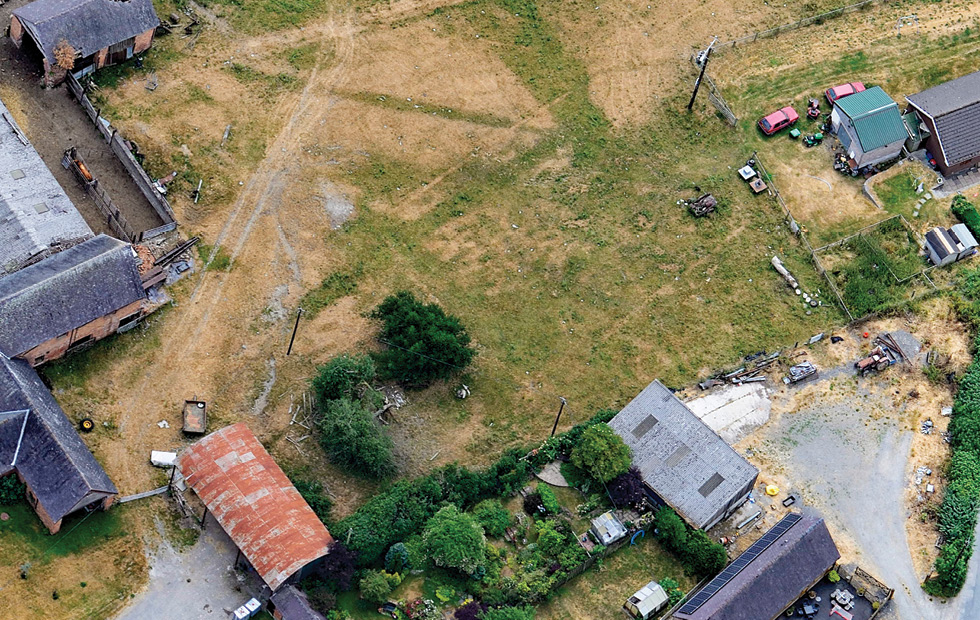
All this spurred the small village community (235 residents) to embark on an ambitious project to ‘Demystify the Abbey’. In 2021, the Trust ran a three-day geophysics field school to investigate two building platforms, a circular bank, and a possible Bronze Age cairn; a geology field school looking at local building stones and the sources of the abbey’s water supply; and an archaeobotany weekend to study the clues that plants can give about past landscape use. During July 2021, 30 local volunteers excavated the buried remains of a farmstead with possible medieval origins at Llanerchdirion.


The Battlefields of England